vaccinate - Master This Word
Master this word with our 5-step learning method – Learn English in English
Train English Through Brain Routes, Not Translation.
This page helps you stop memorizing isolated translations and start understanding a word through its shared mental image, native-style thinking, and practical training steps.
Master this word with our 5-step learning method – Learn English in English
Example sentences are the start of understanding. Don't rush to memorize. First feel how the word works in a sentence.
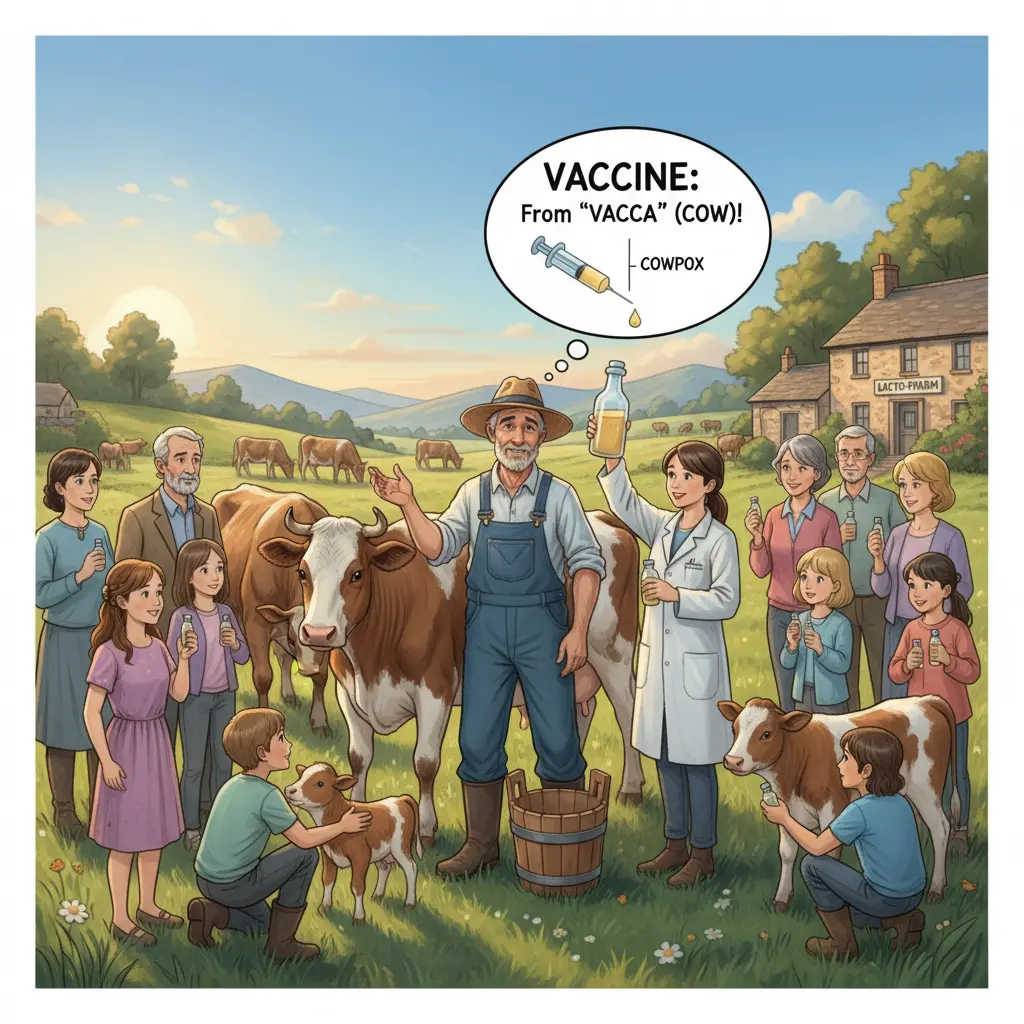
(a) vac- (from 'vacca,' meaning cow) + -inate (a verb-forming suffix); (b) The word comes from Latin 'vaccinare', which derived from 'vacca' (cow) because the first vaccine was derived from cowpox. Through Old French, it made its way into English. (c) Imagine a group of people in a field with cows, as a farmer lovingly takes care of his animals while explaining how their milk has helped create vaccines.
Note 1: These definitions and etymologies are not standard dictionary definitions, but extended explanations provided to help with memorization and understanding of the actual application of words. Through this background information, we strive to make words more vivid and easier to understand, and help you remember their meanings in real life.
Note 2: LexiTalk designs the learning flow around the linguistics principle of “Comprehensible Input.” When learners encounter material that is slightly above their level but still understandable from context, the brain naturally absorbs the language. That’s why we keep every word inside authentic contexts, using examples and associations to help you understand it and use it flexibly.
Read the FAQ explanation of Comprehensible InputVaccinate is a verb meaning to administer a vaccine to someone, or to protect against a disease by injecting a vaccine. It is used in medical contexts, public health messaging, and school or travel requirements. A person is vaccinated when they receive vaccines; a program may vaccinate a population. A related verb, immunize, emphasizes the result of becoming immune, and inoculate can be used in technical senses. The word comes from Latin vaccinare, derived from vacca (cow) because the first vaccine came from cowpox, and it entered English via Old French. This origin helps learners remember the idea of protection against disease; learners should note that immunize and vaccinate are not always interchangeable in every context.
In English, vaccinate vs immunize is a common distinction: vaccinate focuses on giving the vaccine to someone, while immunize focuses on the result of immunity. Some languages translate these as separate verbs, while others blend them; learners should check local usage with doctors or teachers to avoid incorrect collocations.
What does the word 'vaccinate' mean?
Which sentence uses the word 'vaccinate' correctly?
What is a word similar to 'vaccinate'?
What is an opposite word for 'vaccinate'?
Can you think of a real-life context where the word 'vaccinate' would be relevant?
Download LexiTalk app for personalized learning experience
Download AppCookies
We use cookies for essential site functions, analytics, and ads. You can accept, reject, or manage preferences. Privacy Policy