
vaudeville - Master This Word
Master this word with our 5-step learning method – Learn English in English
Train English Through Brain Routes, Not Translation.
This page helps you stop memorizing isolated translations and start understanding a word through its shared mental image, native-style thinking, and practical training steps.
Master this word with our 5-step learning method – Learn English in English
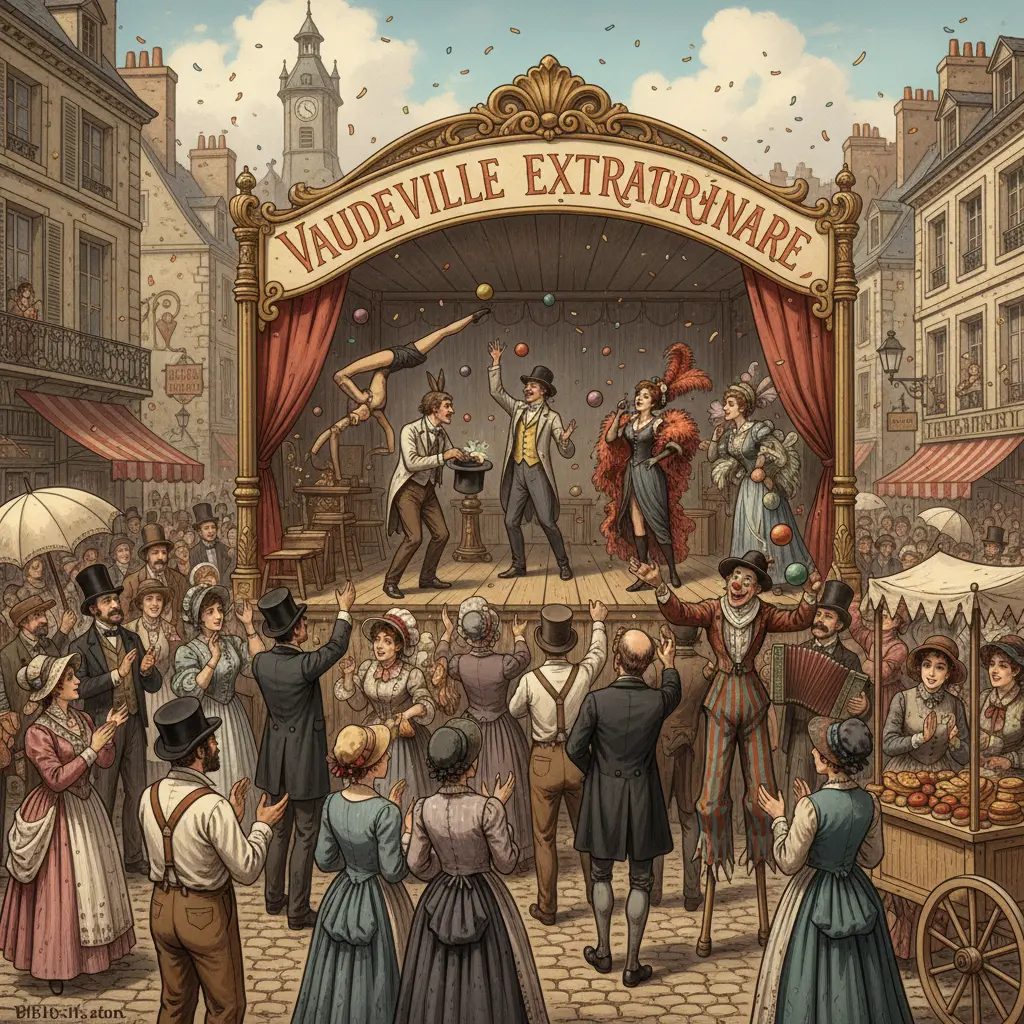
Example sentences are the start of understanding. Don't rush to memorize. First feel how the word works in a sentence.
Root decomposition: 'vau-' (from French) + 'deville' (from Old French, meaning town). Historical origin: French from Old French, meaning 'from the town.' Memory image: Imagine a bustling town square filled with performers entertaining a diverse audience, reminiscent of the lively variety shows of the past.
Note 1: These definitions and etymologies are not standard dictionary definitions, but extended explanations provided to help with memorization and understanding of the actual application of words. Through this background information, we strive to make words more vivid and easier to understand, and help you remember their meanings in real life.
Note 2: LexiTalk designs the learning flow around the linguistics principle of “Comprehensible Input.” When learners encounter material that is slightly above their level but still understandable from context, the brain naturally absorbs the language. That’s why we keep every word inside authentic contexts, using examples and associations to help you understand it and use it flexibly.
Read the FAQ explanation of Comprehensible InputVaudeville was a popular American entertainment form from the late 19th to the early 20th century, presenting a fast-paced sequence of acts that could include music, dance, comedy, and short sketches all in one evening. The emphasis was on variety, brevity, and broad appeal, often performed in large floorshow venues before film and radio dominated entertainment. Today the word is sometimes used figuratively to label a chaotic mix of activities, ideas, or distractions. When teaching, highlight its historical flavor, distinguish it from modern musical theater or revue, and explain how the term carries a sense of quick, interconnected entertainment rather than a single long narrative.
For English learners, vaudeville evokes a precise historical genre of linked acts; learners often mix it up with generic 'variety shows' or 'revues.' Emphasize the historical edge and the sense of rapid, mixed programming rather than a single storyline.
What is the definition of the word 'vaudeville'?
Which sentence uses 'vaudeville' correctly?
Which word is most similar to 'vaudeville'?
What is the opposite of 'vaudeville'?
Can you think of a real-life context where a vaudeville performance would be relevant?
Download LexiTalk app for personalized learning experience
Download AppCookies
We use cookies for essential site functions, analytics, and ads. You can accept, reject, or manage preferences. Privacy Policy