viral - Master This Word
Master this word with our 5-step learning method – Learn English in English
Train English Through Brain Routes, Not Translation.
This page helps you stop memorizing isolated translations and start understanding a word through its shared mental image, native-style thinking, and practical training steps.
Master this word with our 5-step learning method – Learn English in English
Example sentences are the start of understanding. Don't rush to memorize. First feel how the word works in a sentence.
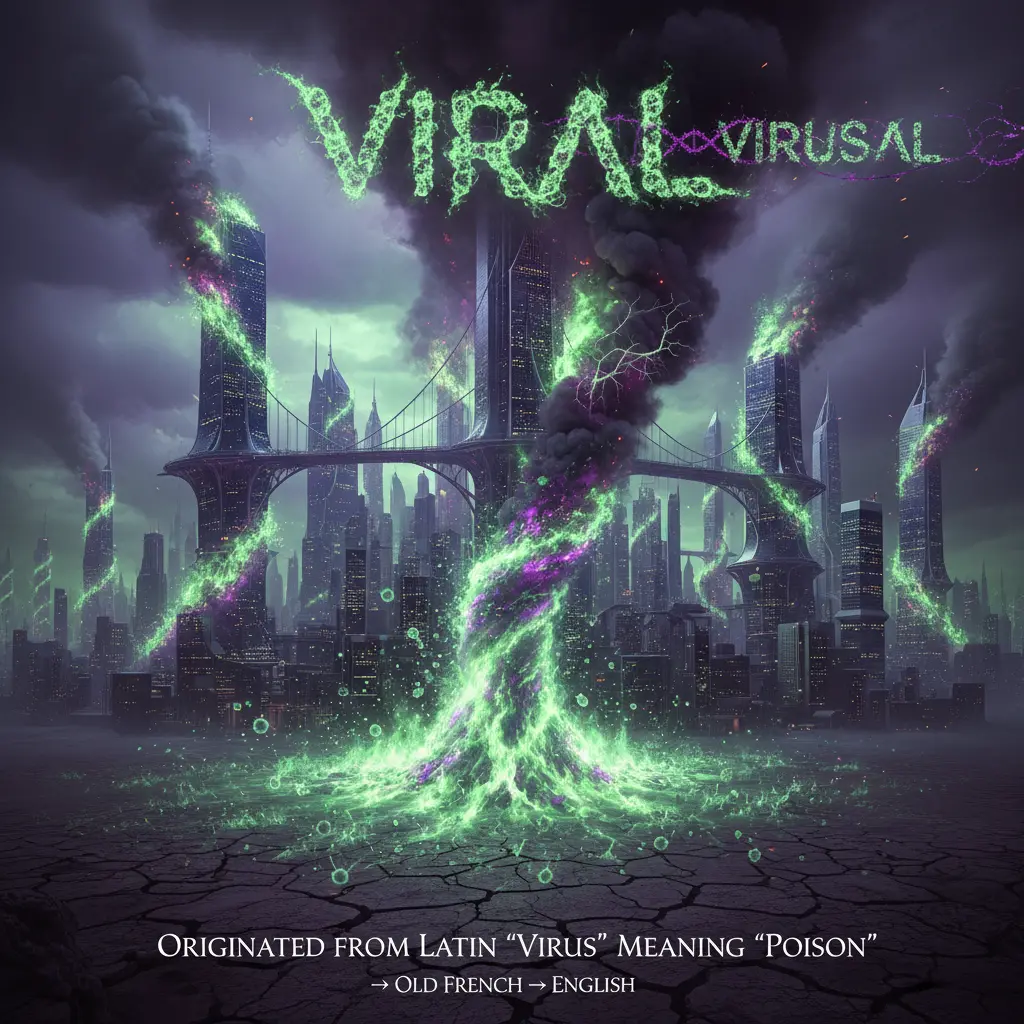
viral = virus + -al; Originated from Latin 'virus' meaning 'poison' → Old French → English. Imagine the rapid spread of a virus as a wild fire, engulfing everything in its path.
Note 1: These definitions and etymologies are not standard dictionary definitions, but extended explanations provided to help with memorization and understanding of the actual application of words. Through this background information, we strive to make words more vivid and easier to understand, and help you remember their meanings in real life.
Note 2: LexiTalk designs the learning flow around the linguistics principle of “Comprehensible Input.” When learners encounter material that is slightly above their level but still understandable from context, the brain naturally absorbs the language. That’s why we keep every word inside authentic contexts, using examples and associations to help you understand it and use it flexibly.
Read the FAQ explanation of Comprehensible InputViral is an adjective with two main senses: relating to viruses and infection, and describing something that spreads rapidly and widely, especially on the internet. In biology, a viral threat is about disease transmission and containment. In everyday use, a video, post, or idea can go viral when many people share, like, and comment, causing explosive visibility in a short time. The nuance sits between literal contagion and cultural contagion, so learners must pay attention to context to avoid confusing medical discussion with online phenomena. Despite the medical root, the online sense dominates popular usage today.
English learners often separate biology and online culture more distinctly; confusing two senses is common when a phrase like viral is used in science class versus social media, so practice with both concrete examples.
What is the meaning of the word 'viral'?
In which of the following sentences is 'viral' used correctly?
Which word is a synonym for 'viral'?
Which word is an antonym for 'viral'?
How can content become 'viral' on social media platforms?
Download LexiTalk app for personalized learning experience
Download AppCookies
We use cookies for essential site functions, analytics, and ads. You can accept, reject, or manage preferences. Privacy Policy