vital - Master This Word
Master this word with our 5-step learning method – Learn English in English
Train English Through Brain Routes, Not Translation.
This page helps you stop memorizing isolated translations and start understanding a word through its shared mental image, native-style thinking, and practical training steps.
Master this word with our 5-step learning method – Learn English in English
Example sentences are the start of understanding. Don't rush to memorize. First feel how the word works in a sentence.
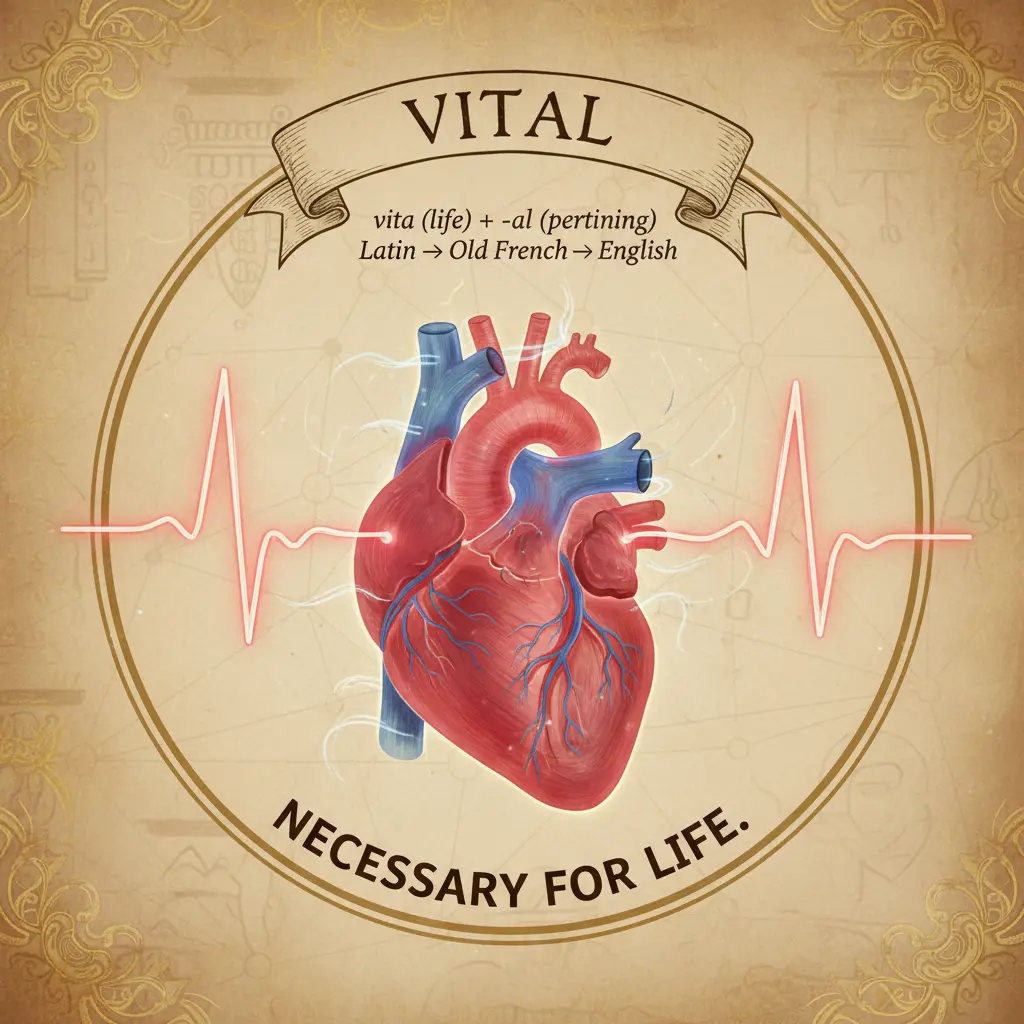
Vital: vita (life) + -al (pertaining to); Latin → Old French → English. Picture a beating heart to remember that something vital is necessary for life.
Note 1: These definitions and etymologies are not standard dictionary definitions, but extended explanations provided to help with memorization and understanding of the actual application of words. Through this background information, we strive to make words more vivid and easier to understand, and help you remember their meanings in real life.
Note 2: LexiTalk designs the learning flow around the linguistics principle of “Comprehensible Input.” When learners encounter material that is slightly above their level but still understandable from context, the brain naturally absorbs the language. That’s why we keep every word inside authentic contexts, using examples and associations to help you understand it and use it flexibly.
Read the FAQ explanation of Comprehensible InputFirst I tighten my grip on the coffee mug and push through the echo of sleep. I change gears in my mind, turn the page of the day, and keep my posture steady as I move toward the task. The room brightens with the kettle, and I feel a pulse of energy rising; this push of focus feels vital, almost alive. By the time I downshift into action, I set small choices in motion and hold them, letting the momentum show what matters most.
Vital is used for something that is essential for life or survival, as well as for things that are critically important in a given situation. It appears in phrases like vital signs, vital role, and vital importance. In everyday speech, a person can be described as having a vital energy or being a vital part of a team. Learners should note that not everything labeled important is vital; the nuance is stronger and implies a necessity. In medical contexts, vital refers to life-sustaining functions—what must work for a person to stay alive.
Vital in English carries both life-or-death and high-importance senses; learners often default to 'very important' in everyday talk or misapply with vitality.
What does the word 'vital' mean?
In which of the following sentences is 'vital' used correctly?
Which word is most similar to 'vital'?
What is the opposite of 'vital'?
Why is understanding the concept of 'vital' important in life?
Download LexiTalk app for personalized learning experience
Download AppCookies
We use cookies for essential site functions, analytics, and ads. You can accept, reject, or manage preferences. Privacy Policy