
volts - Master This Word
Master this word with our 5-step learning method – Learn English in English
Train English Through Brain Routes, Not Translation.
This page helps you stop memorizing isolated translations and start understanding a word through its shared mental image, native-style thinking, and practical training steps.
Master this word with our 5-step learning method – Learn English in English
Example sentences are the start of understanding. Don't rush to memorize. First feel how the word works in a sentence.
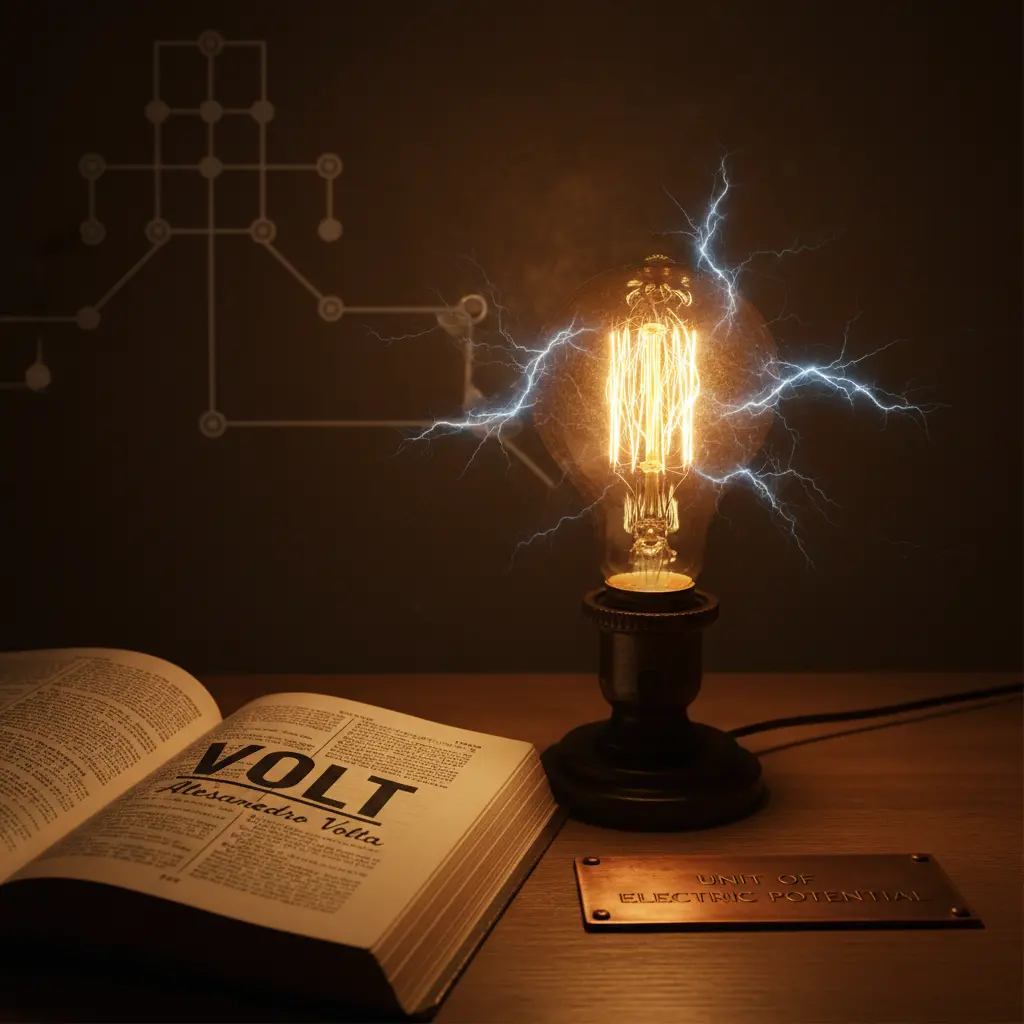
The root 'volt' derives from the name of the Italian scientist Alessandro Volta, representing the concept of electric potential. It originated from the Italian, became established in English in 1881, illustrating a powerful unit of measurement in electricity. Picture a lightbulb illuminating a room, symbolizing the energy brought by volts.
Note 1: These definitions and etymologies are not standard dictionary definitions, but extended explanations provided to help with memorization and understanding of the actual application of words. Through this background information, we strive to make words more vivid and easier to understand, and help you remember their meanings in real life.
Note 2: LexiTalk designs the learning flow around the linguistics principle of “Comprehensible Input.” When learners encounter material that is slightly above their level but still understandable from context, the brain naturally absorbs the language. That’s why we keep every word inside authentic contexts, using examples and associations to help you understand it and use it flexibly.
Read the FAQ explanation of Comprehensible InputVolt is the SI unit of electrical potential, symbol V. It measures the energy per unit charge available to move charges in a circuit, so a higher voltage means more push for current. The term comes from Alessandro Volta, the Italian scientist, and the unit was named in his honor in the late 19th century. In everyday terms, think of volts as the pressure in a water pipe: the higher the pressure, the more energy is available to drive the flow. In circuits, volts are distinct from amps (current) and ohms (resistance), but together they determine how much work electricity can perform.
Explain to an English speaker: volt is a unit of potential difference; English uses 'voltage' for the property and 'volt' for the unit. Learners often confuse voltage, current, and power, or mix up 'potential difference' with 'energy per charge.' Keep the distinction clear with simple analogies and common device examples.
Download LexiTalk app for personalized learning experience
Download AppCookies
We use cookies for essential site functions, analytics, and ads. You can accept, reject, or manage preferences. Privacy Policy