wage - Master This Word
Master this word with our 5-step learning method – Learn English in English
Train English Through Brain Routes, Not Translation.
This page helps you stop memorizing isolated translations and start understanding a word through its shared mental image, native-style thinking, and practical training steps.
Master this word with our 5-step learning method – Learn English in English
Example sentences are the start of understanding. Don't rush to memorize. First feel how the word works in a sentence.
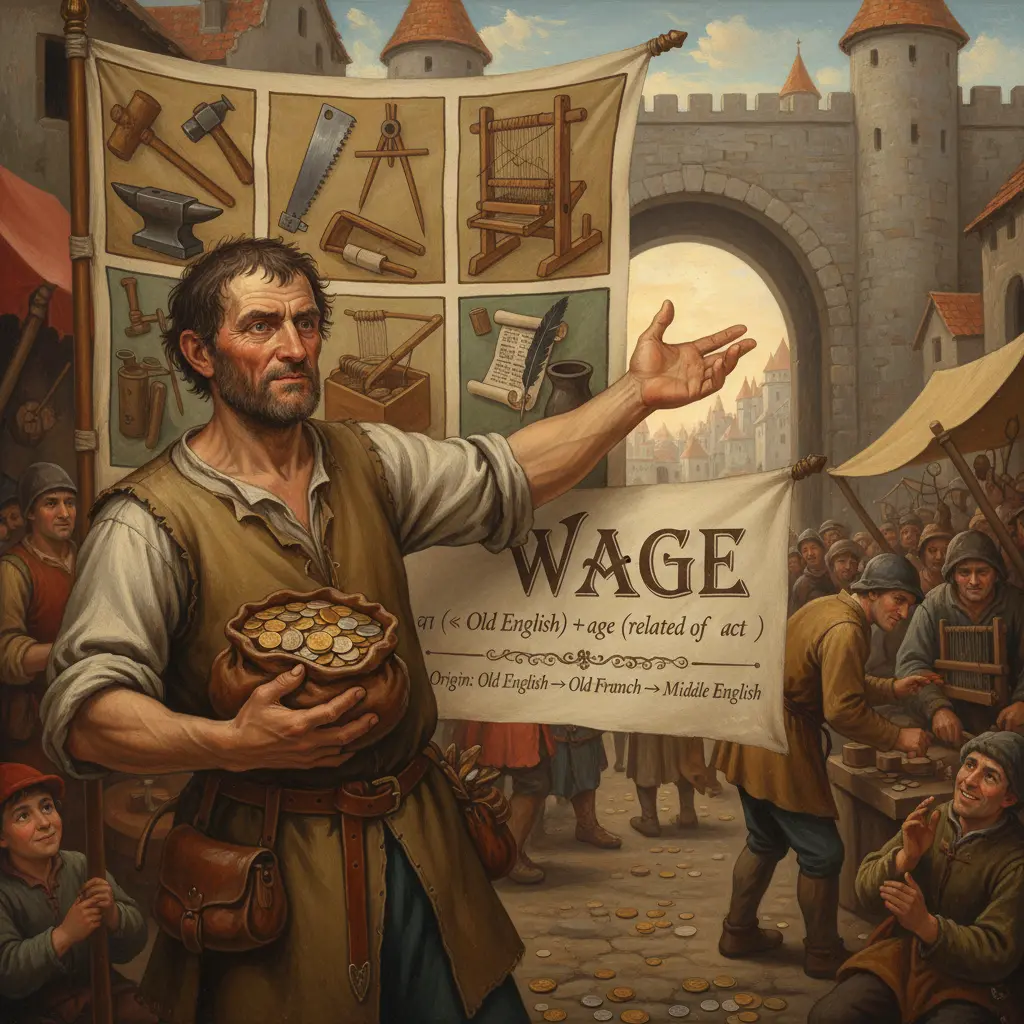
wage = wa (< Old English) + age (related to act of) | Origin: Old English → Old French → Middle English | Imagine a worker receiving his 'wage' in coins while proudly parading his skills, highlighting the fruits of labor.
Note 1: These definitions and etymologies are not standard dictionary definitions, but extended explanations provided to help with memorization and understanding of the actual application of words. Through this background information, we strive to make words more vivid and easier to understand, and help you remember their meanings in real life.
Note 2: LexiTalk designs the learning flow around the linguistics principle of “Comprehensible Input.” When learners encounter material that is slightly above their level but still understandable from context, the brain naturally absorbs the language. That’s why we keep every word inside authentic contexts, using examples and associations to help you understand it and use it flexibly.
Read the FAQ explanation of Comprehensible InputI place my hands on the desk and push, watching the cursor move. The rhythm of the day begins to change in my mind, a small shift in focus. The idea of wage slips into the plan as I keep track of the hours with care. I adjust my pace, hold steady, and move toward the end of the day, feeling that wage will follow the work.
Wage is a word with two main uses in English. As a noun, it refers to the money paid to a worker for labor, typically computed by the hour or day and often used in plural as wages. As a verb, wage is used in expressions like wage a war or wage a campaign, meaning to carry on or engage in a struggle or organized activity. Learners often confuse wages with salary and assume wage describes fixed monthly pay rather than hourly pay, or think wage is only for combat scenarios. Understanding both senses helps avoid mistakes in job discussions and news reporting.
In English, wage clearly splits into a pay noun (often wages) and a verb for conflict contexts; learners must memorize collocations like minimum wage and living wage and avoid using wage to mean simply 'earn'.
What is the meaning of the word 'wage'?
In which of the following sentences is 'wage' used correctly?
Which word is similar to 'wage'?
What is the opposite of 'wage'?
In what real-life context would you hear the word 'wage'?
Download LexiTalk app for personalized learning experience
Download AppCookies
We use cookies for essential site functions, analytics, and ads. You can accept, reject, or manage preferences. Privacy Policy