
walrus - Master This Word
Master this word with our 5-step learning method – Learn English in English
Train English Through Brain Routes, Not Translation.
This page helps you stop memorizing isolated translations and start understanding a word through its shared mental image, native-style thinking, and practical training steps.
Master this word with our 5-step learning method – Learn English in English
Example sentences are the start of understanding. Don't rush to memorize. First feel how the word works in a sentence.
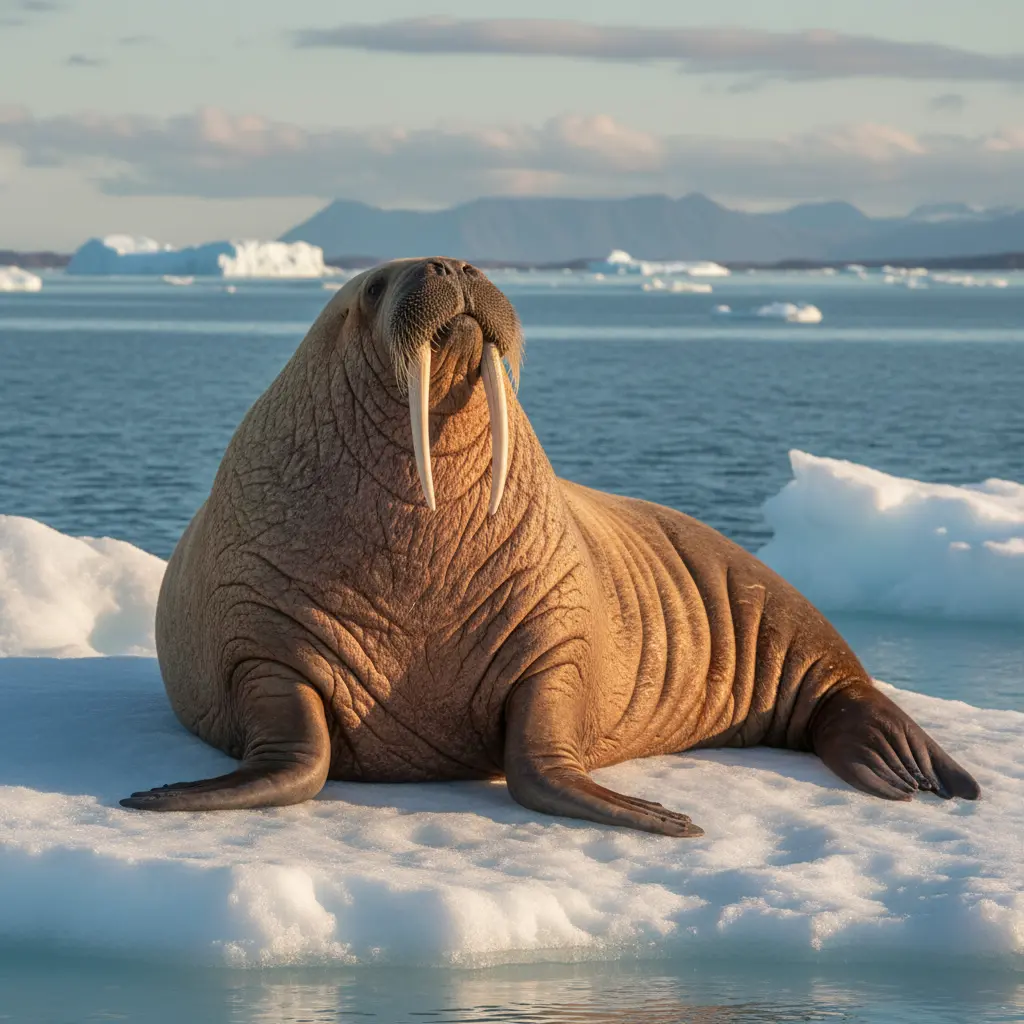
Root decomposition: wal- (related to marine) + rus (a form relating to large). Historical origin: The word has origins in the Old Norse 'hrossvalr' meaning 'horse whale' and passed through Dutch to English. Memory image: Imagine a large sea creature lounging on an ice floe, its whiskered face peeking over the edge as it basks in the sun.
Note 1: These definitions and etymologies are not standard dictionary definitions, but extended explanations provided to help with memorization and understanding of the actual application of words. Through this background information, we strive to make words more vivid and easier to understand, and help you remember their meanings in real life.
Note 2: LexiTalk designs the learning flow around the linguistics principle of “Comprehensible Input.” When learners encounter material that is slightly above their level but still understandable from context, the brain naturally absorbs the language. That’s why we keep every word inside authentic contexts, using examples and associations to help you understand it and use it flexibly.
Read the FAQ explanation of Comprehensible InputWalrus is a large Arctic marine mammal known for its long tusks, prominent whiskers, and thick blubbery body. They gather in social herds on ice floes or near coastal areas, communicating with calls and movements that can be heard far across the water. Walruses use their sensitive mustaches to sense food in the dark, murky water and can dive to forage benthic invertebrates like clams. They breed slowly, and calves stay close to mothers for many months. In popular culture, the image of a walrus often evokes chilly seas, ice, and communal living. In English, walrus is a straightforward noun with little polysemy or metaphorical use.
English often marks number with articles (a/the) and uses plural forms (walruses). Learners may overgeneralize plural rules or confuse with other animals like seals. English also freely uses metaphors or set phrases with animals, which can distract from literal meaning.
What is the meaning of the word 'walrus'?
Which sentence correctly uses the word 'walrus'?
Which word is most similar to 'walrus'?
What is the opposite of the word 'walrus'?
Can you think of a real-life context where someone might mention a walrus?
Download LexiTalk app for personalized learning experience
Download AppCookies
We use cookies for essential site functions, analytics, and ads. You can accept, reject, or manage preferences. Privacy Policy