
washout - Master This Word
Master this word with our 5-step learning method – Learn English in English
Train English Through Brain Routes, Not Translation.
This page helps you stop memorizing isolated translations and start understanding a word through its shared mental image, native-style thinking, and practical training steps.
Master this word with our 5-step learning method – Learn English in English
Example sentences are the start of understanding. Don't rush to memorize. First feel how the word works in a sentence.
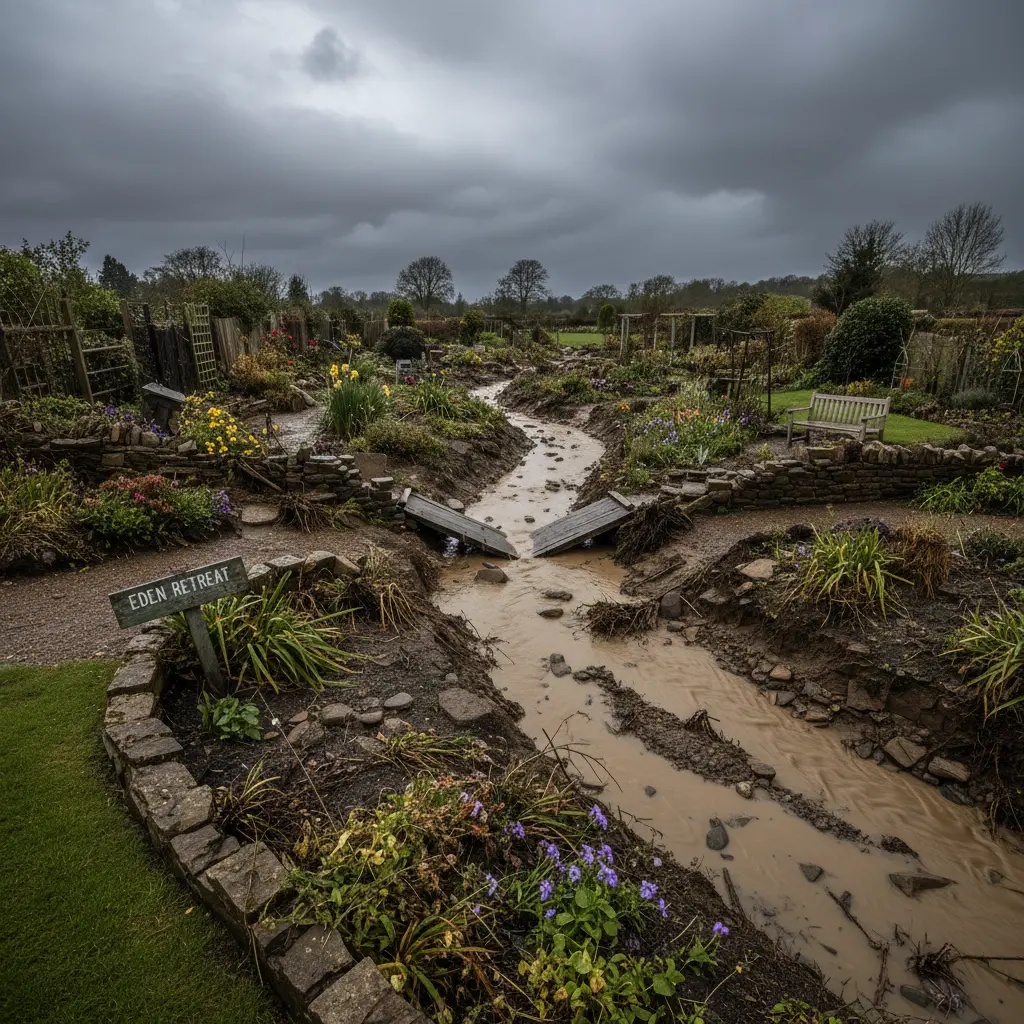
Root decomposition: 'wash' + 'out'. Historical origin: Middle English 'washouten' from 'wash' and 'out'; derived later in the context of erosion and failure. Memory image: Picture a once vibrant garden now ruined by heavy rains, emphasizing the destruction and loss associated with 'washout'.
Note 1: These definitions and etymologies are not standard dictionary definitions, but extended explanations provided to help with memorization and understanding of the actual application of words. Through this background information, we strive to make words more vivid and easier to understand, and help you remember their meanings in real life.
Note 2: LexiTalk designs the learning flow around the linguistics principle of “Comprehensible Input.” When learners encounter material that is slightly above their level but still understandable from context, the brain naturally absorbs the language. That’s why we keep every word inside authentic contexts, using examples and associations to help you understand it and use it flexibly.
Read the FAQ explanation of Comprehensible InputWashout is a noun that can refer to a plan or project that fails, or to heavy rain that causes flooding and erosion. It can describe land or a section of terrain that is washed away during storms. In everyday use, people say a plan or investment has had a washout when outcomes collapse or funds run dry. In weather reporting, a washout describes road closures and flooded fields after prolonged rainfall. The tone is usually negative, implying loss, waste, or damage rather than a minor setback. The term also appears in geology and civil engineering to mark areas particularly vulnerable to erosion.
In English, washout captures a strong sense of dramatic failure or damage, often tied to time pressure or resource loss. Learners tend to confuse it with casual setbacks or with 'wash away' in physical action; remember it is a noun and its sense of disruption is stronger and often more public.
What is the meaning of 'washout'?
Choose the correct usage of 'washout' in a sentence.
Which word is most similar to 'washout'?
What is the opposite of 'washout'?
Can you give an example of a real-life scenario related to this word?
Download LexiTalk app for personalized learning experience
Download AppCookies
We use cookies for essential site functions, analytics, and ads. You can accept, reject, or manage preferences. Privacy Policy