
watt - Master This Word
Master this word with our 5-step learning method – Learn English in English
Train English Through Brain Routes, Not Translation.
This page helps you stop memorizing isolated translations and start understanding a word through its shared mental image, native-style thinking, and practical training steps.
Master this word with our 5-step learning method – Learn English in English
Example sentences are the start of understanding. Don't rush to memorize. First feel how the word works in a sentence.
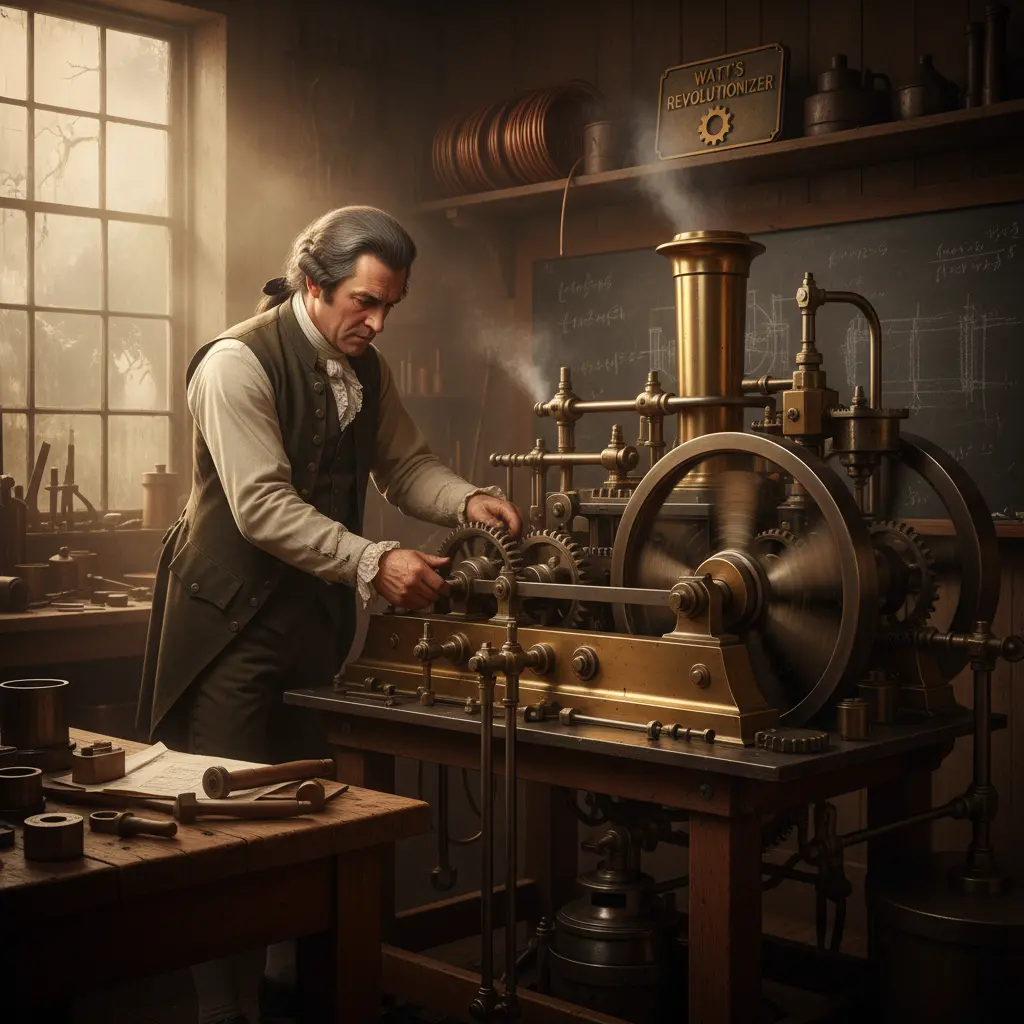
Root decomposition: 'Watt' (named after James Watt). Historical origin: Named in the late 19th century after the Scottish inventor who improved the steam engine. Memory image: Imagine James Watt tinkering in a workshop, revolutionizing energy conversion with a whirring steam engine.
Note 1: These definitions and etymologies are not standard dictionary definitions, but extended explanations provided to help with memorization and understanding of the actual application of words. Through this background information, we strive to make words more vivid and easier to understand, and help you remember their meanings in real life.
Note 2: LexiTalk designs the learning flow around the linguistics principle of “Comprehensible Input.” When learners encounter material that is slightly above their level but still understandable from context, the brain naturally absorbs the language. That’s why we keep every word inside authentic contexts, using examples and associations to help you understand it and use it flexibly.
Read the FAQ explanation of Comprehensible InputWatt is a unit of power, symbol W, equal to one joule per second. It expresses the rate at which energy is transferred or converted, especially in electrical systems. When a charger is rated at 65 W, it tells you how fast it can deliver energy to a device. Watts help compare devices: higher wattage often means more power, and sometimes more heat or faster charging. The term honors James Watt, the 18th‑century Scottish inventor who improved the steam engine and boosted energy conversion efficiency. A memory image: James Watt tinkering in a workshop, watching steam engines hum as energy is transformed into work.
English learners often assume watt equals energy used; the key distinction is that a watt is a rate (power) while energy use is measured in watt-hours or joules over time.
What is the definition of the word 'watt'?
Identify the sentence that correctly uses the word 'watt'.
Which word is most similar to 'watt'?
What is the opposite of 'watt'?
Can you think of a real-life context where electrical power is involved?
Download LexiTalk app for personalized learning experience
Download AppCookies
We use cookies for essential site functions, analytics, and ads. You can accept, reject, or manage preferences. Privacy Policy