wrongs - Master This Word
Master this word with our 5-step learning method – Learn English in English
Train English Through Brain Routes, Not Translation.
This page helps you stop memorizing isolated translations and start understanding a word through its shared mental image, native-style thinking, and practical training steps.
Master this word with our 5-step learning method – Learn English in English
Example sentences are the start of understanding. Don't rush to memorize. First feel how the word works in a sentence.
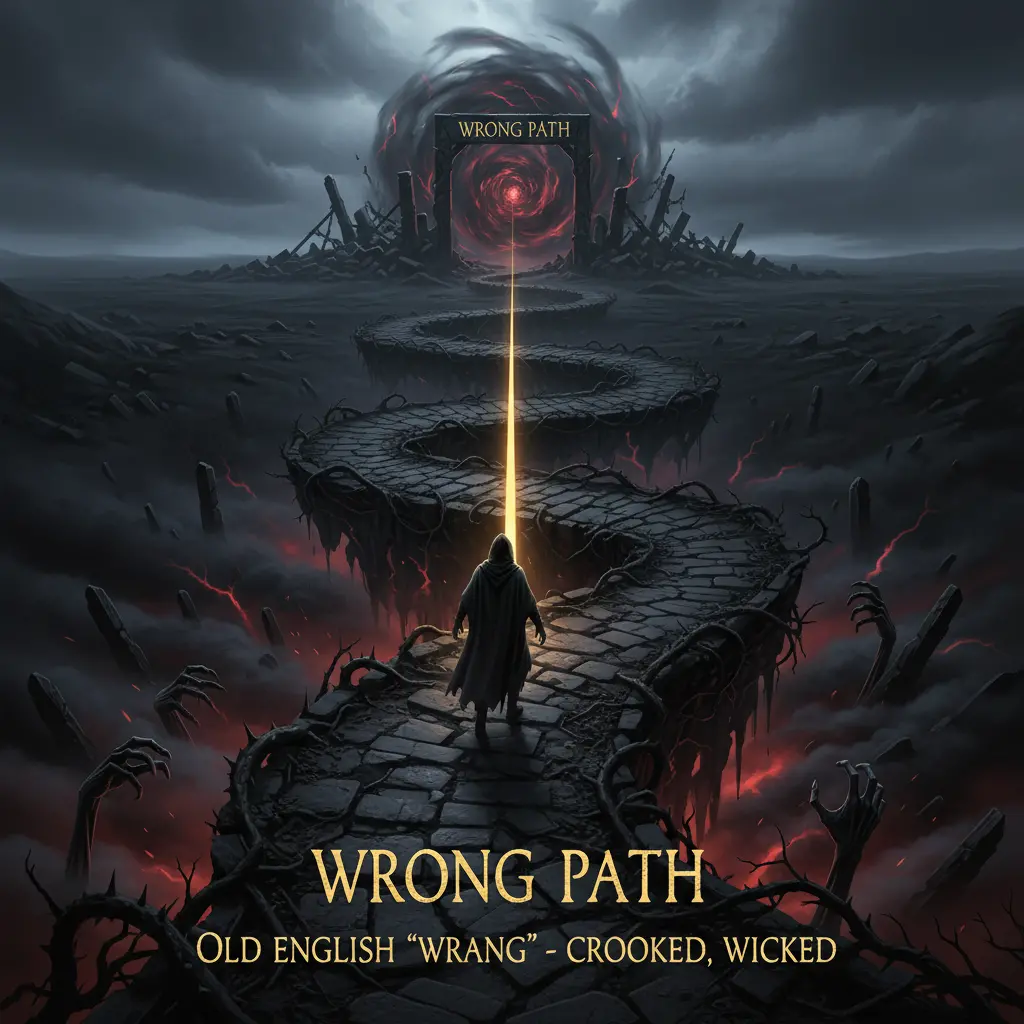
The root 'wrong' comes from Old English 'wrang', meaning 'crooked' or 'wicked'. A vivid image is a crooked line on a path that one tries to follow straight but leads to trouble. This sense extends to actions that deviate from moral correctness.
Note 1: These definitions and etymologies are not standard dictionary definitions, but extended explanations provided to help with memorization and understanding of the actual application of words. Through this background information, we strive to make words more vivid and easier to understand, and help you remember their meanings in real life.
Note 2: LexiTalk designs the learning flow around the linguistics principle of “Comprehensible Input.” When learners encounter material that is slightly above their level but still understandable from context, the brain naturally absorbs the language. That’s why we keep every word inside authentic contexts, using examples and associations to help you understand it and use it flexibly.
Read the FAQ explanation of Comprehensible InputI move the spoon across the plate, testing the balance of flavors. I adjust the seasoning, keeping my eyes on the colors and edges. Tasting again, the kitchen feels off, and a small doubt pushes me—this is wrong. I pull back one idea and change course, letting my hands and eyes guide the next tweak.
Wrong is a versatile word used to describe something not true or correct, something morally bad, or an action done in a dishonest way. As an adjective it can modify facts, beliefs, or behavior, and it often appears in phrases like the wrong answer or the wrong assumption. As a noun it can refer to a harm or injustice, and you can say to do wrong to describe committing a bad act. As an adverb, you usually say wrongly rather than wrong in modern English, for most contexts. The word comes from Old English wrang, meaning crooked or wicked, a sense echoed in the image of a crooked path that leads you astray. Understanding these nuances helps learners choose the right form and tone in different situations.
In English, wrong carries both moral and factual weight. Learners often mix it with incorrect or confuse the adjective with noun forms; keep straight that wrong can imply ethics or accuracy and that adverb forms are usually wrongly or incorrectly.
Download LexiTalk app for personalized learning experience
Download AppCookies
We use cookies for essential site functions, analytics, and ads. You can accept, reject, or manage preferences. Privacy Policy