wry - Master This Word
Master this word with our 5-step learning method – Learn English in English
Train English Through Brain Routes, Not Translation.
This page helps you stop memorizing isolated translations and start understanding a word through its shared mental image, native-style thinking, and practical training steps.
Master this word with our 5-step learning method – Learn English in English
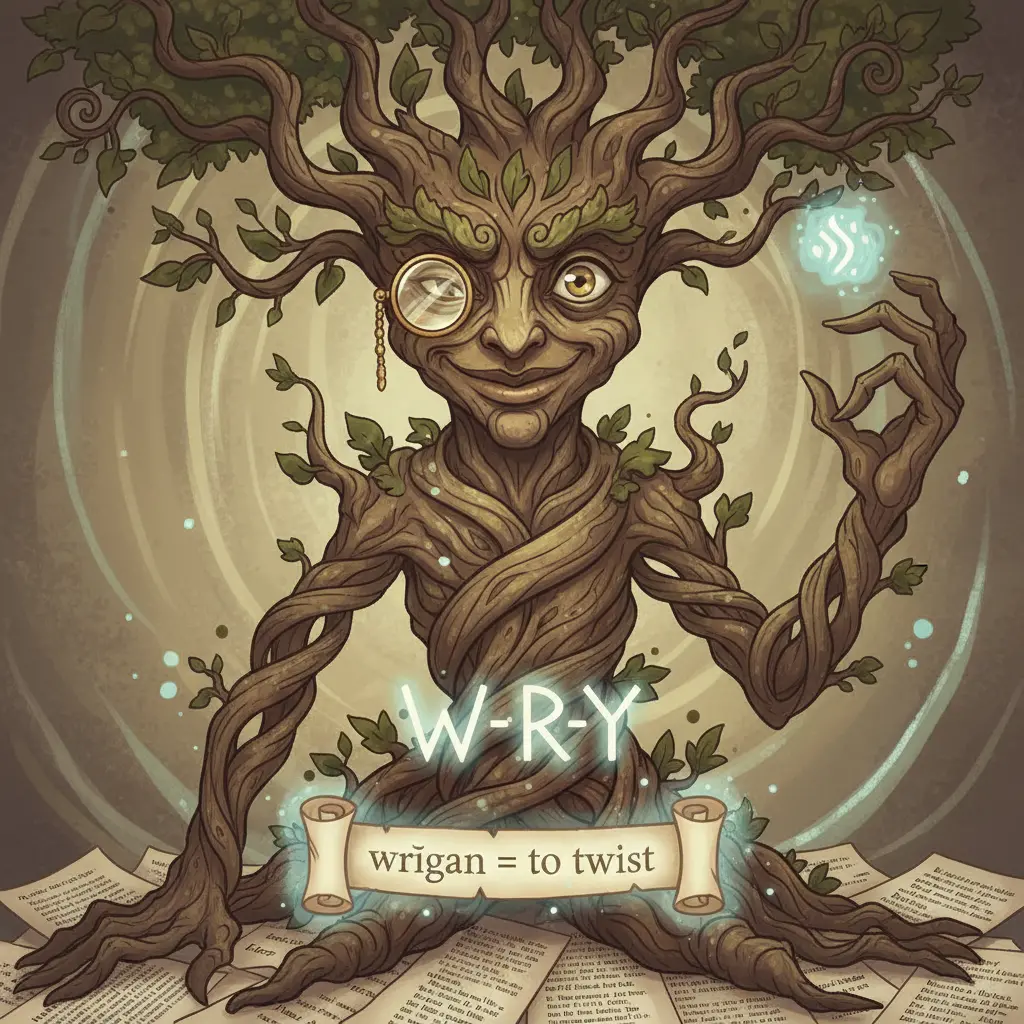
Example sentences are the start of understanding. Don't rush to memorize. First feel how the word works in a sentence.
wry = wry + -y (adjective-forming suffix); Origin: Old English 'wrīgan', meaning 'to twist'. Memory image: Imagine a person making a wry face, twisting their lips to express dry humor or irony.
Note 1: These definitions and etymologies are not standard dictionary definitions, but extended explanations provided to help with memorization and understanding of the actual application of words. Through this background information, we strive to make words more vivid and easier to understand, and help you remember their meanings in real life.
Note 2: LexiTalk designs the learning flow around the linguistics principle of “Comprehensible Input.” When learners encounter material that is slightly above their level but still understandable from context, the brain naturally absorbs the language. That’s why we keep every word inside authentic contexts, using examples and associations to help you understand it and use it flexibly.
Read the FAQ explanation of Comprehensible InputWry describes something twisted or bent, often in an unusual way, but it also characterizes dry humor that relies on irony. When a person has a wry expression, their mouth might tilt at the corners or their eyes narrow, signaling disbelief, sarcasm, or amused cynicism rather than simple cheer. The word can label a perspective, a remark, or a smile that seems clever but subtly critical. In practice, wry humor skewers situations without loud laughter, rewarding readers or listeners who notice the incongruity. Memory aid: picture a smirk that turns a twist of fate into a sly joke rather than a straightforward grin.
English speakers often connect wry with a specific tone: dry, sly, and understated irony. Learners may overstate the humor or misplace it in lively, playful contexts, thinking a wry remark should be loud. Also, wry is not interchangeable with sarcastic cynicism; it carries a subtler bite.
What is the meaning of the word 'wry'?
Which of the following sentences uses 'wry' correctly?
What is a synonym for 'wry'?
What is an antonym for 'wry'?
In what situation would someone demonstrate a 'wry' expression?
Download LexiTalk app for personalized learning experience
Download AppCookies
We use cookies for essential site functions, analytics, and ads. You can accept, reject, or manage preferences. Privacy Policy