
yelling - Master This Word
Master this word with our 5-step learning method – Learn English in English
Train English Through Brain Routes, Not Translation.
This page helps you stop memorizing isolated translations and start understanding a word through its shared mental image, native-style thinking, and practical training steps.
Master this word with our 5-step learning method – Learn English in English
Example sentences are the start of understanding. Don't rush to memorize. First feel how the word works in a sentence.
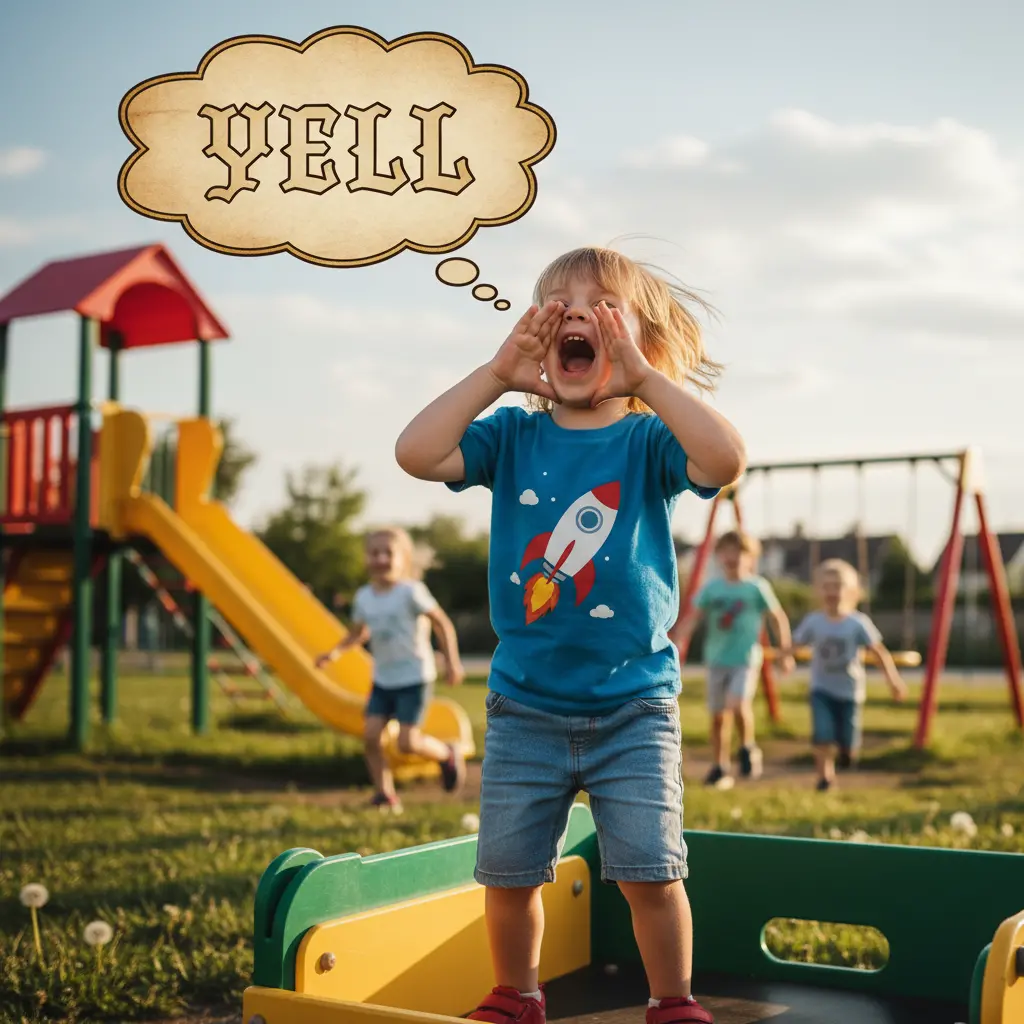
yell = 'yell'; (historical origin: Old English, related to shouting). Memory image: Imagine a child at a playground, energetically shouting to get their friends' attention.
Note 1: These definitions and etymologies are not standard dictionary definitions, but extended explanations provided to help with memorization and understanding of the actual application of words. Through this background information, we strive to make words more vivid and easier to understand, and help you remember their meanings in real life.
Note 2: LexiTalk designs the learning flow around the linguistics principle of “Comprehensible Input.” When learners encounter material that is slightly above their level but still understandable from context, the brain naturally absorbs the language. That’s why we keep every word inside authentic contexts, using examples and associations to help you understand it and use it flexibly.
Read the FAQ explanation of Comprehensible InputYou lean forward and take a big breath. You push your voice up from deep inside, your jaw tightens as the air moves. The sound bursts out, loud and clear, filling the room. In that moment you feel the urge to yell, a surge of push and intent behind the noise.
Yell is a verb meaning to shout loudly, often with strong emotion or urgency. It describes using the voice at a high volume to grab attention, express anger, alarm, excitement, or a command. People yell when they want a message to cut through noise or distance, and the tone can range from scolding to celebration. Yell is stronger than simply shouting or calling out, and it can carry a sense of immediacy or threat. In writing, a yell is often conveyed with exclamation marks or all caps to show volume. Memory image: imagine a child at a playground energetically shouting to get friends' attention.
English speakers often distinguish yell as a high-intensity, emotion-driven action used in urgent or confrontational moments; learners tend to overgeneralize it to any loud sound or use it in polite contexts.
Download LexiTalk app for personalized learning experience
Download AppCookies
We use cookies for essential site functions, analytics, and ads. You can accept, reject, or manage preferences. Privacy Policy