zesty - Master This Word
Master this word with our 5-step learning method – Learn English in English
Train English Through Brain Routes, Not Translation.
This page helps you stop memorizing isolated translations and start understanding a word through its shared mental image, native-style thinking, and practical training steps.
Master this word with our 5-step learning method – Learn English in English
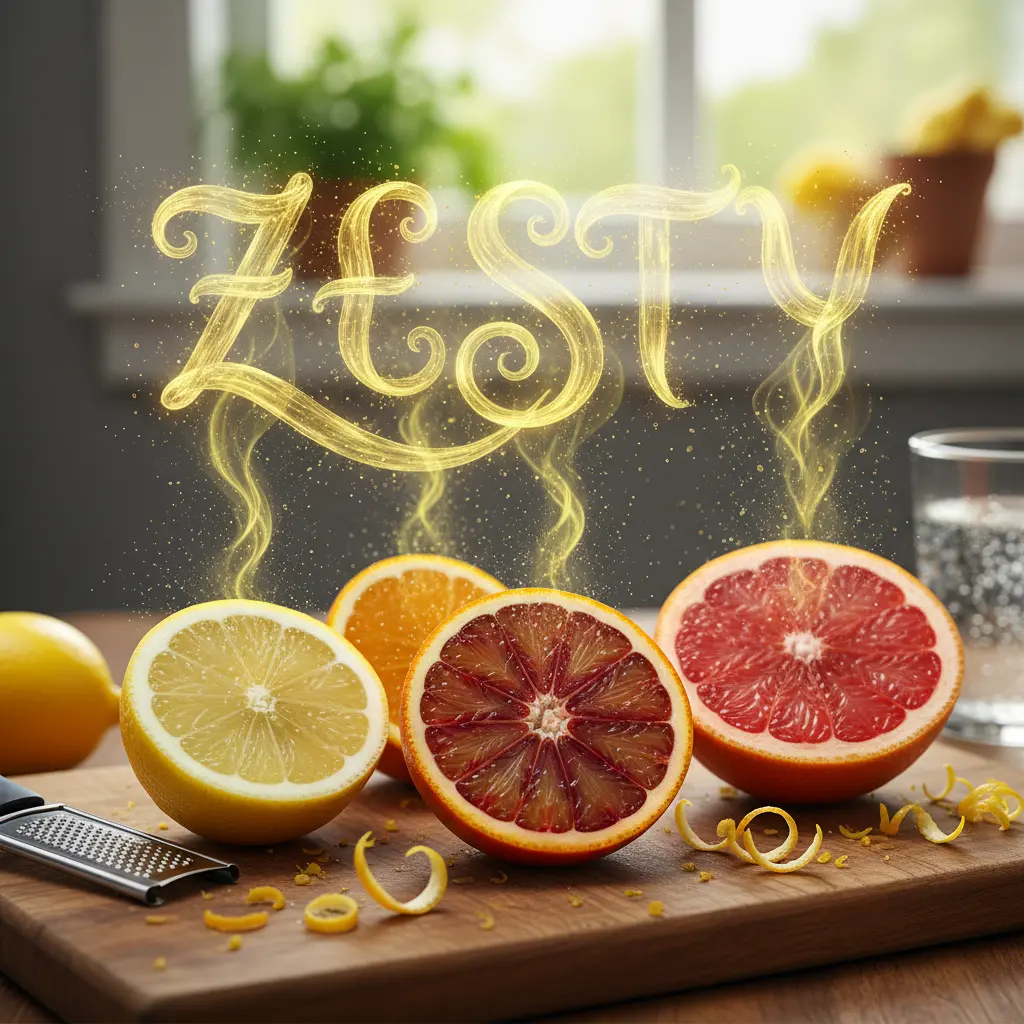
Example sentences are the start of understanding. Don't rush to memorize. First feel how the word works in a sentence.
zesty: (zest + -y) → Originated from Middle English 'zest', from Old French 'zeste', from the Latin 'citrus' meaning 'citrus fruit'. Picture a freshly cut citrus fruit releasing its tangy, invigorating aroma, which is the essence of ‘zesty’.
Note 1: These definitions and etymologies are not standard dictionary definitions, but extended explanations provided to help with memorization and understanding of the actual application of words. Through this background information, we strive to make words more vivid and easier to understand, and help you remember their meanings in real life.
Note 2: LexiTalk designs the learning flow around the linguistics principle of “Comprehensible Input.” When learners encounter material that is slightly above their level but still understandable from context, the brain naturally absorbs the language. That’s why we keep every word inside authentic contexts, using examples and associations to help you understand it and use it flexibly.
Read the FAQ explanation of Comprehensible InputZesty describes something with a bright, tangy flavor that wakes the palate, often suggesting citrus notes that feel lively on the tongue. It can also describe people, performances, or ideas that feel energetic, spirited, and fresh rather than dull. In cooking, a zesty salsa or sauce has a noticeable sharpness that brightens a dish. In conversations about character, a zesty attitude means enthusiasm and a quick, playful energy that draws others in. The sense blends two images: zest from citrus and zest for life. Etymology: from zest, then -y; Middle English via Old French and Latin citrus.
For English speakers, zesty often fuses culinary and energetic imagery, but learners may overextend it to mean simply 'spicy' or apply it to dull things; keep in mind the citrus zing and lively vibe together.
What does the word 'zesty' mean?
Select the sentence that correctly uses 'zesty'.
Which of the following words is most similar to 'zesty'?
What is the opposite of 'zesty'?
Can you think of a real-life context where something could be described as zesty?
Download LexiTalk app for personalized learning experience
Download AppCookies
We use cookies for essential site functions, analytics, and ads. You can accept, reject, or manage preferences. Privacy Policy