carnage 英文例句
例句是你理解詞義的起點,不必急著背誦,先感受它在句子中的用法。
carnage 音標與發音
英式
/ˈkɑːnɪdʒ/
美式
/ˈkɑrnɪdʒ/
carnage 單詞的語源
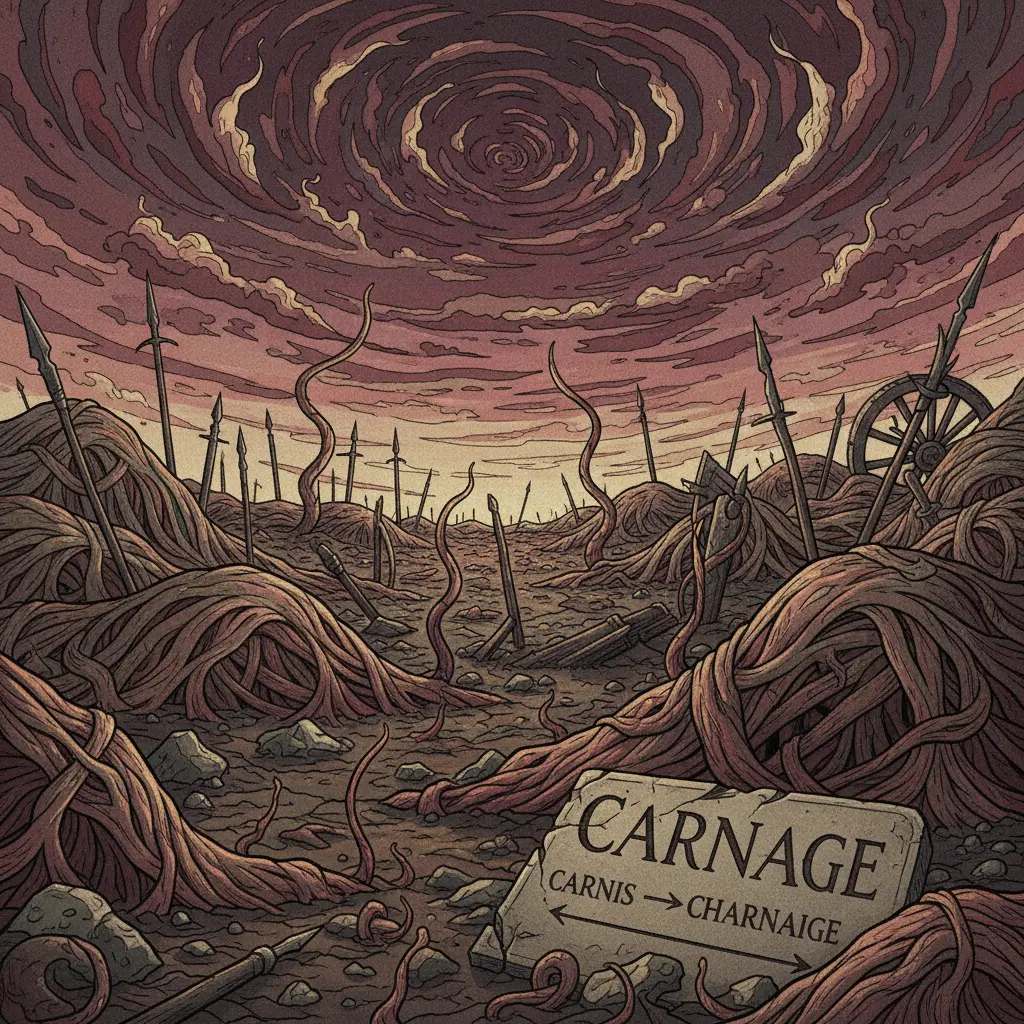
詞根:'carn-'(肉)+後綴'-age'(與……有關)。起源:拉丁文'carnis' -> 古法語'charnaige' -> 英語'carnage'。記憶:想像一片戰場,地上滿是肉體的殘骸,生動地突顯了可怕的毀滅。
註一:這些釋義和詞源並非傳統字典中的標準定義,而是為了幫助記憶和理解單詞的實際應用而提供的擴展解釋。透過這些背景資訊,我們力求讓單詞更加生動、易於理解,並幫助你記住它們在真實生活中的含義。
註二:LexiTalk 在設計學習流程時,遵循語言學中的「可理解輸入」原則。當學習者接觸略高於自己水準、但能從語境中理解的內容時,大腦會自然吸收語言。這就是為什麼我們讓每個單詞都出現在真實語境中,透過例句和聯想幫助你理解並靈活使用。
前往 FAQ 了解「可理解輸入」
真實語境解釋
carnage 在英語中指的是大規模的殺戮與毀滅,常用於描述戰爭、天災或暴力事件之後的慘烈景象。它強調規模與殘酷,常出現在新聞報導、歷史敘述與文學作品中。通常不可數,不能說一個 carnage;可以說 the carnage。常見譯法包括“大屠殺”和“慘烈場面”,但要避免過於露骨或誤解。此詞具有強烈情感色彩,使用時需留意語境的正式性與敏感性。詞源自拉丁語 carne(肉)經由法語傳入英語,暗示屍體與毀滅的聯想。
用法提醒
- 僅在正式或戲劇性情境下使用;不要用於輕微事故。通常不可數,寫作時用“the carnage”,不要說“a carnage”。可與形容詞搭配,如「大規模的、徹底的、廣泛的」。常見於新聞報導與歷史敘述。避免煽情,盡量以事實為依據;如描述具體暴行,可用「大屠殺」等同義詞。
常見誤解
- 表示單一、可數的事件(其實通常不可數)。
- 可用於較小的事件(實際上不能)。
- 語氣中性、臨床(實際上帶有強烈情感重度)。
- 在所有情境下可與“大屠殺”互換(語氣與語義有細微差異)。
- 指涉到人或整體破壞(不僅是人,還包括場景與後果)。
語言思維差異
在華語語境中,carnage 常指極端暴力後的慘烈景象,常見於新聞與歷史文字。學習者易將其誤譯為一般暴力事件,或誤用為可數名詞,需留意語氣與規模的差異。
學習提示
- 搭配 extentsive/utter/widespread 等形容詞以表達規模。
- 記得通常不可數,不說 'a carnage'。
- 用於大規模暴力事件,避免小事故。
- 與 massacre 的語氣與語境區分清楚。
- 多用於正式或新聞風格的表達,避免日常口語化。
- 可與 aftermath、destruction、人員損失等搭配。
五步學習法,用英語來學習英語
步驟1:含義
What is the definition of 'carnage'?
A.A feeling of happiness
B.The killing or wounding of many people in a conflict
C.A type of food product
D.A musical instrument
步驟2:使用
Which sentence uses 'carnage' correctly?
A.The artist's painting depicted a scene of carnage with vibrant colors.
B.After the fall, the athlete experienced carnage in his ankle.
C.The book was intense, filled with such carnage that it was hard to read.
D.They enjoyed a lovely picnic near the park while discussing carnage.
步驟3:同義詞
Which word is most similar to 'carnage'?
A.Massacre
B.Celebration
C.Glee
D.Reunion
步驟4:反義詞
What is the opposite of 'carnage'?
A.Conflict
B.Peace
C.Battle
D.Sorrow
步驟5:掌握
Can you think of a real-life context where 'carnage' would apply?
A.The battlefield was filled with chaos and carnage.
B.The team celebrated their victory at the event, enjoying the festivities.
C.Many people left the event feeling uplifted and happy.
D.After the disaster, the streets were left in disarray, and many lives were lost.
想要練習更多單詞嗎?
下載 LexiTalk 應用程式,獲得個人化學習體驗
下載應用