absurd - Master This Word
Master this word with our 5-step learning method – Learn English in English
Train English Through Brain Routes, Not Translation.
This page helps you stop memorizing isolated translations and start understanding a word through its shared mental image, native-style thinking, and practical training steps.
Master this word with our 5-step learning method – Learn English in English
Example sentences are the start of understanding. Don't rush to memorize. First feel how the word works in a sentence.
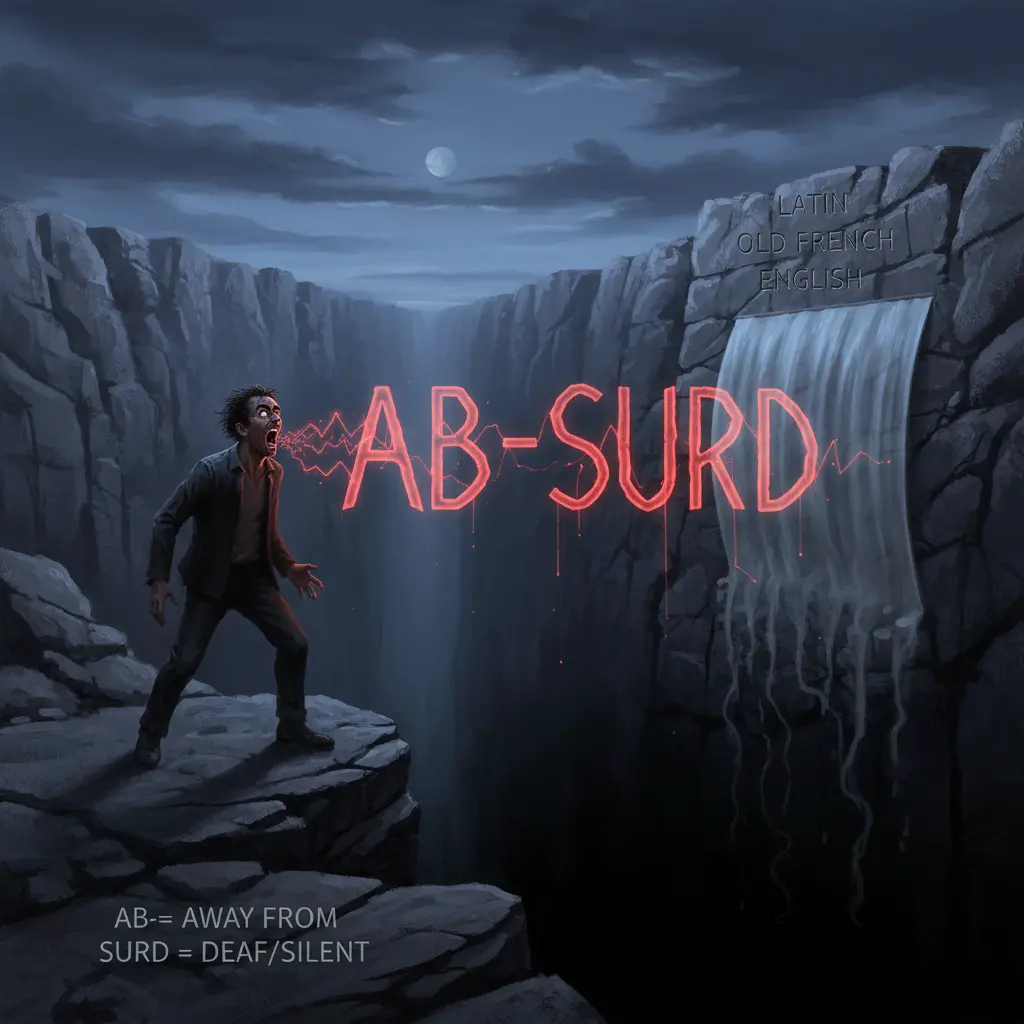
ab- = away from, surd = deaf/silent. Originating from Latin, through Old French into English. Imagine a person shouting an unreasonable statement that echoes back into silence as no one listens.
Note 1: These definitions and etymologies are not standard dictionary definitions, but extended explanations provided to help with memorization and understanding of the actual application of words. Through this background information, we strive to make words more vivid and easier to understand, and help you remember their meanings in real life.
Note 2: LexiTalk designs the learning flow around the linguistics principle of “Comprehensible Input.” When learners encounter material that is slightly above their level but still understandable from context, the brain naturally absorbs the language. That’s why we keep every word inside authentic contexts, using examples and associations to help you understand it and use it flexibly.
Read the FAQ explanation of Comprehensible InputFirst I adjust my stance, shift weight from foot to foot, and push off to start the task. The room changes color as the idea keeps changing, and I hold the line between order and chaos. It feels absurd when the simplest step turns into a detour that makes less sense the longer I go, yet I keep at it, tweaking and testing. By the end I realize the strangest truth comes not from rules but from watching what happens when you push beyond logic.
Absurd describes something so ridiculous or unreasonable that it challenges common sense. It conveys a stronger critique than simply odd or surprising, implying that a situation defies reason or seems impossible to justify. Native speakers use it to call out policies, plans, or statements that make no logical sense or contradict basic facts. The tone can be humorous or scornful depending on context. You might say a proposal is absurd if its costs clearly outweigh the benefits or if it ignores well established evidence. Absurdity and absurdly are common relatives that label such departures from reason.
In English, absu rd is a strong label that often carries a critical, sometimes humorous edge. Learners may overstatement by using absu rd for merely odd things, or miss the weight in formal contexts. English speakers rely on tone and context to balance severity and politeness.
In which sentence is 'absurd' used correctly?
Which word is a synonym of 'absurd'?
What is the opposite of 'absurd'?
In what real-life context might you describe something as 'absurd'?
Download LexiTalk app for personalized learning experience
Download AppCookies
We use cookies for essential site functions, analytics, and ads. You can accept, reject, or manage preferences. Privacy Policy