and - Master This Word
Master this word with our 5-step learning method – Learn English in English
Train English Through Brain Routes, Not Translation.
This page helps you stop memorizing isolated translations and start understanding a word through its shared mental image, native-style thinking, and practical training steps.
Master this word with our 5-step learning method – Learn English in English
Example sentences are the start of understanding. Don't rush to memorize. First feel how the word works in a sentence.
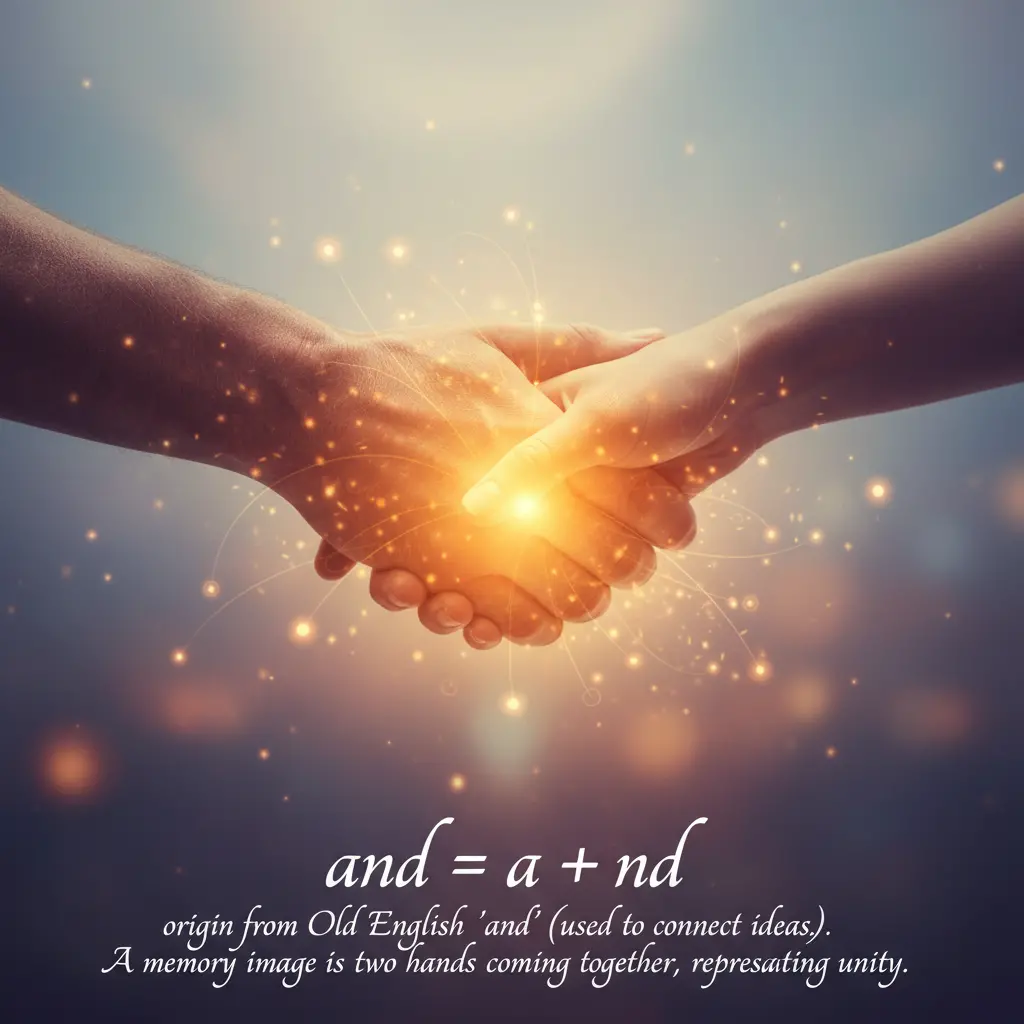
and = a + nd, origin from Old English 'and' (used to connect ideas). A memory image is two hands coming together, representing unity.
Note 1: These definitions and etymologies are not standard dictionary definitions, but extended explanations provided to help with memorization and understanding of the actual application of words. Through this background information, we strive to make words more vivid and easier to understand, and help you remember their meanings in real life.
Note 2: LexiTalk designs the learning flow around the linguistics principle of “Comprehensible Input.” When learners encounter material that is slightly above their level but still understandable from context, the brain naturally absorbs the language. That’s why we keep every word inside authentic contexts, using examples and associations to help you understand it and use it flexibly.
Read the FAQ explanation of Comprehensible InputI grip two ideas and move them closer, a small tug of attention. I place a second thought beside the first, adjust their space until they touch softly. I keep the pace, feel a shift in focus as I turn from one image to the next. And I sense a simple bridge forming between them, a moment of motion that holds both together.
And is the most common English conjunction, used to join words, phrases, and clauses. It can link items in a simple list, such as bread and butter, or introduce a second idea that adds information to what came before, as in she arrived late and apologized. It also shows a relationship between two clauses, often signaling sequence, result, or emphasis, as in it rained all day and we stayed home. English speakers rely on and for smooth, fluent speech, but beginners often overuse it, misplace it at the start of sentences, or confuse it with other connectors like also or too.
Think of and as the default glue in English; it covers lists and additive relations. Learners often overuse it or rely on it when a more precise connector would be clearer, and they may ignore the need for parallel structure in lists.
What is the meaning of the word 'and'?
Which of the following sentences use the word 'and' correctly?
What is a synonym for 'and'?
What is an antonym for 'and'?
How is the word 'and' commonly used in real-life conversations?
Download LexiTalk app for personalized learning experience
Download AppCookies
We use cookies for essential site functions, analytics, and ads. You can accept, reject, or manage preferences. Privacy Policy