angles - Master This Word
Master this word with our 5-step learning method – Learn English in English
Train English Through Brain Routes, Not Translation.
This page helps you stop memorizing isolated translations and start understanding a word through its shared mental image, native-style thinking, and practical training steps.
Master this word with our 5-step learning method – Learn English in English
Example sentences are the start of understanding. Don't rush to memorize. First feel how the word works in a sentence.
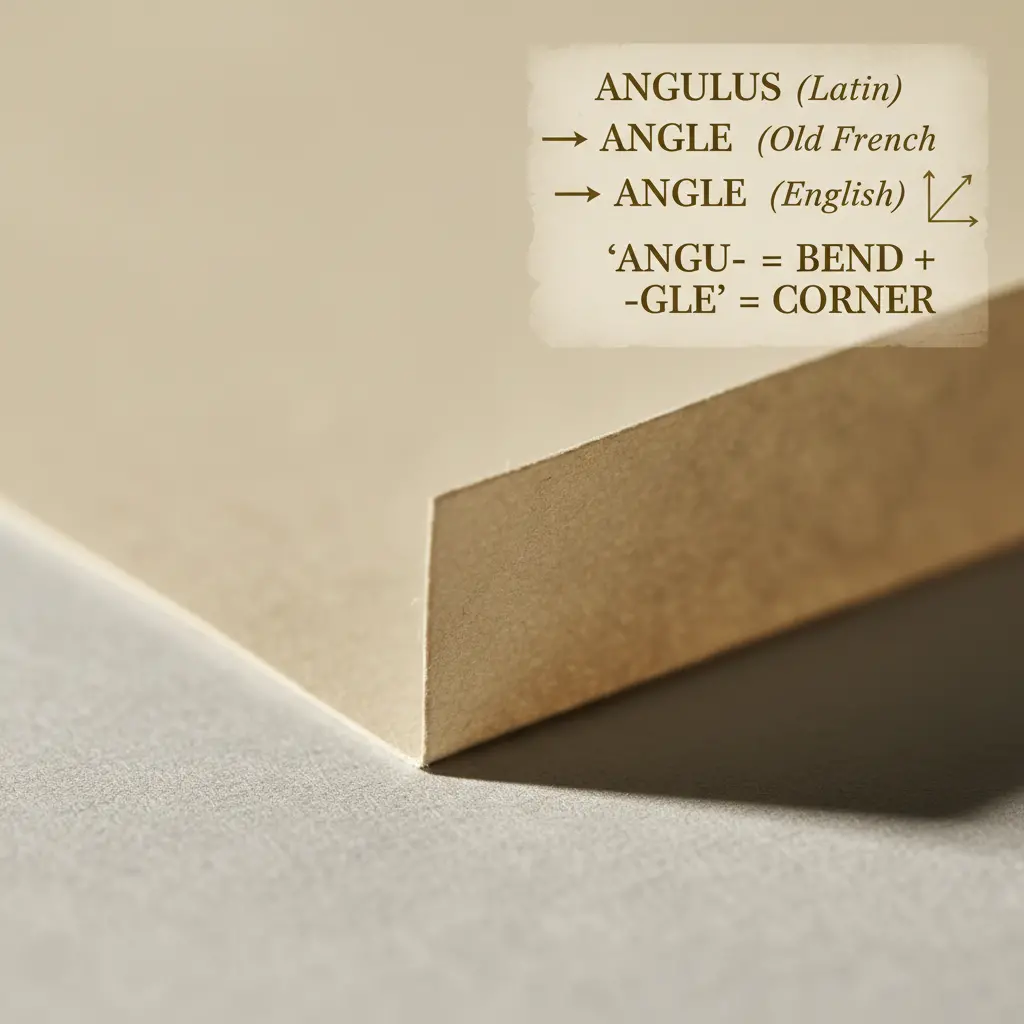
Angle derives from 'angu-' meaning 'bend', and 'gle' indicating 'corner'. Historically, it comes from Latin 'angulus', through Old French 'angle', into English. Imagine a sharp corner, like the edge of a piece of paper bending sharply, to remember 'angle'.
Note 1: These definitions and etymologies are not standard dictionary definitions, but extended explanations provided to help with memorization and understanding of the actual application of words. Through this background information, we strive to make words more vivid and easier to understand, and help you remember their meanings in real life.
Note 2: LexiTalk designs the learning flow around the linguistics principle of “Comprehensible Input.” When learners encounter material that is slightly above their level but still understandable from context, the brain naturally absorbs the language. That’s why we keep every word inside authentic contexts, using examples and associations to help you understand it and use it flexibly.
Read the FAQ explanation of Comprehensible InputI shift my stance and slowly set the angle of my gaze toward the river. I push the boat, pull the oar, and watch the light ripple as I turn my wrist to adjust the line. It hurts a little, the muscles protest, but I keep at it, holding steady even as the current tries to push me off course. Then I see how a new angle—a small change in how I look at the water or the problem—opens a different path, a way to reach the fish or a fresh way to think about the issue.
Angle has three main meanings in English: the space between two intersecting lines or surfaces in geometry; a particular way of approaching or considering something, such as an argument or problem; and the verb angle, meaning to fish by presenting bait, or to fish for something indirectly. In everyday use you might speak of the angle of the sun, the angle from which you view a scene, or you might angle for votes or favors in a tricky way. Learners often confuse angle with corner or mistake the verb for the noun in non-fishing contexts. Remember that 'angle' as a verb is mostly about fishing or seeking indirectly.
Explain to English readers that English often uses angle as both a math term and a metaphor for perspective; learners must actively separate these senses.
What does the word 'angles' mean?
Which sentence uses the word 'angles' correctly?
Which word is most similar to 'angles'?
What is the opposite of 'angles'?
Can you think of a real-life scenario where angles are important?
Download LexiTalk app for personalized learning experience
Download AppCookies
We use cookies for essential site functions, analytics, and ads. You can accept, reject, or manage preferences. Privacy Policy