awkward - Master This Word
Master this word with our 5-step learning method – Learn English in English
Train English Through Brain Routes, Not Translation.
This page helps you stop memorizing isolated translations and start understanding a word through its shared mental image, native-style thinking, and practical training steps.
Master this word with our 5-step learning method – Learn English in English
Example sentences are the start of understanding. Don't rush to memorize. First feel how the word works in a sentence.
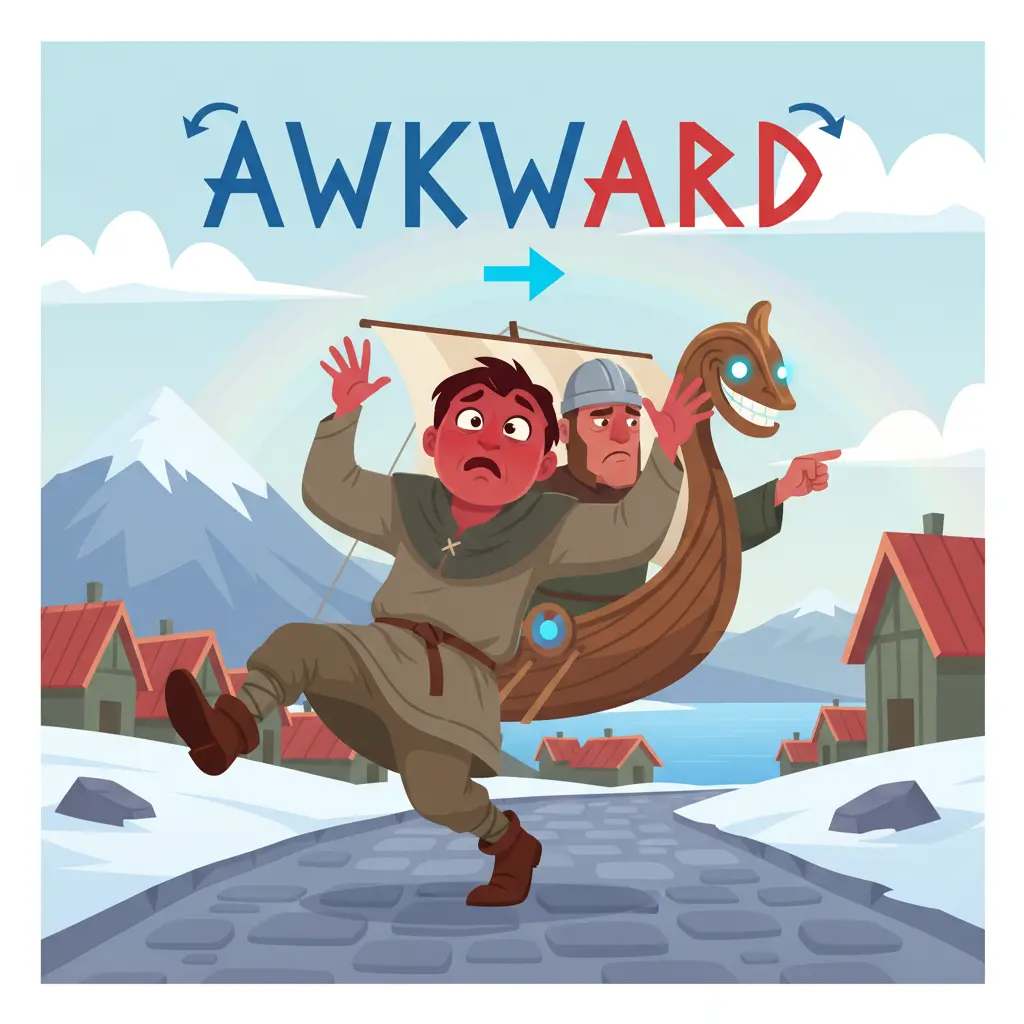
awkward = awk (backward) + ward (direction). Origin: Scandinavian → Middle English. Memory Image: Picture someone trying to walk backward but stumbling and feeling embarrassed.
Note 1: These definitions and etymologies are not standard dictionary definitions, but extended explanations provided to help with memorization and understanding of the actual application of words. Through this background information, we strive to make words more vivid and easier to understand, and help you remember their meanings in real life.
Note 2: LexiTalk designs the learning flow around the linguistics principle of “Comprehensible Input.” When learners encounter material that is slightly above their level but still understandable from context, the brain naturally absorbs the language. That’s why we keep every word inside authentic contexts, using examples and associations to help you understand it and use it flexibly.
Read the FAQ explanation of Comprehensible InputI shift my weight as I reach for a cup, the edge of the table tugging my sleeve just enough to feel off balance. A soft laugh ripples around the room as I miss the mark and stumble into a pause that lasts a second too long. I bite my lip, adjust my stance, and keep a steady voice as I steer the conversation back to familiar ground. In that small moment of awkwardness you notice how a tiny change in posture or pace changes the scene and how we keep going anyway.
Awkward describes things that feel clumsy or ill-fitting, as when you stumble during a dance, drop a mug, or misstep in conversation. It also covers situations that are difficult or uncomfortable to deal with, such as an awkward meeting where a tough topic is suddenly raised or a plan falls apart at the last minute. Socially, awkward can describe people who seem unsure or out of place, like giving a presentation with stilted dialogue or enduring an uncomfortable silence after a joke falls flat. Learners often confuse it with purely physical quience or with embarrassment, missing the broader sense of social awkwardness and uneasy situations.
Explain to an English speaker (meta, keep short)
What is the meaning of the word 'awkward'?
Which sentence uses 'awkward' correctly?
What is a synonym for 'awkward'?
What is an antonym for 'awkward'?
In what real-life situation would someone feel awkward?
Download LexiTalk app for personalized learning experience
Download AppCookies
We use cookies for essential site functions, analytics, and ads. You can accept, reject, or manage preferences. Privacy Policy