
animosity - Master This Word
Master this word with our 5-step learning method – Learn English in English
Train English Through Brain Routes, Not Translation.
This page helps you stop memorizing isolated translations and start understanding a word through its shared mental image, native-style thinking, and practical training steps.
Master this word with our 5-step learning method – Learn English in English
Example sentences are the start of understanding. Don't rush to memorize. First feel how the word works in a sentence.
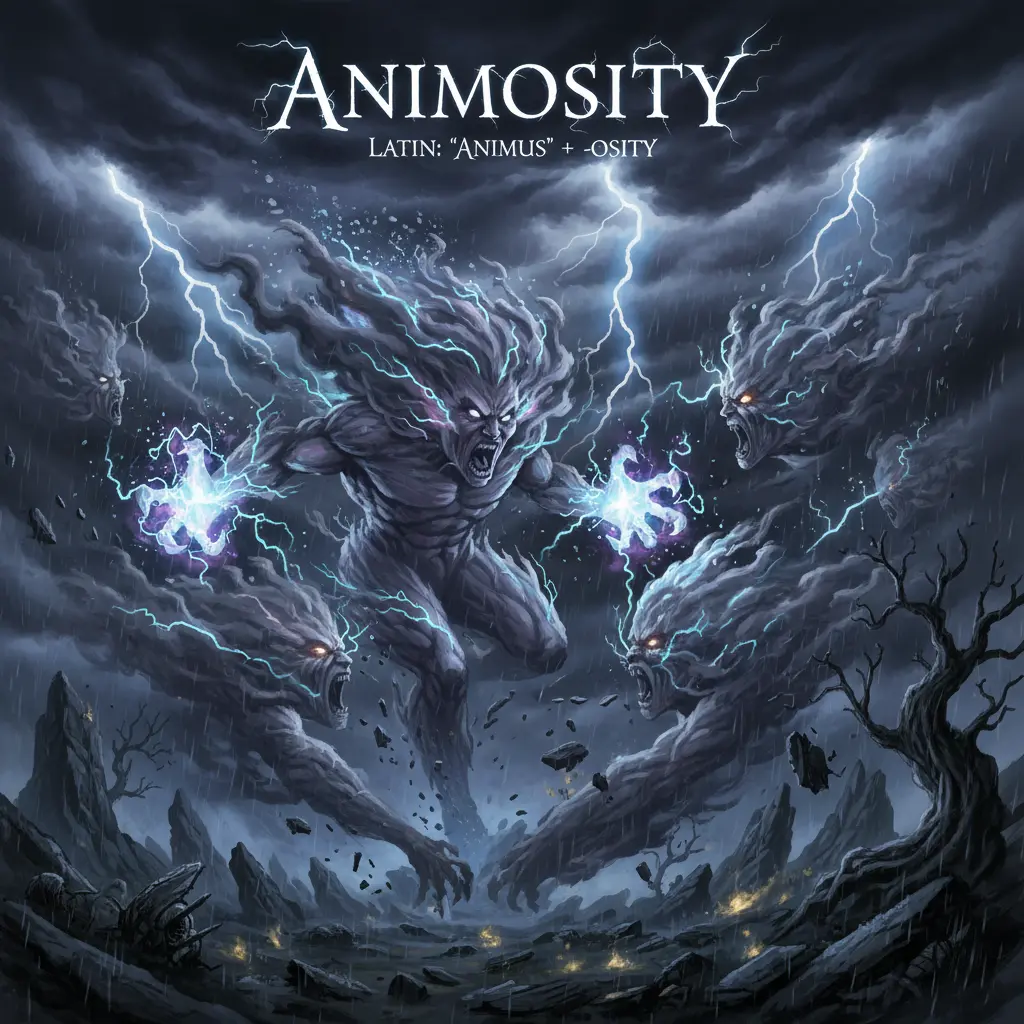
The root decomposes into 'animus' (Latin for 'mind' or 'spirit') + '-osity' (a suffix denoting quality). The term originated from Latin, evolving into French, and then English. Picture a fierce stormy spirit clashing with others, highlighting the intensity of the conflict.
Note 1: These definitions and etymologies are not standard dictionary definitions, but extended explanations provided to help with memorization and understanding of the actual application of words. Through this background information, we strive to make words more vivid and easier to understand, and help you remember their meanings in real life.
Note 2: LexiTalk designs the learning flow around the linguistics principle of “Comprehensible Input.” When learners encounter material that is slightly above their level but still understandable from context, the brain naturally absorbs the language. That’s why we keep every word inside authentic contexts, using examples and associations to help you understand it and use it flexibly.
Read the FAQ explanation of Comprehensible InputAnimosity is a strong feeling of hostility toward someone, often built up through a series of conflicts, betrayals, or perceived slights. It goes beyond ordinary dislike by coloring thoughts, speech, and behavior toward the person, sometimes producing lasting resentment or active opposition. The word emphasizes intensity and duration rather than a momentary mood. In everyday use you might describe a workplace feud, a long-standing rivalry, or political polarization as animosity. It can stem from personal hurt, perceived injustice, or competing interests, and once established it can be hard to shake. The etymology, linking mind and spirit clashing, evokes a stormy inner atmosphere that fuels such hostility.
English speakers often view animosity as a deep, long-lasting form of hostility, sometimes rooted in a clash of interests or values. Learners may overgeneralize it to everyday annoyances or treat it as merely “anger.” In English, animosity pairs naturally with toward/against, and it commonly appears in discussions of conflicts, rivalries, or politics.
What is the meaning of 'animosity'?
In which sentence is 'animosity' used correctly?
Which word is a synonym of 'animosity'?
What is the opposite of 'animosity'?
How might 'animosity' manifest in a workplace setting?
Download LexiTalk app for personalized learning experience
Download AppCookies
We use cookies for essential site functions, analytics, and ads. You can accept, reject, or manage preferences. Privacy Policy