annoys - Master This Word
Master this word with our 5-step learning method – Learn English in English
Train English Through Brain Routes, Not Translation.
This page helps you stop memorizing isolated translations and start understanding a word through its shared mental image, native-style thinking, and practical training steps.
Master this word with our 5-step learning method – Learn English in English
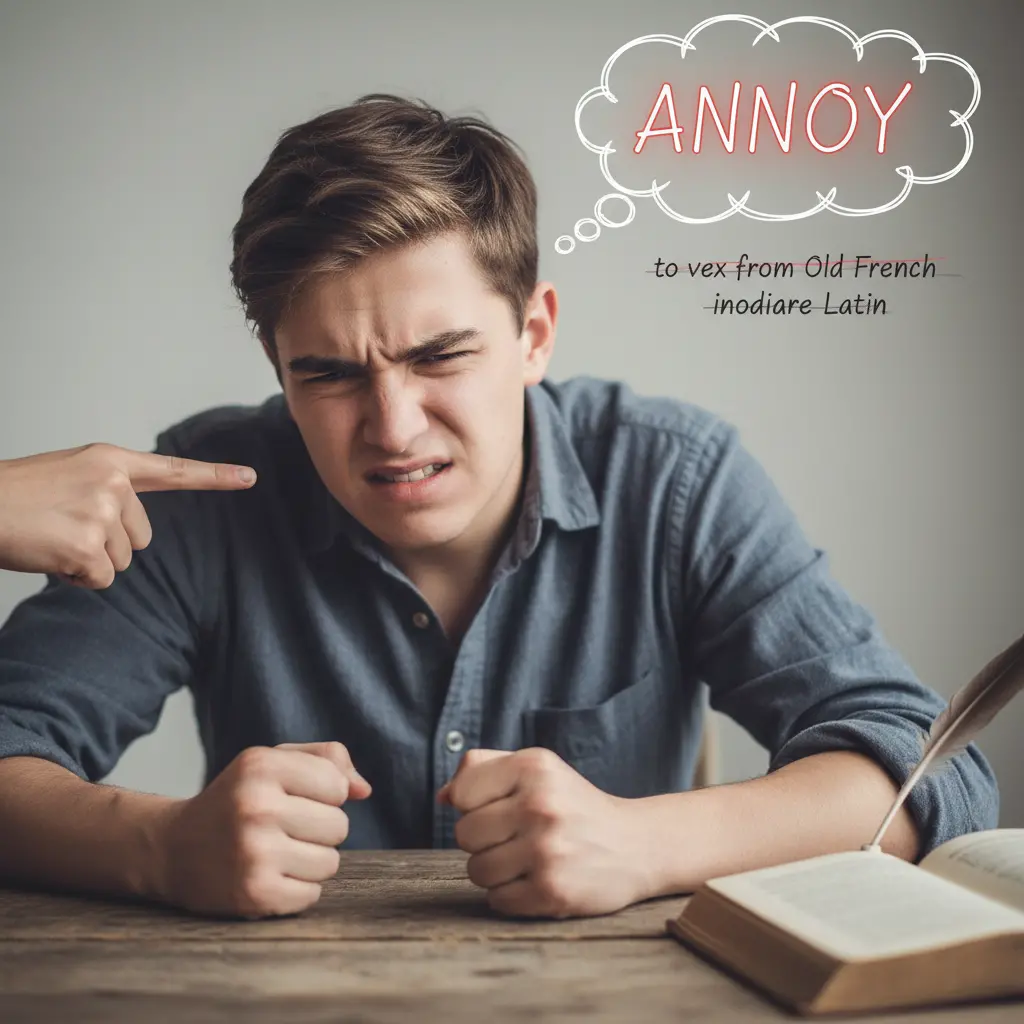
Example sentences are the start of understanding. Don't rush to memorize. First feel how the word works in a sentence.
an- = 'to' + noy = 'vex' (from Old French); rooted in Latin 'inodiare', meaning to annoy. Picture someone poking you repeatedly, making you feel increasingly frustrated.
Note 1: These definitions and etymologies are not standard dictionary definitions, but extended explanations provided to help with memorization and understanding of the actual application of words. Through this background information, we strive to make words more vivid and easier to understand, and help you remember their meanings in real life.
Note 2: LexiTalk designs the learning flow around the linguistics principle of “Comprehensible Input.” When learners encounter material that is slightly above their level but still understandable from context, the brain naturally absorbs the language. That’s why we keep every word inside authentic contexts, using examples and associations to help you understand it and use it flexibly.
Read the FAQ explanation of Comprehensible InputI shift my weight and turn a bit, trying to find a little space in the crowded train. I push against the shoulder in front of me and pull back when the car sways, adjusting my stance to stay calm. A noisy buzz fills the car and a quick cough makes my teeth clench. I keep telling myself to stay steady, letting the small move of patience carry me through the moment.
Annoy means to irritate or bother someone in a mild, persistent way. It describes behavior that wears on a person’s patience rather than a single sharp insult. In practice, you use annoy for repeated actions, like someone tapping a pen, or a loud roommate who keeps talking during your favorite show. It sits between bother and irritate in intensity, with annoyance often feeling tame but nagging. Native speakers typically pair it with a person or situation: 'It annoys me when he interrupts.' People sometimes confuse it with irritate (stronger or more physical discomfort) or with bother (often softer). Remember that the subject is affected by the action, not the action itself.
Think in English-linked intensity: English tends to mark mild, persistent irritation as annoy or bother, emphasizing behavior rather than emotion. Learners often map it to a general irritation, missing that annoy targets the behavior and its repetition.
Download LexiTalk app for personalized learning experience
Download AppCookies
We use cookies for essential site functions, analytics, and ads. You can accept, reject, or manage preferences. Privacy Policy