
anthropology - Master This Word
Master this word with our 5-step learning method – Learn English in English
Train English Through Brain Routes, Not Translation.
This page helps you stop memorizing isolated translations and start understanding a word through its shared mental image, native-style thinking, and practical training steps.
Master this word with our 5-step learning method – Learn English in English
Example sentences are the start of understanding. Don't rush to memorize. First feel how the word works in a sentence.
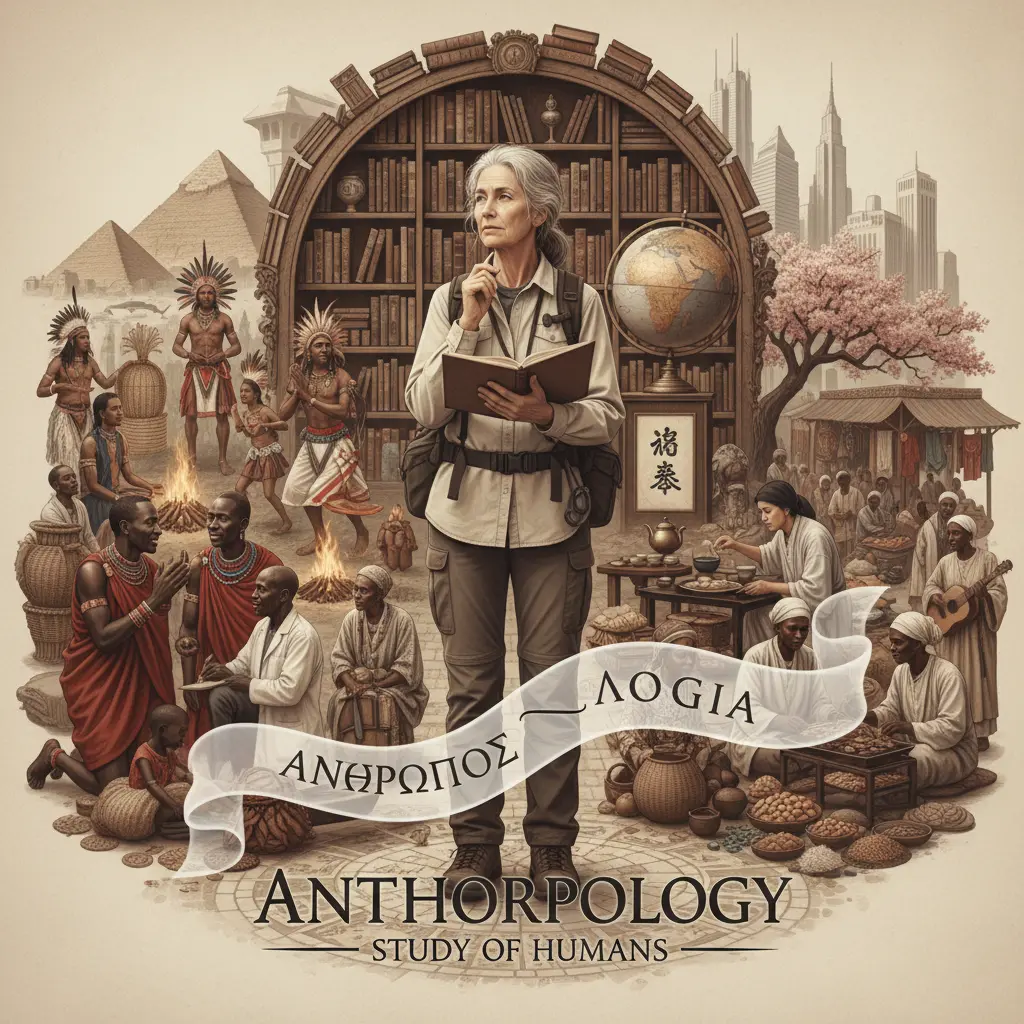
Anthropo- from Greek 'anthropos' meaning 'human' + -logy from Greek 'logia' meaning 'study'; it traces back through Latin to English. Visualize a scholar surrounded by diverse humans and cultures, exploring their lives and customs.
Note 1: These definitions and etymologies are not standard dictionary definitions, but extended explanations provided to help with memorization and understanding of the actual application of words. Through this background information, we strive to make words more vivid and easier to understand, and help you remember their meanings in real life.
Note 2: LexiTalk designs the learning flow around the linguistics principle of “Comprehensible Input.” When learners encounter material that is slightly above their level but still understandable from context, the brain naturally absorbs the language. That’s why we keep every word inside authentic contexts, using examples and associations to help you understand it and use it flexibly.
Read the FAQ explanation of Comprehensible InputAnthropology is the study of human beings, past and present, and of how they live, think, and organize their worlds. It combines archaeology, cultural analysis, linguistic study, and physical anthropology to explain why people behave the way they do, and how societies change over time. Fieldwork is common, often with long stays among the communities being studied, learning local languages and customs. Anthropologists ask questions about kinship, religion, food, work, and power, and they compare cultures to identify universal patterns as well as local differences. The term comes from Greek roots meaning 'human' and 'study'.
Explain to an English speaker: Anthropology is broad and comparative, blending humanities and sciences; emphasize fieldwork and cross-cultural methods, and distinguish it from sociology or history.
What is the meaning of 'anthropology'?
In which of the following sentences is 'anthropology' used correctly?
Which word is most similar to 'anthropology'?
Which word is the opposite of 'anthropology'?
How does 'anthropology' apply in real-world situations?
Download LexiTalk app for personalized learning experience
Download AppCookies
We use cookies for essential site functions, analytics, and ads. You can accept, reject, or manage preferences. Privacy Policy