anticipation - Master This Word
Master this word with our 5-step learning method – Learn English in English
Train English Through Brain Routes, Not Translation.
This page helps you stop memorizing isolated translations and start understanding a word through its shared mental image, native-style thinking, and practical training steps.
Master this word with our 5-step learning method – Learn English in English
Example sentences are the start of understanding. Don't rush to memorize. First feel how the word works in a sentence.
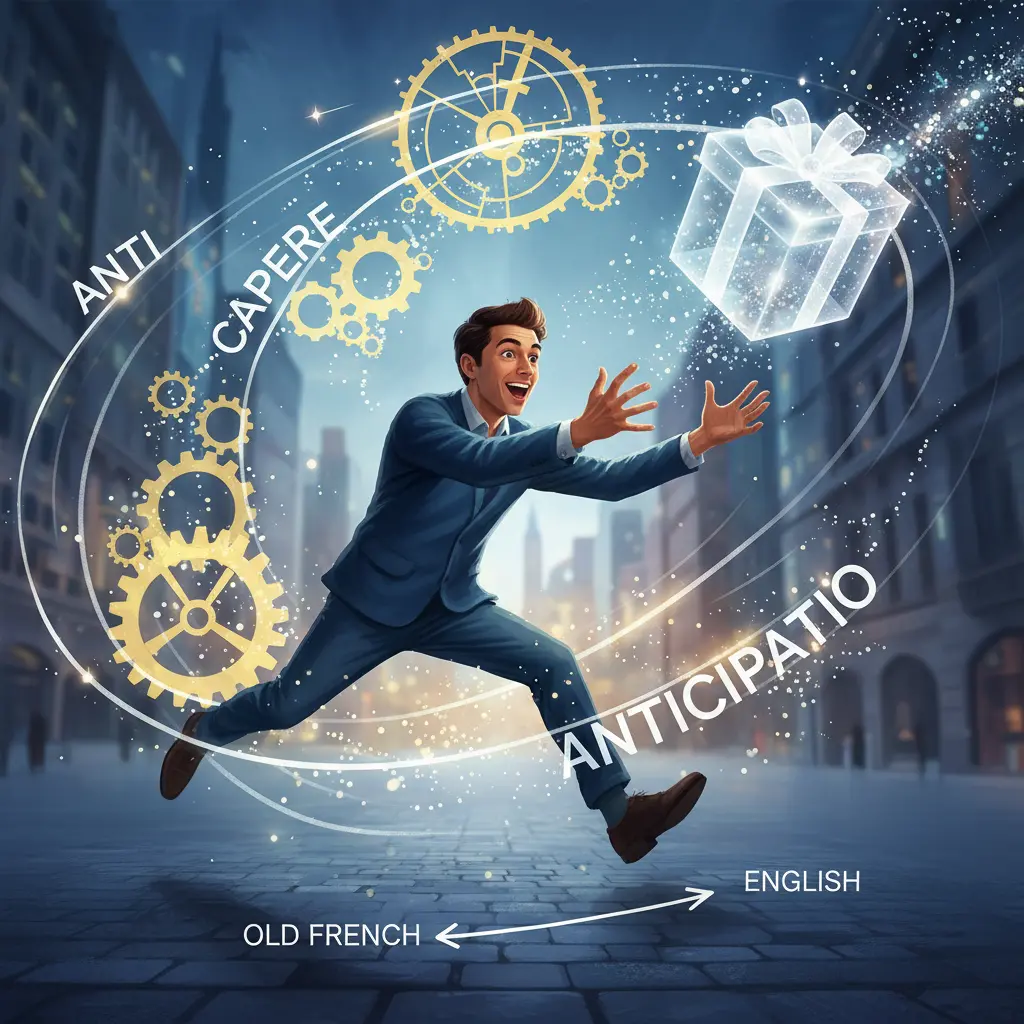
anti- = against, capere = to seize; Latin 'anticipatio' → Old French 'anticipation' → English. Imagine a person eagerly reaching out to catch an upcoming event like a surprise package before it lands.
Note 1: These definitions and etymologies are not standard dictionary definitions, but extended explanations provided to help with memorization and understanding of the actual application of words. Through this background information, we strive to make words more vivid and easier to understand, and help you remember their meanings in real life.
Note 2: LexiTalk designs the learning flow around the linguistics principle of “Comprehensible Input.” When learners encounter material that is slightly above their level but still understandable from context, the brain naturally absorbs the language. That’s why we keep every word inside authentic contexts, using examples and associations to help you understand it and use it flexibly.
Read the FAQ explanation of Comprehensible InputAnticipation is the state of waiting for something you expect, often with excitement, suspense, or even nerves about what will happen next. It can refer to the act of anticipating as a mental process, or to the emotion you feel before a forthcoming event. In use, you might speak of the anticipation of good news, the anticipation before a performance, or the natural expectation that something will occur. Learners should note that anticipation pairs with phrases like 'anticipation of' or 'anticipate' as a verb, and that the sense can be positive or anxious depending on context.
Anticipation blends both mental forecasting and emotional response in English, so learners should note the distinction between predicting something will happen (cognitive) and the feeling of looking forward to it (emotional). Prepositions matter: anticipation of something vs anticipation for an event. Avoid confusing with planning ahead; anticipation can exist even when you cannot influence the outcome.
What is the meaning of 'anticipation'?
Which of the following is a correct usage of 'anticipation'?
Which word is a synonym for 'anticipation'?
In what real-world scenario would you experience 'anticipation'?
Can you think of a situation in your life where 'anticipation' played a significant role?
English Learning Listening Content
Listen NowDownload LexiTalk app for personalized learning experience
Download AppCookies
We use cookies for essential site functions, analytics, and ads. You can accept, reject, or manage preferences. Privacy Policy