
artifacts - Master This Word
Master this word with our 5-step learning method – Learn English in English
Train English Through Brain Routes, Not Translation.
This page helps you stop memorizing isolated translations and start understanding a word through its shared mental image, native-style thinking, and practical training steps.
Master this word with our 5-step learning method – Learn English in English
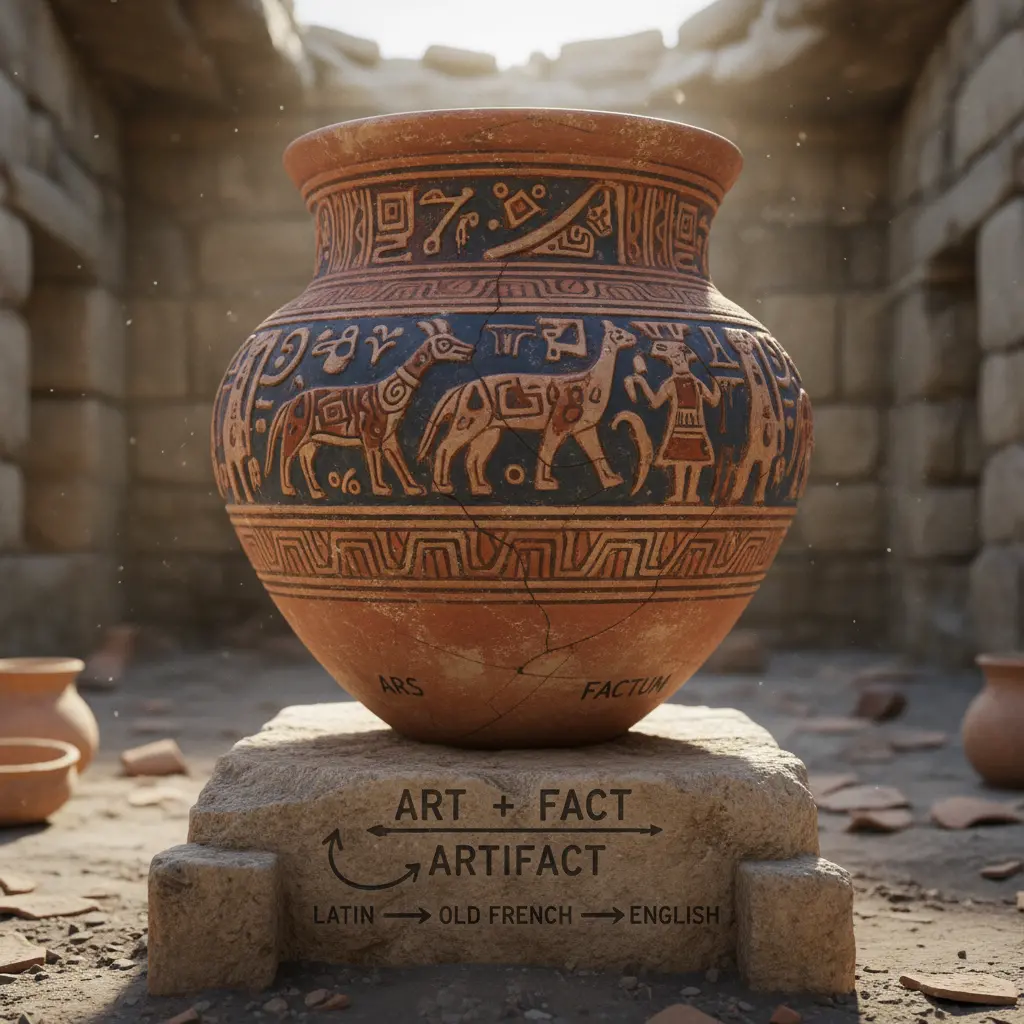
Example sentences are the start of understanding. Don't rush to memorize. First feel how the word works in a sentence.
Root decomposition: art + fact (art = skill, fact = made). Historical origin: Latin → Old French → English. Memory image: Picture an ancient pot created by skilled artisans, representing the craftsmanship of past cultures.
Note 1: These definitions and etymologies are not standard dictionary definitions, but extended explanations provided to help with memorization and understanding of the actual application of words. Through this background information, we strive to make words more vivid and easier to understand, and help you remember their meanings in real life.
Note 2: LexiTalk designs the learning flow around the linguistics principle of “Comprehensible Input.” When learners encounter material that is slightly above their level but still understandable from context, the brain naturally absorbs the language. That’s why we keep every word inside authentic contexts, using examples and associations to help you understand it and use it flexibly.
Read the FAQ explanation of Comprehensible InputAn artifact is a human-made object that holds historical, cultural, or archaeological interest. It can be a tool, a piece of pottery, a piece of jewelry, or a ceremonial item that reveals how people lived, worked, and expressed themselves in the past. Artifacts are valued not just for their beauty, but for the information they carry about technology, trade, social structure, and daily life. When learning English, notice how we pair artifact with adjectives like cultural or archaeological, and how it contrasts with relic or remnant in some contexts. Think of artifact as a crafted object that survives through time rather than something found by accident.
For English learners, artifacts are often seen as tangible pieces of history; learners may overemphasize age and miss how context changes usage (cultural vs archaeological).
Download LexiTalk app for personalized learning experience
Download AppCookies
We use cookies for essential site functions, analytics, and ads. You can accept, reject, or manage preferences. Privacy Policy