museum - Master This Word
Master this word with our 5-step learning method – Learn English in English
Train English Through Brain Routes, Not Translation.
This page helps you stop memorizing isolated translations and start understanding a word through its shared mental image, native-style thinking, and practical training steps.
Master this word with our 5-step learning method – Learn English in English
Example sentences are the start of understanding. Don't rush to memorize. First feel how the word works in a sentence.
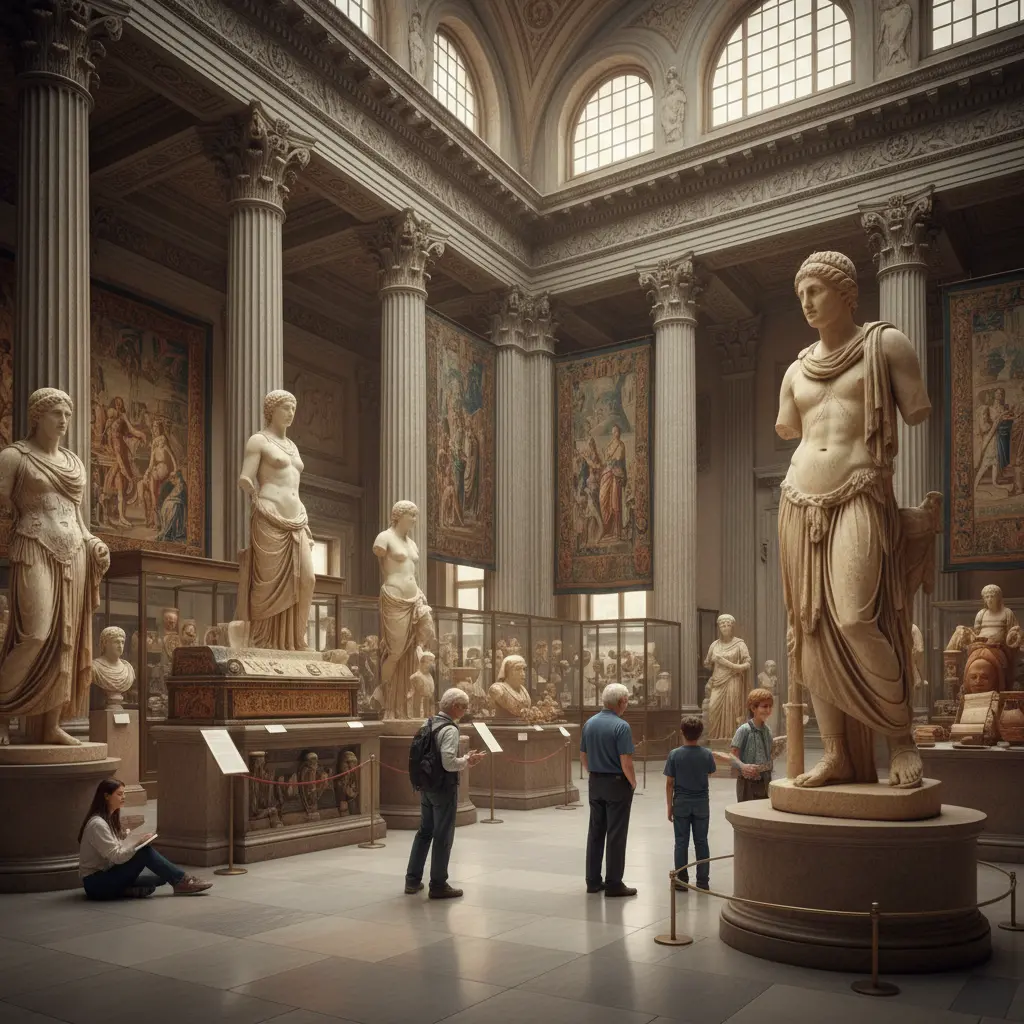
Muse- (from Greek: 'mousa' meaning 'a source of inspiration') + -um (Latin noun suffix). Historical origin: Latin 'museum' (referring to a place of study) → Old French 'musée' → English 'museum'. Memory image: Imagine walking through a grand hall filled with ancient artifacts, where each piece inspires new thoughts and ideas.
Note 1: These definitions and etymologies are not standard dictionary definitions, but extended explanations provided to help with memorization and understanding of the actual application of words. Through this background information, we strive to make words more vivid and easier to understand, and help you remember their meanings in real life.
Note 2: LexiTalk designs the learning flow around the linguistics principle of “Comprehensible Input.” When learners encounter material that is slightly above their level but still understandable from context, the brain naturally absorbs the language. That’s why we keep every word inside authentic contexts, using examples and associations to help you understand it and use it flexibly.
Read the FAQ explanation of Comprehensible InputI push the museum doors and step into the hush. I move from case to case, letting the light shift as I go and my thoughts adjust to what I see. I turn a corner and a sculpture changes my pace; I keep choosing where to look, where to stand. I set my gaze on a detail, hold my breath for a moment, and let the scene teach me how the objects live in the room.
Museums are places that house and display objects of artistic, historical, or scientific interest, preserving them for public education and enjoyment. A building may host a permanent collection alongside temporary exhibitions that highlight different themes, eras, or artists. Museums often employ curators, educators, and docents who guide visitors and interpret objects for diverse audiences. People visit to learn about cultures, scientific discoveries, or local history, and to see famous works up close or to participate in workshops. While some museums require tickets or timed entries, many offer free days or family programs. For language learners, phrases like visit a museum, museum collection, and museum curator are useful anchors for discussing culture and learning.
Museum is seen as a public, educational space where objects are preserved and interpreted for learning. English tends to pair museum with verbs of visiting and education, and learners may think of museums mainly as art galleries or places to see famous works, missing the research and curatorial aspects.
What is the meaning of the word 'museum'?
How is the word 'museum' used in a sentence?
Which word is similar to 'museum'?
What is the opposite of 'museum'?
Can you think of a real-life context where you might visit a museum?
Download LexiTalk app for personalized learning experience
Download AppCookies
We use cookies for essential site functions, analytics, and ads. You can accept, reject, or manage preferences. Privacy Policy