
baffles - Master This Word
Master this word with our 5-step learning method – Learn English in English
Train English Through Brain Routes, Not Translation.
This page helps you stop memorizing isolated translations and start understanding a word through its shared mental image, native-style thinking, and practical training steps.
Master this word with our 5-step learning method – Learn English in English
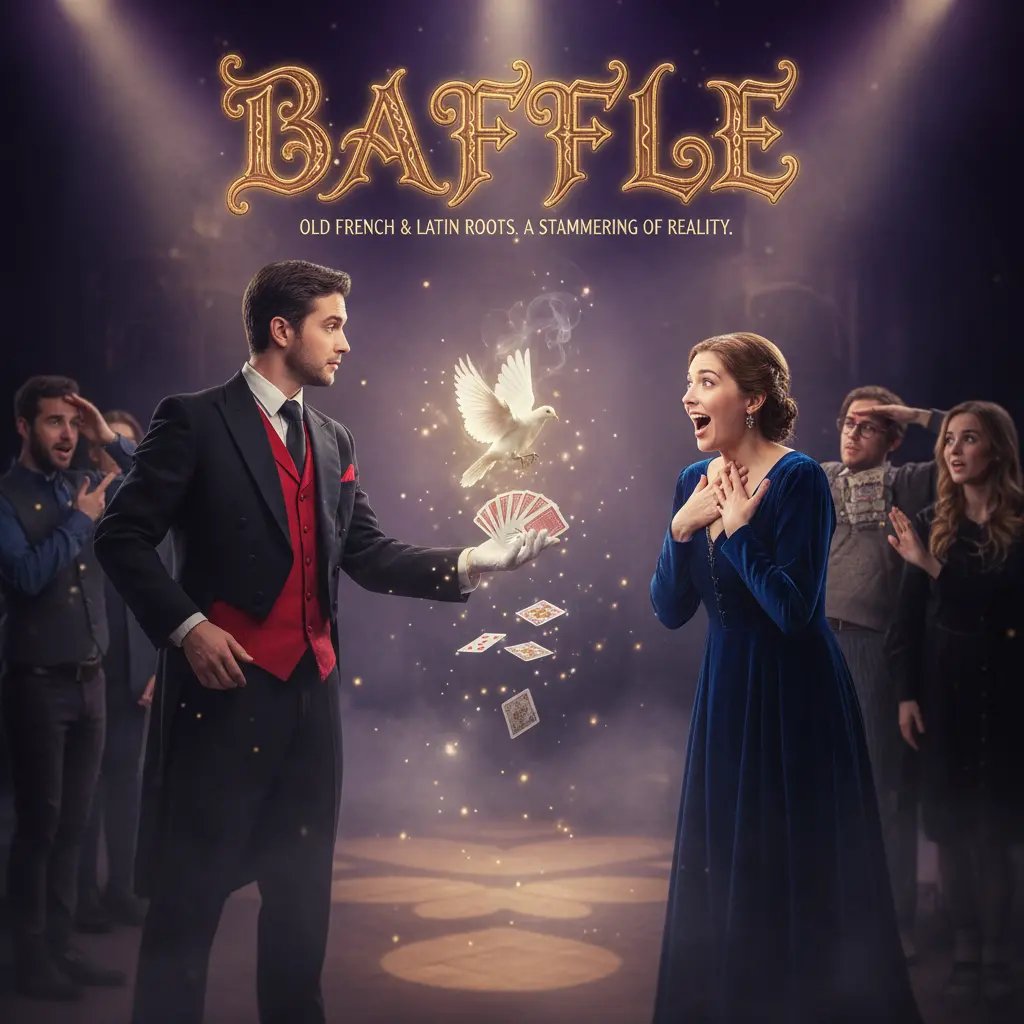
Example sentences are the start of understanding. Don't rush to memorize. First feel how the word works in a sentence.
The word 'baffle' may be decomposed into the root 'baffle' (to stammer), showing confusion. It has roots in Middle English and was influenced by Old French and Latin origins. Imagine a magician causing a person to be confused by unexpected tricks, which creates a lasting wonder.
Note 1: These definitions and etymologies are not standard dictionary definitions, but extended explanations provided to help with memorization and understanding of the actual application of words. Through this background information, we strive to make words more vivid and easier to understand, and help you remember their meanings in real life.
Note 2: LexiTalk designs the learning flow around the linguistics principle of “Comprehensible Input.” When learners encounter material that is slightly above their level but still understandable from context, the brain naturally absorbs the language. That’s why we keep every word inside authentic contexts, using examples and associations to help you understand it and use it flexibly.
Read the FAQ explanation of Comprehensible InputBaffle is a versatile verb that covers several closely related ideas. Primarily, it means to confuse or perplex someone, leaving them at a loss for what to think or do. It can also mean to defeat or thwart someone's efforts, as when a clever obstacle baffles a challenger or a plan is foiled by an unexpected complication. In a more formal sense, it can mean to prevent from being understood, such as when a complex explanation seems to baffle listeners. The word carries a sense of bewilderment rather than anger, and it often appears with objects like 'the question baffled me' or 'the riddle baffled the crowd'.
For English learners, baffle often straddles confusion, obstruction, and thwarting. It’s less about anger and more about cognitive barriers. Learners sometimes mix it with confuse or perplex, or fail to use the 'be baffled' construction.
Download LexiTalk app for personalized learning experience
Download AppCookies
We use cookies for essential site functions, analytics, and ads. You can accept, reject, or manage preferences. Privacy Policy