
balderdash - Master This Word
Master this word with our 5-step learning method – Learn English in English
Train English Through Brain Routes, Not Translation.
This page helps you stop memorizing isolated translations and start understanding a word through its shared mental image, native-style thinking, and practical training steps.
Master this word with our 5-step learning method – Learn English in English
Example sentences are the start of understanding. Don't rush to memorize. First feel how the word works in a sentence.
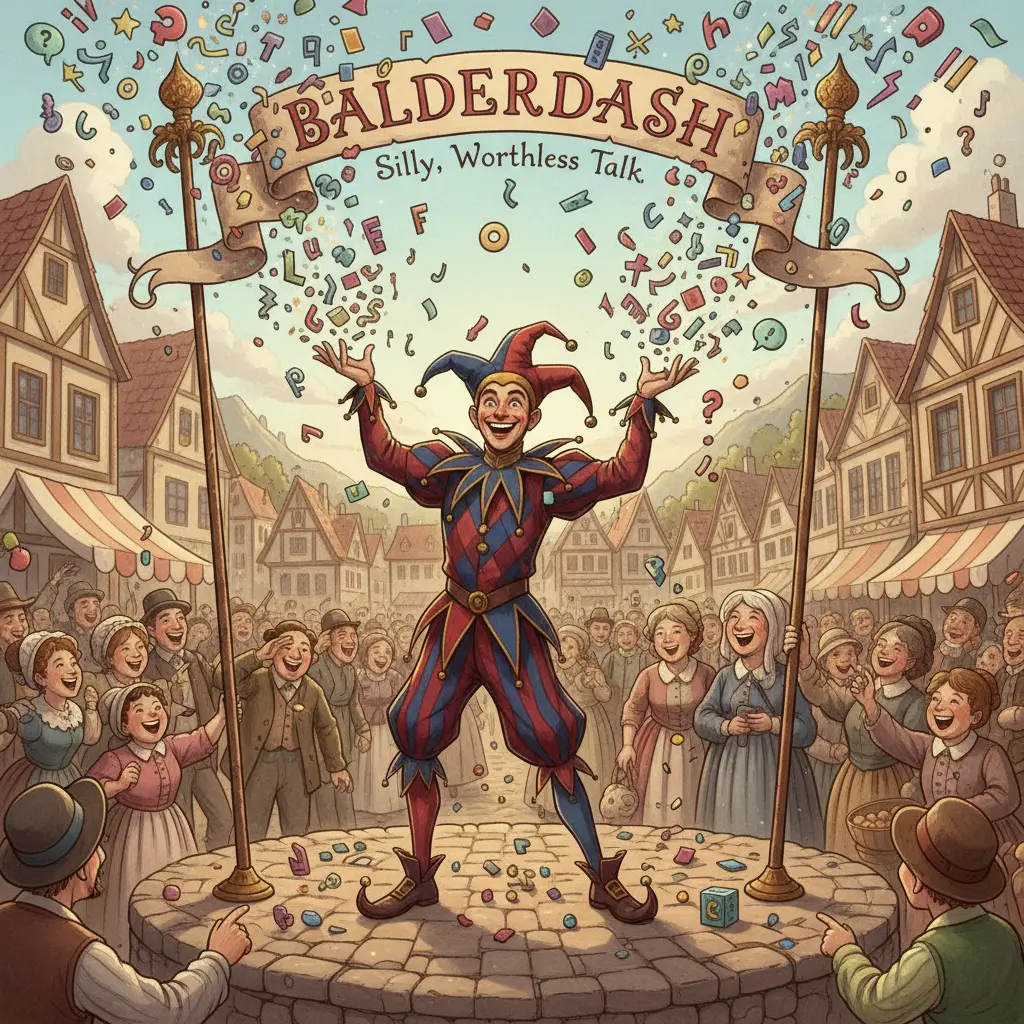
1. Root decomposition: 'balder' (a playful option) + 'dash' (to throw). 2. Historical origin: from early 19th century, possibly from dialectal roots in Europe. 3. Memory image: picture a jester throwing nonsense like confetti in the air, illustrating how silly and worthless such talk can be.
Note 1: These definitions and etymologies are not standard dictionary definitions, but extended explanations provided to help with memorization and understanding of the actual application of words. Through this background information, we strive to make words more vivid and easier to understand, and help you remember their meanings in real life.
Note 2: LexiTalk designs the learning flow around the linguistics principle of “Comprehensible Input.” When learners encounter material that is slightly above their level but still understandable from context, the brain naturally absorbs the language. That’s why we keep every word inside authentic contexts, using examples and associations to help you understand it and use it flexibly.
Read the FAQ explanation of Comprehensible InputBalderdash is an old-fashioned, playful noun meaning nonsense or foolish talk. It’s used to dismiss statements that are unfounded, exaggerated, or simply ridiculous, but with a wink rather than a harsh insult. You’ll hear balderdash in witty banter, period dramas, or editorials that aim to puncture empty rhetoric. The tone is light and humorous, yet it signals clear disapproval of talk that lacks substance. While common in casual speech, it’s less frequent in formal writing, where stronger words like nonsense or falsehoods might be preferred. Remember the image of a jester tossing confetti of pointless words when you hear balderdash.
Balderdash is a playful, old-fashioned pejorative in English. Learners often treat it as a direct synonym of 'nonsense,' but it carries a humorous, lightly dismissive register and can sound familiar, even theatrical, rather than strictly factual. Pay attention to tone and context; using balderdash in a serious debate can read as flippant.
What is the definition of 'balderdash'?
Which of the following sentences uses 'balderdash' correctly?
Which word is most similar to 'balderdash'?
What is the opposite of 'balderdash'?
Can you think of a real-life context where someone might use the word 'balderdash'?
Download LexiTalk app for personalized learning experience
Download AppCookies
We use cookies for essential site functions, analytics, and ads. You can accept, reject, or manage preferences. Privacy Policy