bankruptcy - Master This Word
Master this word with our 5-step learning method – Learn English in English
Train English Through Brain Routes, Not Translation.
This page helps you stop memorizing isolated translations and start understanding a word through its shared mental image, native-style thinking, and practical training steps.
Master this word with our 5-step learning method – Learn English in English
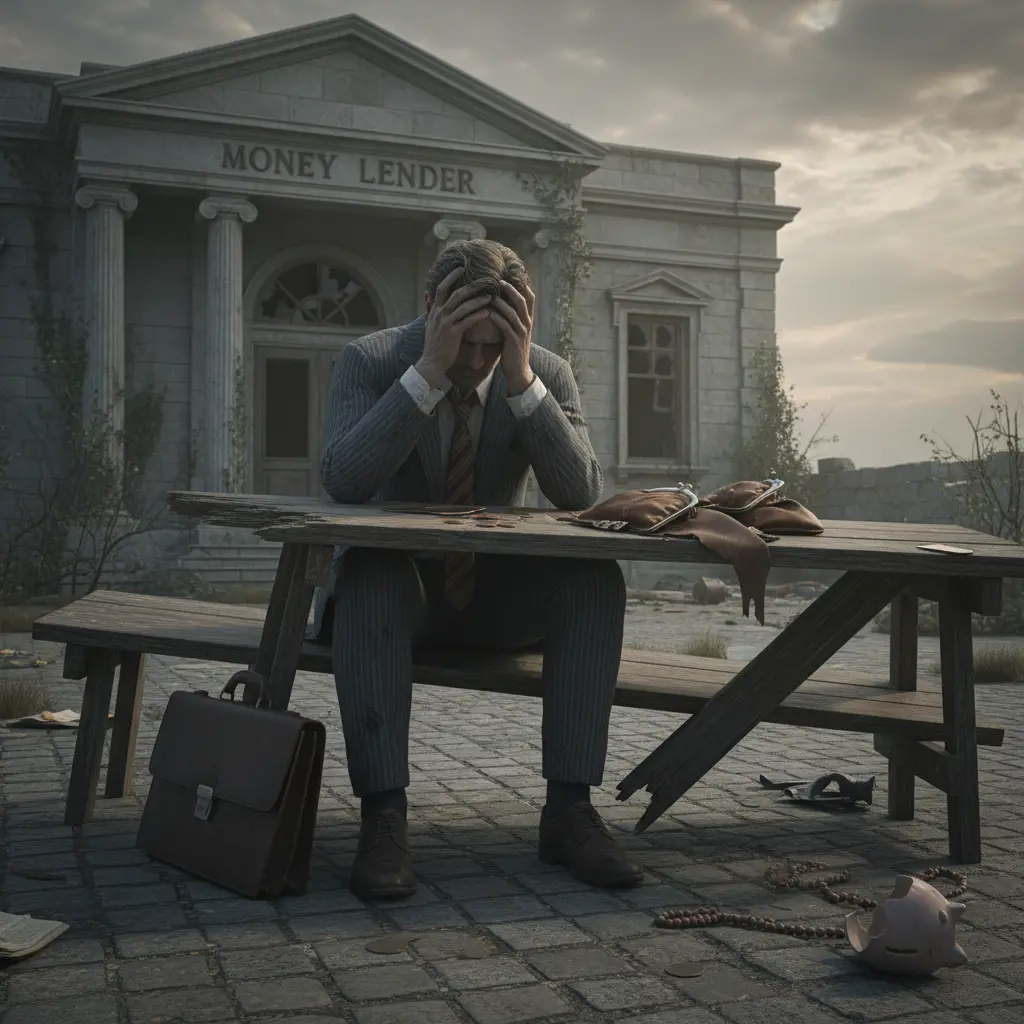
Example sentences are the start of understanding. Don't rush to memorize. First feel how the word works in a sentence.
bank + rupt = to break; 'bankrupt' originally referred to a 'broken bench' in reference to a banker’s inability to conduct business. Imagine a banker sitting at a broken table with no money to lend.
Note 1: These definitions and etymologies are not standard dictionary definitions, but extended explanations provided to help with memorization and understanding of the actual application of words. Through this background information, we strive to make words more vivid and easier to understand, and help you remember their meanings in real life.
Note 2: LexiTalk designs the learning flow around the linguistics principle of “Comprehensible Input.” When learners encounter material that is slightly above their level but still understandable from context, the brain naturally absorbs the language. That’s why we keep every word inside authentic contexts, using examples and associations to help you understand it and use it flexibly.
Read the FAQ explanation of Comprehensible InputI push a folder toward me, then move the papers to chase the numbers under the lamp. I adjust my plan, hold a breath, and turn the page toward a heavier decision. The room tightens, the air feels thin, and I set a boundary that keeps the people who depend on me in mind. In that moment the word lands as a real weight, a sign of what you can save, what you have to pause, and what you must face next.
Bankruptcy is a legal status in which a person or business cannot repay debts. It triggers a formal process where assets may be used to satisfy creditors, and different chapters or procedures govern the outcome. For individuals, bankruptcy can lead to debt discharge after court review; for companies, it may involve liquidation or a reorganization plan. The term is more formal and regulated than everyday expressions like being “broke,” and it carries long-term consequences for credit and future borrowing. Learners should distinguish bankruptcy from insolvency, a broader state of inability to pay that does not always involve a formal filing.
For English, bankruptcy is a formal legal noun with long-term credit implications; learners often confuse bankrupt as a noun and mix up with insolvency.
What is the meaning of 'bankruptcy'?
Which sentence uses 'bankruptcy' correctly?
What is a synonym for 'bankruptcy'?
What is an antonym for 'bankruptcy'?
In what real-life situation might 'bankruptcy' occur?
Download LexiTalk app for personalized learning experience
Download AppCookies
We use cookies for essential site functions, analytics, and ads. You can accept, reject, or manage preferences. Privacy Policy