
basks - Master This Word
Master this word with our 5-step learning method – Learn English in English
Train English Through Brain Routes, Not Translation.
This page helps you stop memorizing isolated translations and start understanding a word through its shared mental image, native-style thinking, and practical training steps.
Master this word with our 5-step learning method – Learn English in English
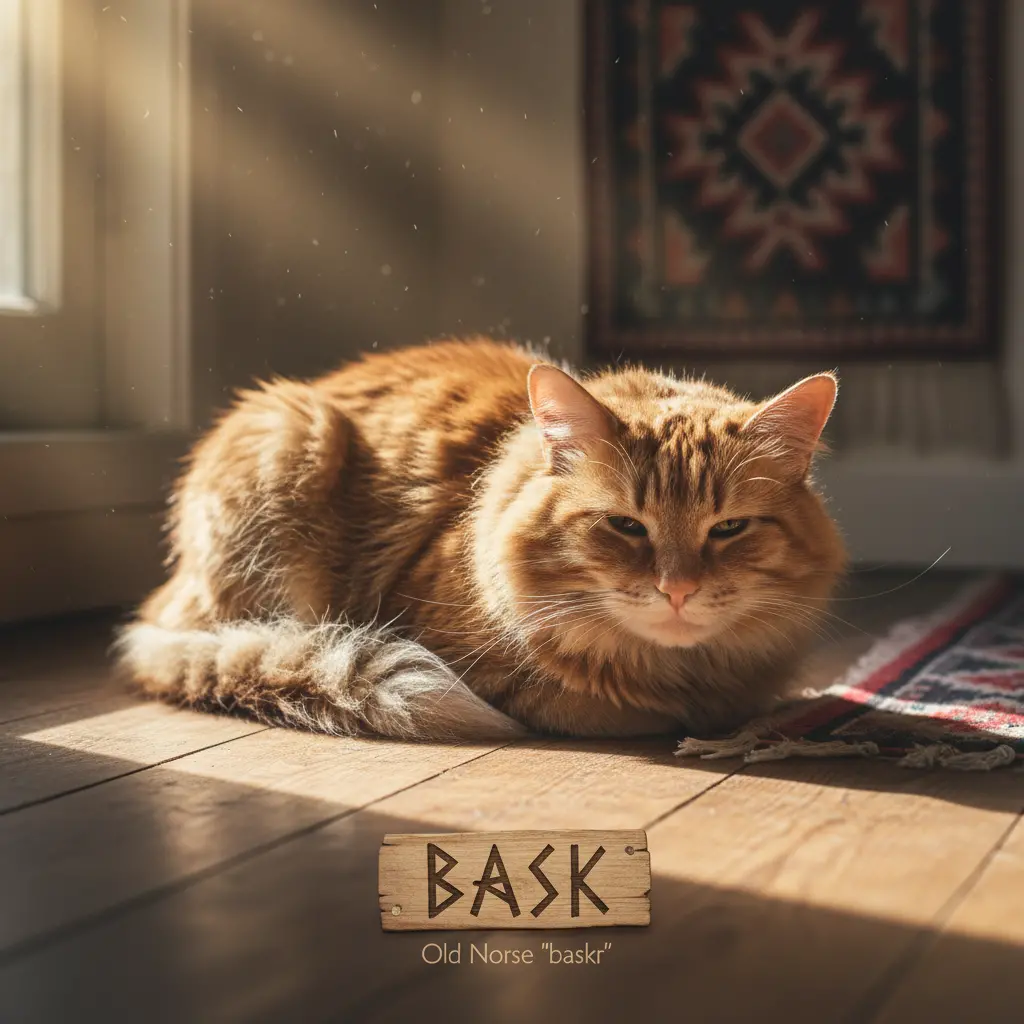
Example sentences are the start of understanding. Don't rush to memorize. First feel how the word works in a sentence.
Root: bask (no derivational elements). Historical origin: Middle English basken, originating from the Old Norse 'baskr', meaning 'to bask, revel'. Memory image: Imagine a cat lying lazily in a sunbeam, soaking up the warm rays, embodying both leisure and happiness.
Note 1: These definitions and etymologies are not standard dictionary definitions, but extended explanations provided to help with memorization and understanding of the actual application of words. Through this background information, we strive to make words more vivid and easier to understand, and help you remember their meanings in real life.
Note 2: LexiTalk designs the learning flow around the linguistics principle of “Comprehensible Input.” When learners encounter material that is slightly above their level but still understandable from context, the brain naturally absorbs the language. That’s why we keep every word inside authentic contexts, using examples and associations to help you understand it and use it flexibly.
Read the FAQ explanation of Comprehensible InputBask means to lie in or be exposed to warmth and light, especially sunlight, and to take pleasure in that warmth. It can also describe taking obvious delight in something, like compliments, success, or a favorable situation. The verb is intransitive, typically followed by in or under: 'bask in the sun', 'bask in the glow.' People also say 'bask in the warmth of family' or 'bask in good fortune.' The sense of indulging or luxuriating is common: you may bask for a long afternoon, or bask in the nostalgia of a memory. Etymology explains this as drying and warming like a sun-loving animal; its memory image is a cat lounging contentedly in sunbeams.
English tends to pair bask with in or under to show what is being enjoyed (in the sun, in the glow). Learners sometimes say bask the sun or omit the preposition, and may treat bask as transitive. Emphasize the in/under pattern and the inanimate memory image of a sunbeam.
Download LexiTalk app for personalized learning experience
Download AppCookies
We use cookies for essential site functions, analytics, and ads. You can accept, reject, or manage preferences. Privacy Policy