sun - Master This Word
Master this word with our 5-step learning method – Learn English in English
Train English Through Brain Routes, Not Translation.
This page helps you stop memorizing isolated translations and start understanding a word through its shared mental image, native-style thinking, and practical training steps.
Master this word with our 5-step learning method – Learn English in English
Example sentences are the start of understanding. Don't rush to memorize. First feel how the word works in a sentence.
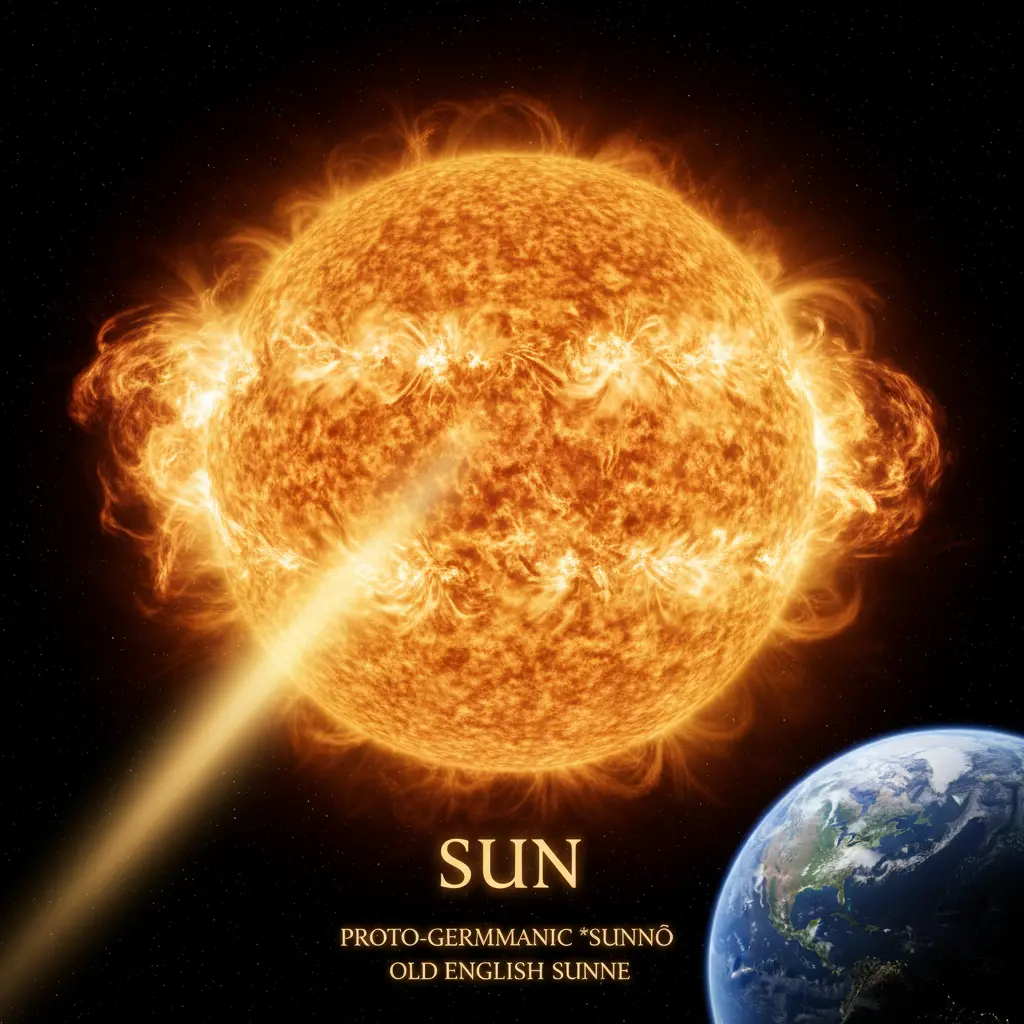
The word 'sun' originates from the Proto-Germanic *sunnō, related to the Old English 'sunne'. Can be remembered as a bright, warm ball in the sky, shining down and bringing life.
Note 1: These definitions and etymologies are not standard dictionary definitions, but extended explanations provided to help with memorization and understanding of the actual application of words. Through this background information, we strive to make words more vivid and easier to understand, and help you remember their meanings in real life.
Note 2: LexiTalk designs the learning flow around the linguistics principle of “Comprehensible Input.” When learners encounter material that is slightly above their level but still understandable from context, the brain naturally absorbs the language. That’s why we keep every word inside authentic contexts, using examples and associations to help you understand it and use it flexibly.
Read the FAQ explanation of Comprehensible InputI tilt my chin toward the window and push the blinds up a notch. The sun climbs over the roofs and warmth move across my arms. I adjust my posture, let the light change my mood, and breathe a little deeper. With a small decision I keep going, the sun becoming a simple cue for action and a smile.
The word sun in English refers to the star at the center of our solar system and to the light and heat it gives us. It also appears metaphorically as a source of joy or happiness. In weather talk we say the sun is out or the sun shines to describe bright conditions. The capitalized Sun refers specifically to the star, while the lowercase sun can appear in compound forms like sunburn or sunbeam. Related terms include sunrise, sunset, sunny, and sunlit, which expand descriptive range without changing the core meaning. Learners should note the distinction between the proper noun Sun and the common word sun, and beware of confusing sun with son.
English learners often treat sun as a generic light source and may forget to capitalize when referring to the star as a proper noun. They also frequently confuse sun with son due to pronunciation and forget that the Sun (capital S) is a specific celestial object.
Which sentence uses the word 'sun' correctly?
What is the most similar word to 'sun'?
What is the opposite of 'sun'?
Can you think of a real-life scenario involving the sun?
Download LexiTalk app for personalized learning experience
Download AppCookies
We use cookies for essential site functions, analytics, and ads. You can accept, reject, or manage preferences. Privacy Policy