beautiful - Master This Word
Master this word with our 5-step learning method – Learn English in English
Train English Through Brain Routes, Not Translation.
This page helps you stop memorizing isolated translations and start understanding a word through its shared mental image, native-style thinking, and practical training steps.
Master this word with our 5-step learning method – Learn English in English
Example sentences are the start of understanding. Don't rush to memorize. First feel how the word works in a sentence.
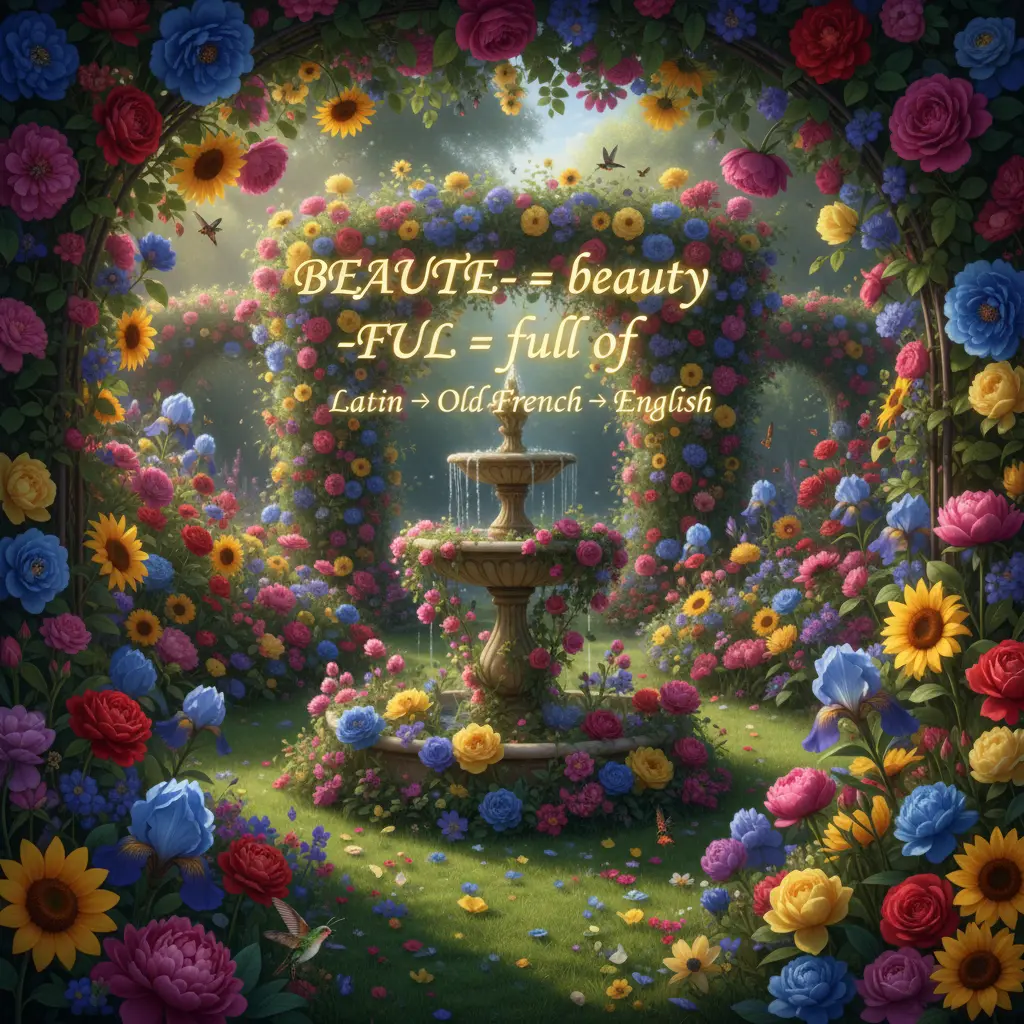
Root: beaute- = beauty, -ful = full of. Origin: Latin → Old French → English. Memory image: Imagine a stunning, vibrant flower garden, fully blooming and radiating beauty.
Note 1: These definitions and etymologies are not standard dictionary definitions, but extended explanations provided to help with memorization and understanding of the actual application of words. Through this background information, we strive to make words more vivid and easier to understand, and help you remember their meanings in real life.
Note 2: LexiTalk designs the learning flow around the linguistics principle of “Comprehensible Input.” When learners encounter material that is slightly above their level but still understandable from context, the brain naturally absorbs the language. That’s why we keep every word inside authentic contexts, using examples and associations to help you understand it and use it flexibly.
Read the FAQ explanation of Comprehensible InputI adjust the lamp, lean in, and watch the painting breathe as light slides across the brushstrokes. I move a fraction closer and let my eyes shift with the colors, turning my thoughts toward what pleases them. The room settles, my breath slows, and a small lift tells me this moment feels in tune, almost effortless yet exact. When I speak about it later, I set the word aside from the rest and let it settle on that quiet magic, the sense that the scene is beautiful.
Beautiful is a versatile adjective used to describe things that please the senses or inspire admiration. It can refer to appearance, scenery, people, or moments that feel emotionally uplifting. In everyday speech, many speakers reserve it for strong impressions, preferring pretty or nice for milder praise. You can attach it to nouns like beauty, world, music, or performance, and you can form adverbs with beautifully to describe actions. The sense is subjective and culturally shaped, so learners should pay attention to context and tone: beautiful often signals charm, elegance, or excellence rather than mere usefulness.
In English, beautiful often signals a strong, emotionally weighted appraisal. Learners should note its flexibility across domains (people, places, ideas) and remember it is stronger than pretty but not as absolute as magnificent. Common errors include using it for mundane objects or overusing it in casual chat.
In which sentence is the word 'beautiful' used correctly?
Which word is similar to 'beautiful'?
Which word is the opposite of 'beautiful'?
In what real-life context would you use the word 'beautiful'?
Download LexiTalk app for personalized learning experience
Download AppCookies
We use cookies for essential site functions, analytics, and ads. You can accept, reject, or manage preferences. Privacy Policy