bees - Master This Word
Master this word with our 5-step learning method – Learn English in English
Train English Through Brain Routes, Not Translation.
This page helps you stop memorizing isolated translations and start understanding a word through its shared mental image, native-style thinking, and practical training steps.
Master this word with our 5-step learning method – Learn English in English
Example sentences are the start of understanding. Don't rush to memorize. First feel how the word works in a sentence.
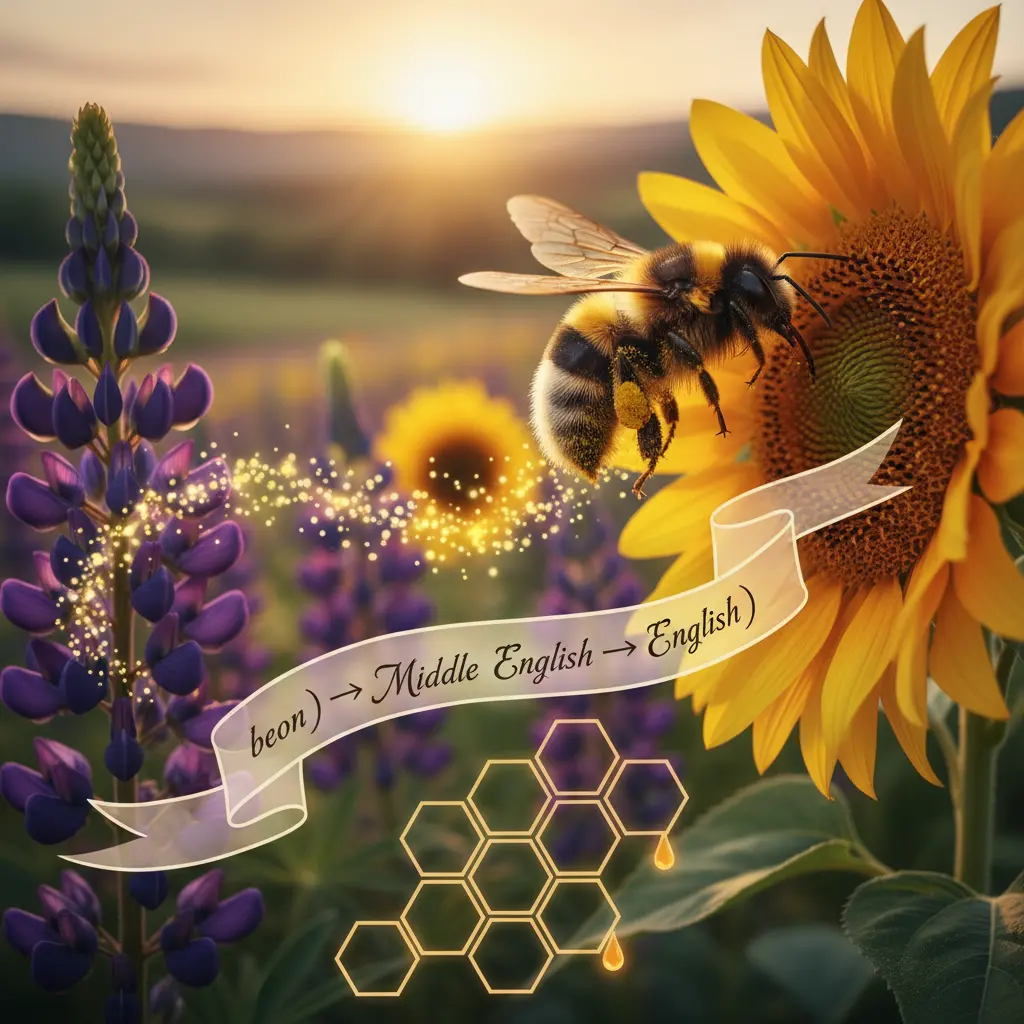
bee = beon (an Old English term) → Old English → Middle English → English; Imagine a buzzing bee flying tirelessly between flowers, collecting nectar and making honey, symbolizing industriousness.
Note 1: These definitions and etymologies are not standard dictionary definitions, but extended explanations provided to help with memorization and understanding of the actual application of words. Through this background information, we strive to make words more vivid and easier to understand, and help you remember their meanings in real life.
Note 2: LexiTalk designs the learning flow around the linguistics principle of “Comprehensible Input.” When learners encounter material that is slightly above their level but still understandable from context, the brain naturally absorbs the language. That’s why we keep every word inside authentic contexts, using examples and associations to help you understand it and use it flexibly.
Read the FAQ explanation of Comprehensible InputI squat at the garden edge and watch a bee hover near the flowers. It moves from bloom to bloom, its tiny wings pushing air and changing its course with every turn. The effort makes me feel focused and a little tired, as if I’m guiding a small plan with patient action. When I work, I keep that rhythm, adjust pace, and let small, busy effort add up. I place the scene in my memory, letting it push me to stay steady and productive.
Bee is an actual insect famous for honey production and pollination, yet in English it also functions as a metaphor for a very busy, productive person. You will encounter phrases like busy as a bee or a real bee to describe hard work, teamwork, and diligence. The word appears in nature writing about hives and pollinators, in educational texts about ecosystems, and in everyday speech when praising someone who gets a lot done. Remember that bee is a noun with the plural bees, and do not confuse it with be the verb. The insect sense and the metaphorical sense blend in many contexts, so watch cues from pictures or surrounding words.
Explain to English speakers that bee has dual life senses: a concrete insect and a versatile metaphor for a hard worker; highlight common idioms and pronunciation challenges with be.
What is the definition of 'bees'?
Which sentence uses the word 'bees' correctly?
Which word is most similar to 'bees'?
What is the opposite of 'bees'?
Can you think of a real-life scenario involving bees?
Download LexiTalk app for personalized learning experience
Download AppCookies
We use cookies for essential site functions, analytics, and ads. You can accept, reject, or manage preferences. Privacy Policy