
biased - Master This Word
Master this word with our 5-step learning method – Learn English in English
Train English Through Brain Routes, Not Translation.
This page helps you stop memorizing isolated translations and start understanding a word through its shared mental image, native-style thinking, and practical training steps.
Master this word with our 5-step learning method – Learn English in English
Example sentences are the start of understanding. Don't rush to memorize. First feel how the word works in a sentence.
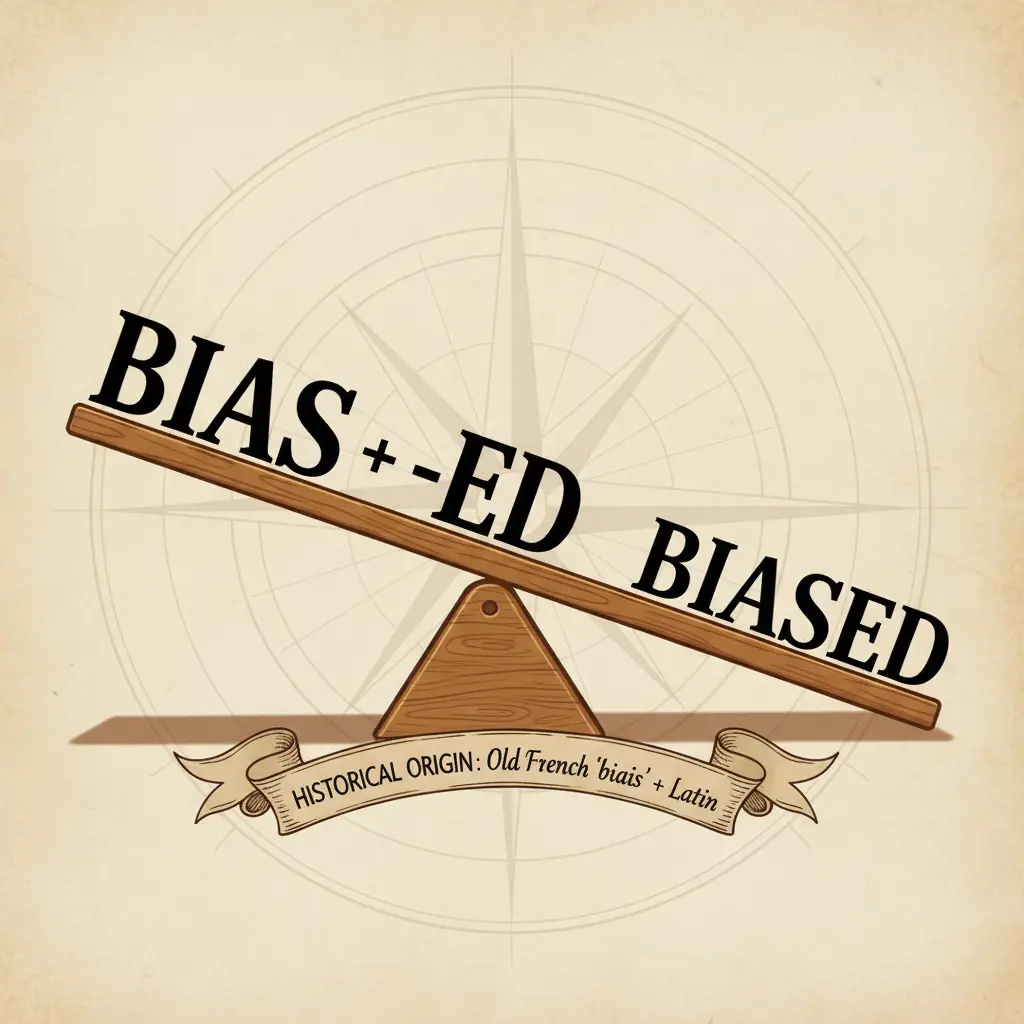
Root decomposition: bias + -ed forming biased; Historical origin: from Old French biais meaning an oblique way or slope, with Latin influence; Memory image: imagine a seesaw tilting to one side to recall bias.
Note 1: These definitions and etymologies are not standard dictionary definitions, but extended explanations provided to help with memorization and understanding of the actual application of words. Through this background information, we strive to make words more vivid and easier to understand, and help you remember their meanings in real life.
Note 2: LexiTalk designs the learning flow around the linguistics principle of “Comprehensible Input.” When learners encounter material that is slightly above their level but still understandable from context, the brain naturally absorbs the language. That’s why we keep every word inside authentic contexts, using examples and associations to help you understand it and use it flexibly.
Read the FAQ explanation of Comprehensible InputBias means having a preference that skews judgment. A biased person or source is not objective, giving more weight to one side. In statistics, a biased estimator systematically overestimates or underestimates the true value. Bias can come from personal experiences, cultural norms, or flawed data collection. Being biased doesn't always mean complete falsehood; it means there is a tendency that distorts conclusions. Learners should note common indicators: adjectives like 'biased' before a claim, selective quotes, headline framing, or cherry-picking evidence. To improve fairness, compare multiple sources, check methodology, and separate emotions from facts.
In English, bias is often discussed as a tendency or prejudice that colors judgment; learners should note collocations like biased toward, biased in favor of, or bias in reporting.
Which sentence uses 'biased' correctly?
What is a synonym for 'biased'?
What is an antonym for 'biased'?
In what real-life scenario can bias affect decision-making?
Download LexiTalk app for personalized learning experience
Download AppCookies
We use cookies for essential site functions, analytics, and ads. You can accept, reject, or manage preferences. Privacy Policy