biology - Master This Word
Master this word with our 5-step learning method – Learn English in English
Train English Through Brain Routes, Not Translation.
This page helps you stop memorizing isolated translations and start understanding a word through its shared mental image, native-style thinking, and practical training steps.
Master this word with our 5-step learning method – Learn English in English
Example sentences are the start of understanding. Don't rush to memorize. First feel how the word works in a sentence.
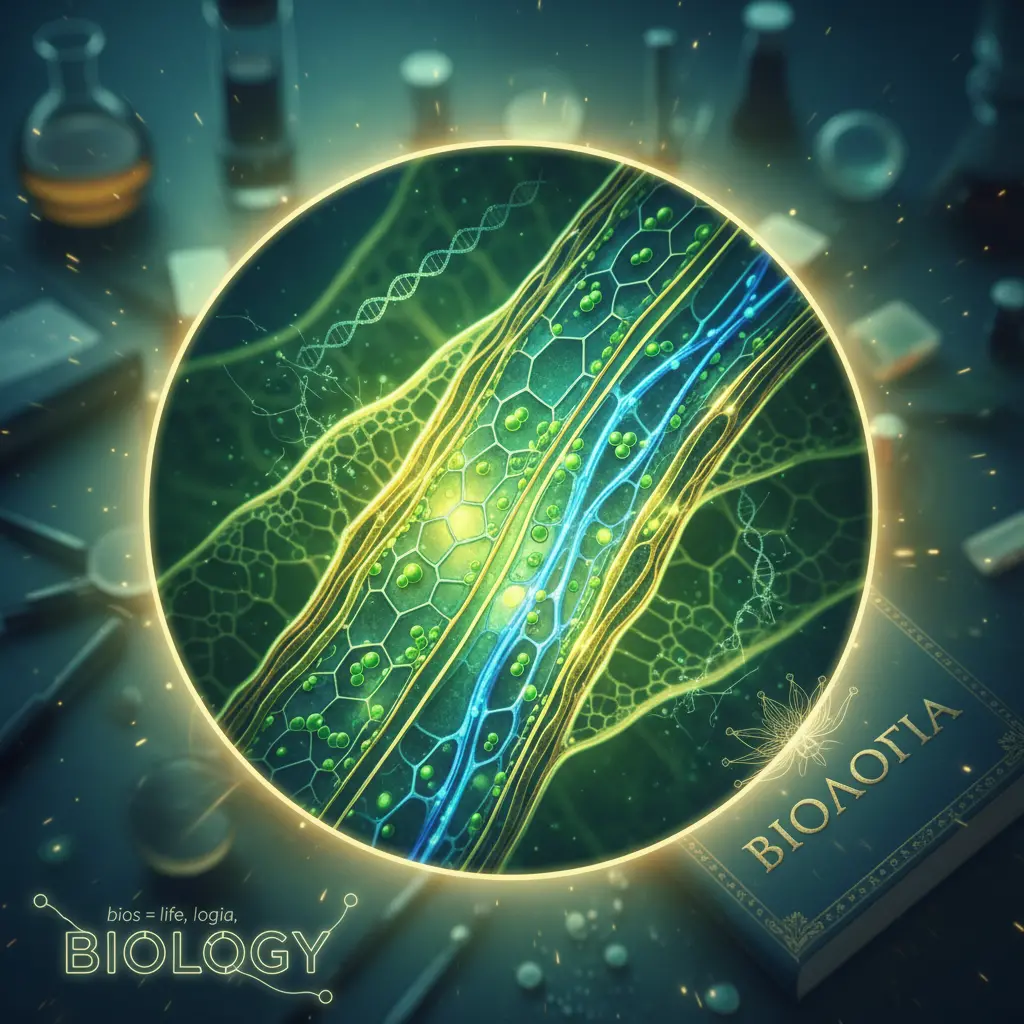
bio- = life, logy = study. The word comes from Greek 'bios' meaning 'life' and 'logia' meaning 'study'. Imagine a microscope revealing the complexity and beauty of a leaf, showcasing the life within it, encapsulating the essence of biology.
Note 1: These definitions and etymologies are not standard dictionary definitions, but extended explanations provided to help with memorization and understanding of the actual application of words. Through this background information, we strive to make words more vivid and easier to understand, and help you remember their meanings in real life.
Note 2: LexiTalk designs the learning flow around the linguistics principle of “Comprehensible Input.” When learners encounter material that is slightly above their level but still understandable from context, the brain naturally absorbs the language. That’s why we keep every word inside authentic contexts, using examples and associations to help you understand it and use it flexibly.
Read the FAQ explanation of Comprehensible InputI place my hand on a leaf and feel the tiny life move under the surface. I watch the veins, the cells, the way a plant changes with light, and I adjust my focus with curiosity. The word biology starts to feel like a toolkit for life, a sense that living things share a slow, hidden rhythm. When I talk about animals or labs, I set the word where life is the subject, and I keep listening to how things grow.
Biology is the scientific study of living organisms, from microscopic bacteria to complex multicellular beings. It asks how life works, from the structure of cells to the functioning of organs, and how living things grow, reproduce, evolve, and interact with their environments. The field spans anatomy, genetics, physiology, ecology, evolution, and behavior, and it helps explain patterns across scales—from molecules to ecosystems. In everyday use, biology appears in school courses, research, and health contexts, while inviting curiosity about plants, microbes, and human life. To master biology is to observe carefully, reason about evidence, and connect ideas across levels of organization.
English speakers often equate biology with a broad, academic field and may assume it is primarily about medicine or humans; learners should note the system-level breadth from cells to ecosystems and avoid narrowing biology to doctors or hospitals.
What is the meaning of the word 'biology'?
In which of the following sentences is 'biology' used correctly?
Which word is most similar to 'biology'?
Which word is the opposite of 'biology'?
How is the study of 'biology' applicable in everyday life?
Download LexiTalk app for personalized learning experience
Download AppCookies
We use cookies for essential site functions, analytics, and ads. You can accept, reject, or manage preferences. Privacy Policy