
bombardier - Master This Word
Master this word with our 5-step learning method – Learn English in English
Train English Through Brain Routes, Not Translation.
This page helps you stop memorizing isolated translations and start understanding a word through its shared mental image, native-style thinking, and practical training steps.
Master this word with our 5-step learning method – Learn English in English
Example sentences are the start of understanding. Don't rush to memorize. First feel how the word works in a sentence.
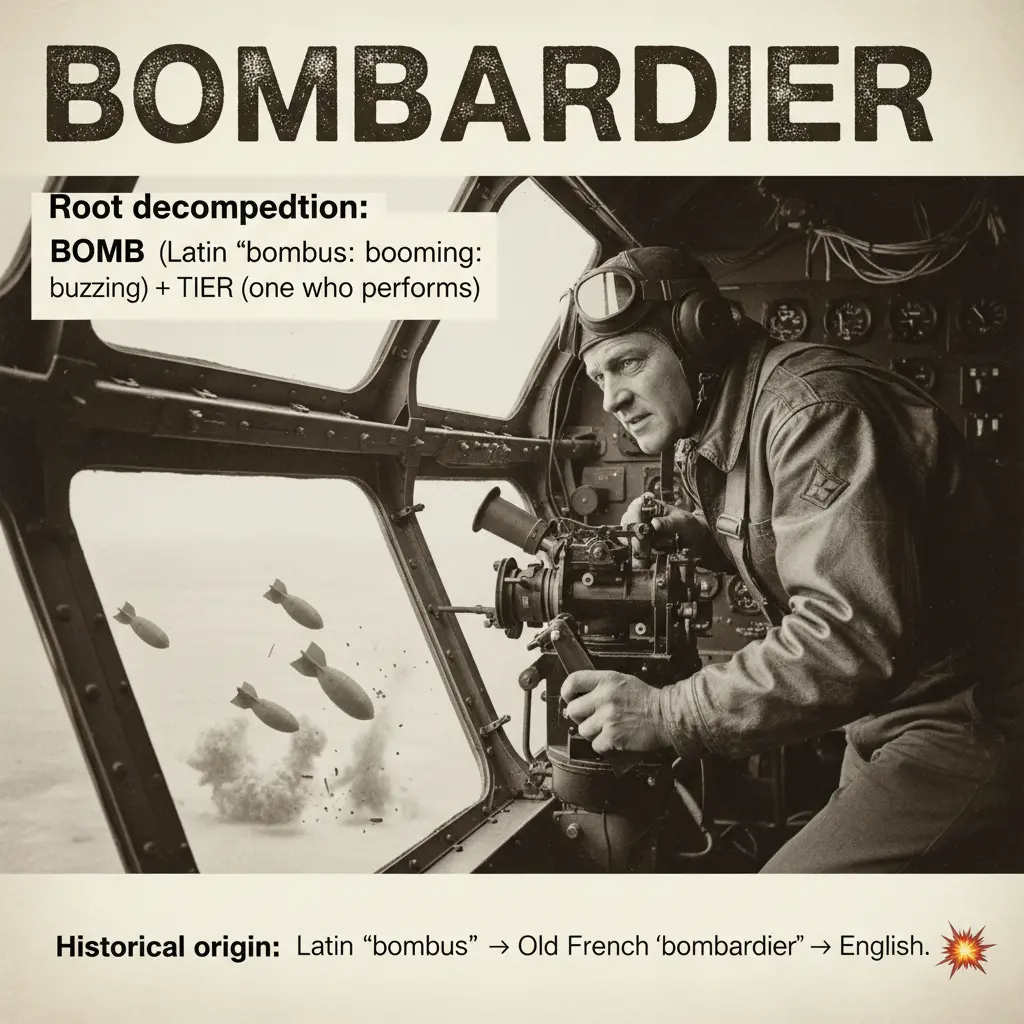
Root decomposition: bomb (from Latin 'bombus' meaning 'booming, buzzing sound') + tier (one who does or performs). Historical origin: Latin 'bombus' → Old French 'bombardier' → English. Memory image: Picture a WWII bomber pilot, skillfully dropping explosives, embodying the intensity of the word.
Note 1: These definitions and etymologies are not standard dictionary definitions, but extended explanations provided to help with memorization and understanding of the actual application of words. Through this background information, we strive to make words more vivid and easier to understand, and help you remember their meanings in real life.
Note 2: LexiTalk designs the learning flow around the linguistics principle of “Comprehensible Input.” When learners encounter material that is slightly above their level but still understandable from context, the brain naturally absorbs the language. That’s why we keep every word inside authentic contexts, using examples and associations to help you understand it and use it flexibly.
Read the FAQ explanation of Comprehensible InputA bombardier is the aircrew member whose primary job during a bombing mission is to aim and release bombs from a bomber aircraft. In World War II, bombardiers sat at the bombsight and received instructions from navigators, then timed the release precisely as the aircraft rolled through flak and enemy fire. The role required composure under pressure, mathematical precision, and strong coordination with pilots and gunners. In modern air forces the term is rarer, but the core idea remains: a person who controls the delivery of ordnance from the air. Etymologically, bombardier comes from Old French bombardier, built on the root bomb and the -ier suffix, with the sense of someone who performs a dangerous task.
In English, bombardier is a specific historical job title for an aircrew member who controlled bomb delivery. Learners often mistake it for a general verb or confuse it with the aircraft type 'bomber.' Remember that the core idea is a person performing a dangerous, precise task, not the act itself.
What is the meaning of the word 'bombardier'?
Which sentence uses the word 'bombardier' correctly?
Which word is most similar to 'bombardier'?
What is the opposite of 'bombardier'?
Can you give an example of a real-life scenario of the term 'bombardier'?
Download LexiTalk app for personalized learning experience
Download AppCookies
We use cookies for essential site functions, analytics, and ads. You can accept, reject, or manage preferences. Privacy Policy