bother - Master This Word
Master this word with our 5-step learning method – Learn English in English
Train English Through Brain Routes, Not Translation.
This page helps you stop memorizing isolated translations and start understanding a word through its shared mental image, native-style thinking, and practical training steps.
Master this word with our 5-step learning method – Learn English in English
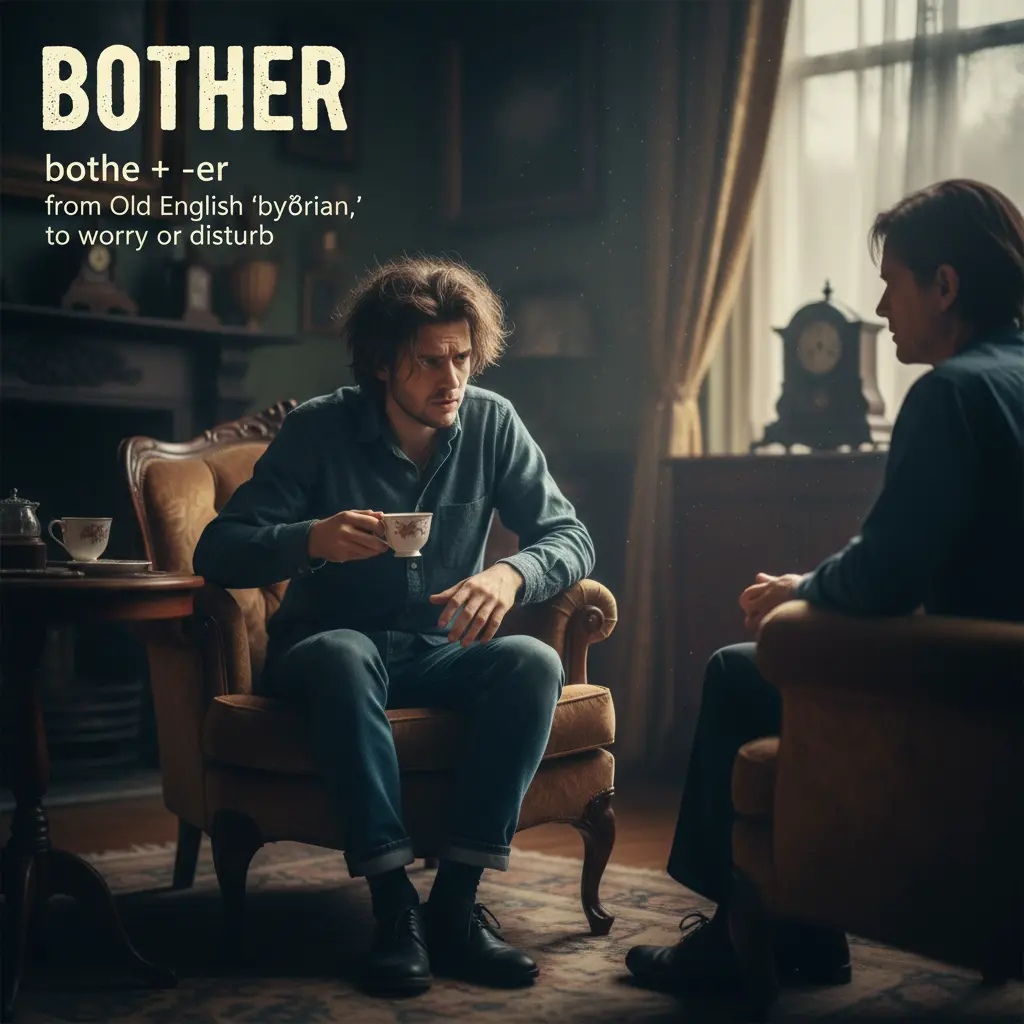
Example sentences are the start of understanding. Don't rush to memorize. First feel how the word works in a sentence.
bother = bothe + -er; from Old English 'byðrian', which means to worry or disturb. Picture someone being so restless that they can't sit still, always fidgeting, making others uneasy.
Note 1: These definitions and etymologies are not standard dictionary definitions, but extended explanations provided to help with memorization and understanding of the actual application of words. Through this background information, we strive to make words more vivid and easier to understand, and help you remember their meanings in real life.
Note 2: LexiTalk designs the learning flow around the linguistics principle of “Comprehensible Input.” When learners encounter material that is slightly above their level but still understandable from context, the brain naturally absorbs the language. That’s why we keep every word inside authentic contexts, using examples and associations to help you understand it and use it flexibly.
Read the FAQ explanation of Comprehensible InputOn the bus, I shift in my seat and move my bag closer to my chest so I don’t bother the person beside me. I lower my voice and breathe slowly, feeling a touch of worry about being annoying. Then I bother to send a quick text, taking the trouble to make it clear, and I force a small smile as I press send. That little sequence of adjustments tells me how bother is lived: it’s a quiet choice to balance care with the moment.
Bother is a versatile verb that covers several related ideas: to disturb or annoy someone, to take the trouble to do something, or to worry or concern oneself. In everyday speech we often use 'don’t bother' to tell someone not to waste time, and 'bother to do something' to indicate effort is involved. It can appear in questions and polite requests, and its tone ranges from mild irritation to courteous restraint depending on the context. Learners should note that British and American usage are similar but occasionally differ in politeness and intensity.
Explain to an English speaker (meta, keep short)
What is the meaning of the word 'bother'?
In which of the following sentences is 'bother' used correctly?
Which word is most similar to 'bother'?
Which word is the opposite of 'bother'?
When a friend cancels plans last minute, it can be a _______.
Download LexiTalk app for personalized learning experience
Download AppCookies
We use cookies for essential site functions, analytics, and ads. You can accept, reject, or manage preferences. Privacy Policy