
bouffant - Master This Word
Master this word with our 5-step learning method – Learn English in English
Train English Through Brain Routes, Not Translation.
This page helps you stop memorizing isolated translations and start understanding a word through its shared mental image, native-style thinking, and practical training steps.
Master this word with our 5-step learning method – Learn English in English
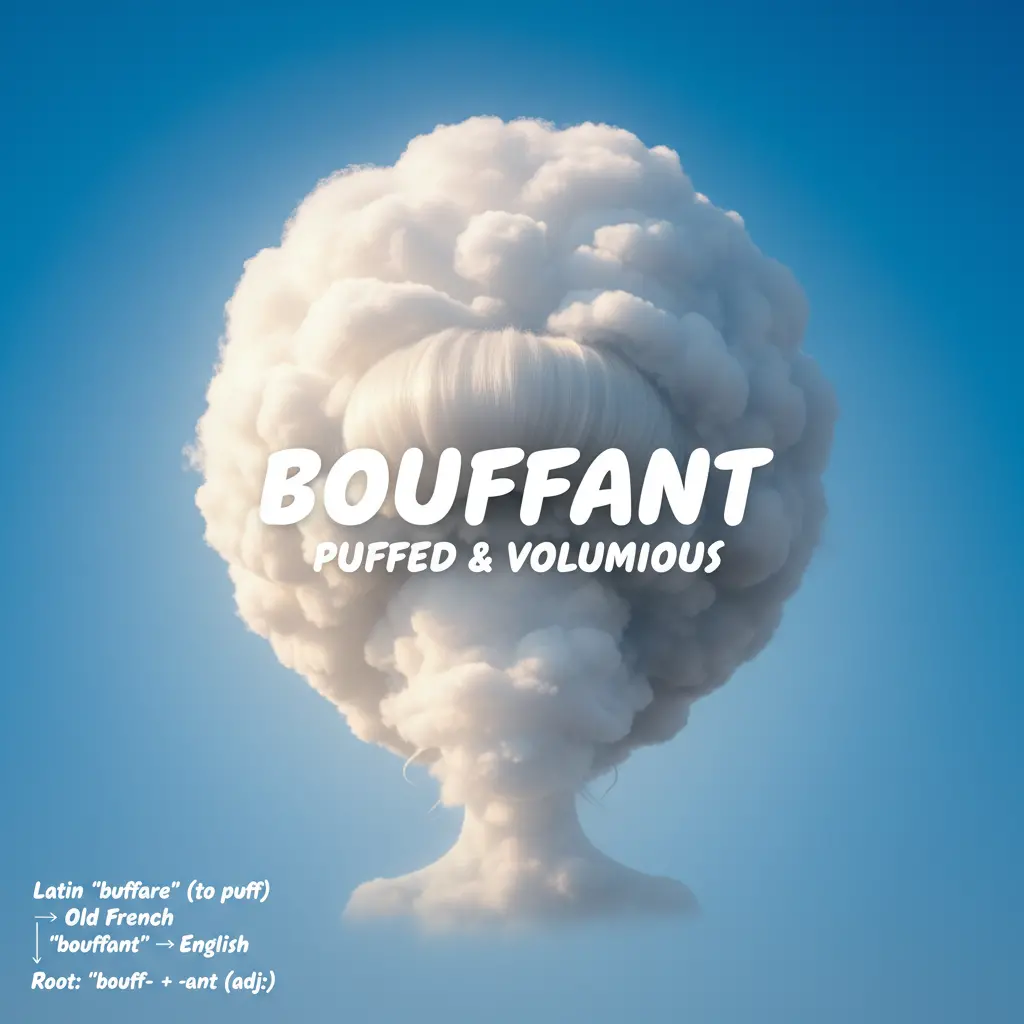
Example sentences are the start of understanding. Don't rush to memorize. First feel how the word works in a sentence.
Root: 'bouff-' (to puff) + suffix '-ant' (forming adjectives). Origin: Latin 'buffare' (to puff) → Old French 'bouffant' → English. Memory Image: Picture a fluffy cloud, puffed up in the sky, symbolizing the airy and voluminous nature of a bouffant hairstyle.
Note 1: These definitions and etymologies are not standard dictionary definitions, but extended explanations provided to help with memorization and understanding of the actual application of words. Through this background information, we strive to make words more vivid and easier to understand, and help you remember their meanings in real life.
Note 2: LexiTalk designs the learning flow around the linguistics principle of “Comprehensible Input.” When learners encounter material that is slightly above their level but still understandable from context, the brain naturally absorbs the language. That’s why we keep every word inside authentic contexts, using examples and associations to help you understand it and use it flexibly.
Read the FAQ explanation of Comprehensible InputBouffant is an adjective that describes a hairstyle or style that is puffed up and full, giving a rounded, exaggerated silhouette. In fashion terms it signals volume, lushness, or a deliberately elaborate look. The term carries a retro vibe, often tied to mid-20th century beauty trends, big hair, and a touch of theatrical glamour. It can be used playfully to note overdone styling, but also marks a confident, curated appearance. When applied to clothing or design, bouffant implies fullness and ornamentation rather than simplicity. In contemporary usage, speakers may reserve it for nostalgic or ironic contexts rather than everyday casual talk.
Bouffant is a borrowed French term that English speakers use to signal a specific, nostalgic aesthetic; learners often struggle with pronunciation and with using it outside fashion talk.
What does the word 'bouffant' mean?
Which sentence uses the word 'bouffant' correctly?
Which word is most similar to 'bouffant'?
What is the opposite of 'bouffant'?
Can you think of a real-life context where the word 'bouffant' would be applicable?
Download LexiTalk app for personalized learning experience
Download AppCookies
We use cookies for essential site functions, analytics, and ads. You can accept, reject, or manage preferences. Privacy Policy