
boycott - Master This Word
Master this word with our 5-step learning method – Learn English in English
Train English Through Brain Routes, Not Translation.
This page helps you stop memorizing isolated translations and start understanding a word through its shared mental image, native-style thinking, and practical training steps.
Master this word with our 5-step learning method – Learn English in English
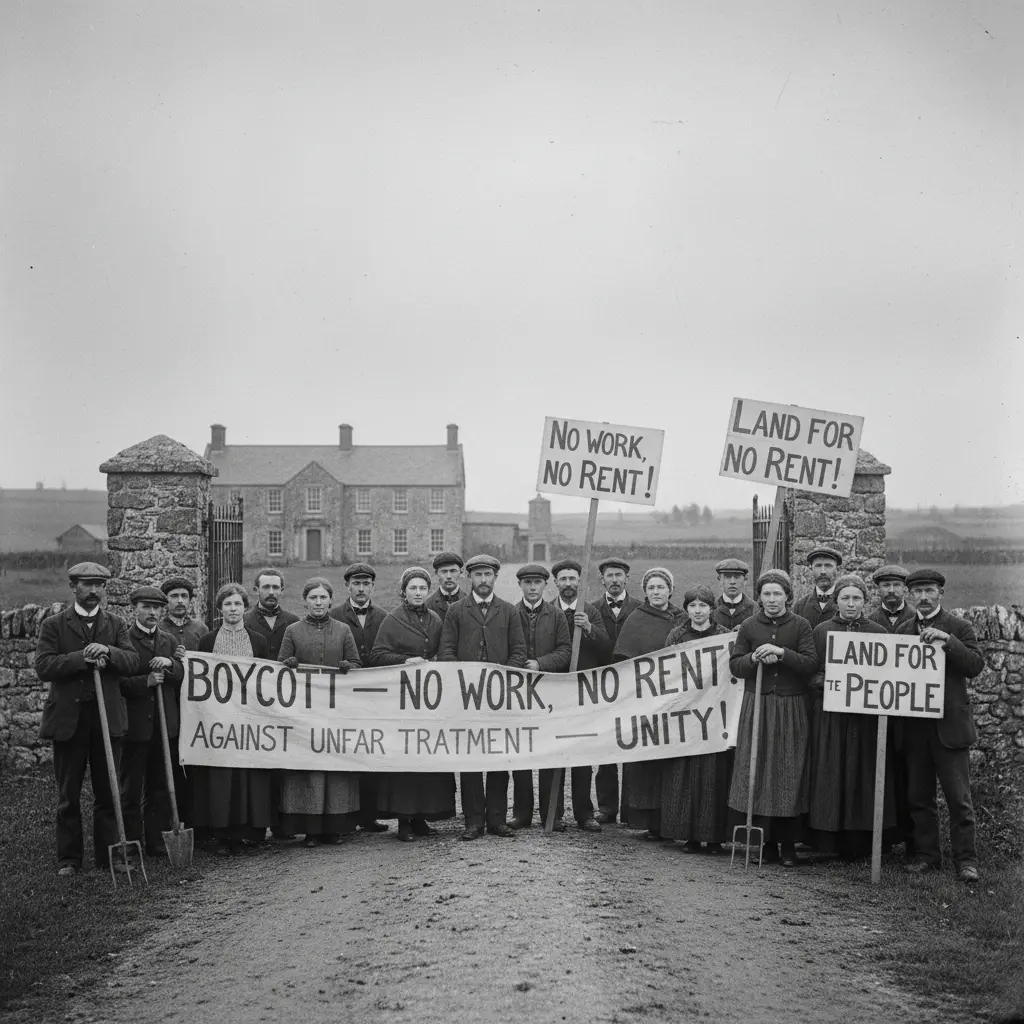
Example sentences are the start of understanding. Don't rush to memorize. First feel how the word works in a sentence.
The word 'boycott' comes from 'Boycott' (name of Charles Boycott), which was used during the Irish Land War when people refused to work for him. Imagine people standing together, refusing to enter a farm, symbolizing unity against unfair treatment.
Note 1: These definitions and etymologies are not standard dictionary definitions, but extended explanations provided to help with memorization and understanding of the actual application of words. Through this background information, we strive to make words more vivid and easier to understand, and help you remember their meanings in real life.
Note 2: LexiTalk designs the learning flow around the linguistics principle of “Comprehensible Input.” When learners encounter material that is slightly above their level but still understandable from context, the brain naturally absorbs the language. That’s why we keep every word inside authentic contexts, using examples and associations to help you understand it and use it flexibly.
Read the FAQ explanation of Comprehensible InputBoycott is a versatile term that works as both a verb and a noun. It originated from the name of Charles Boycott during the Irish Land War, where locals refused to work for him; since then, the word has expanded to describe public protests that involve refusing to buy goods or services, or to cooperate with a person or organization. In modern usage, a boycott can be organized by consumers, workers, or activists and may target a company, a government policy, or a social practice. As a verb, we say to boycott something; as a noun, a boycott is the organized action itself. It often signals collective disapproval and can influence decisions when a large number participate.
In English, 'boycott' strongly conveys organized collective action with a clear target and measurable impact, often tied to ethics or policy. Learners tend to overgeneralize it to any complaint and may confuse it with simple protest or critique. English frequently uses collocations like 'call for a boycott' or 'universal boycott' that learners should recognize as formal or media-friendly phrasing.
What does the word 'boycott' mean?
In which of the following sentences is 'boycott' used correctly?
Which word is an antonym of 'boycott'?
In what real-life context might you see the word 'boycott' being used?
Can you explain the impact of a boycott on a company's sales?
Download LexiTalk app for personalized learning experience
Download AppCookies
We use cookies for essential site functions, analytics, and ads. You can accept, reject, or manage preferences. Privacy Policy