event - Master This Word
Master this word with our 5-step learning method – Learn English in English
Train English Through Brain Routes, Not Translation.
This page helps you stop memorizing isolated translations and start understanding a word through its shared mental image, native-style thinking, and practical training steps.
Master this word with our 5-step learning method – Learn English in English
Example sentences are the start of understanding. Don't rush to memorize. First feel how the word works in a sentence.
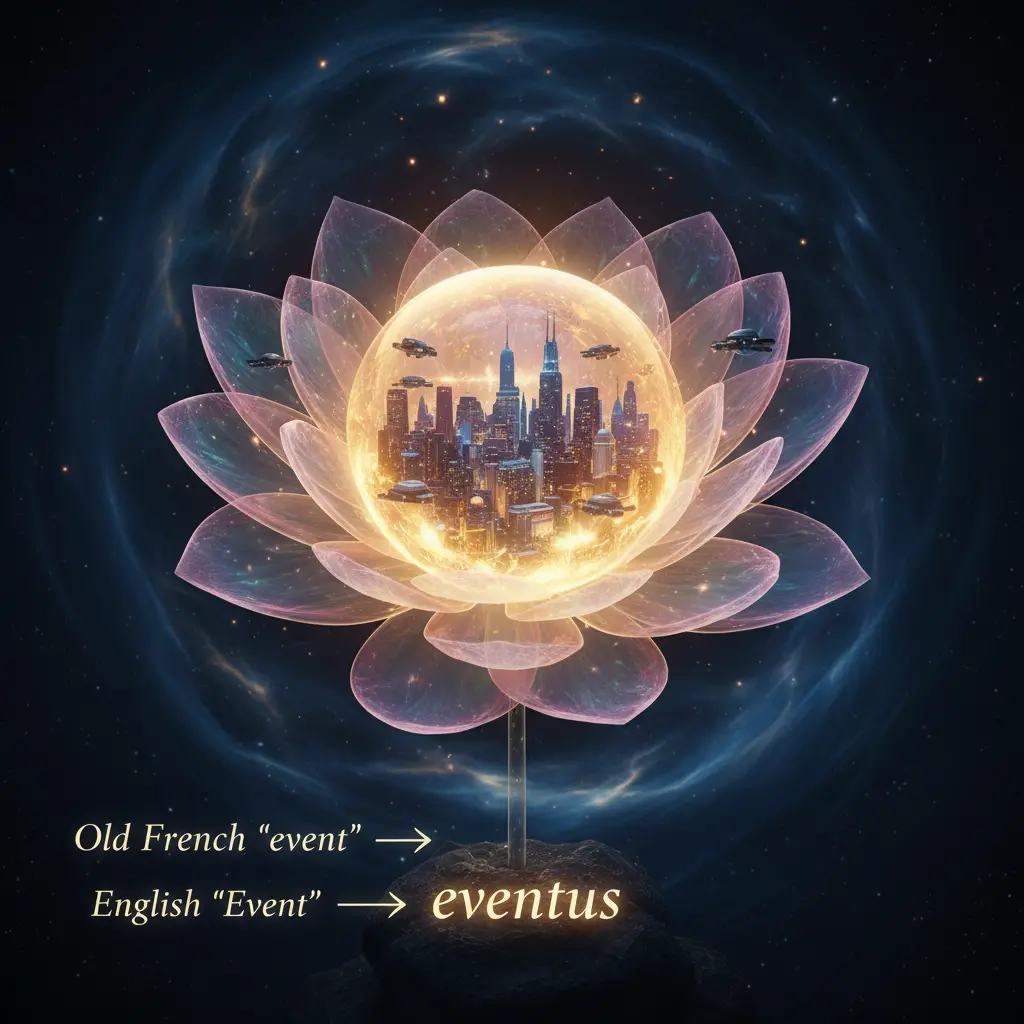
event = e- (out) + vent (to come) → Latin 'eventus' → Old French 'event' → English. Picture an unfolding event like a flower blooming, revealing something exciting as it comes out.
Note 1: These definitions and etymologies are not standard dictionary definitions, but extended explanations provided to help with memorization and understanding of the actual application of words. Through this background information, we strive to make words more vivid and easier to understand, and help you remember their meanings in real life.
Note 2: LexiTalk designs the learning flow around the linguistics principle of “Comprehensible Input.” When learners encounter material that is slightly above their level but still understandable from context, the brain naturally absorbs the language. That’s why we keep every word inside authentic contexts, using examples and associations to help you understand it and use it flexibly.
Read the FAQ explanation of Comprehensible InputFirst I move from the desk to the door, adjust my pace, and set the plan for the evening. The scene shifts as a knock lands and a few faces appear—every small turn feels like a hinge in the day. I push through hesitation, pull the moment toward action, and hold the thread of the plan tight as the conversation grows. What starts as a choice becomes something bigger, an event that changes what comes next.
An event is a noun that names something that happens, especially something notable or important. It can refer to an actual occurrence in the world, such as a weather change, a cultural shift, or a news moment. It also covers planned public or social happenings, like concerts, conferences, or festivals. In everyday speech, we usually pair event with adjectives like major, exciting, or planned, to signal significance or organization. The word is countable, so you can say two events, one event, or a series of events. Learners sometimes confuse event with incident or occurrence; incident implies trouble, occurrence is more formal. Remember that event can describe both a happening and a gathering.
English uses event for both a happening and a planned gathering; learners often miss the planning sense. They may say incident or occurrence for social gatherings or use event to mean any minor happening.
What does the word 'event' mean?
Which sentence uses the word 'event' correctly?
Which word is most similar to 'event'?
What is the opposite of the word 'event'?
Can you think of a real-life scenario involving a gathering?
Download LexiTalk app for personalized learning experience
Download AppCookies
We use cookies for essential site functions, analytics, and ads. You can accept, reject, or manage preferences. Privacy Policy