
capitalism - Master This Word
Master this word with our 5-step learning method – Learn English in English
Train English Through Brain Routes, Not Translation.
This page helps you stop memorizing isolated translations and start understanding a word through its shared mental image, native-style thinking, and practical training steps.
Master this word with our 5-step learning method – Learn English in English
Example sentences are the start of understanding. Don't rush to memorize. First feel how the word works in a sentence.
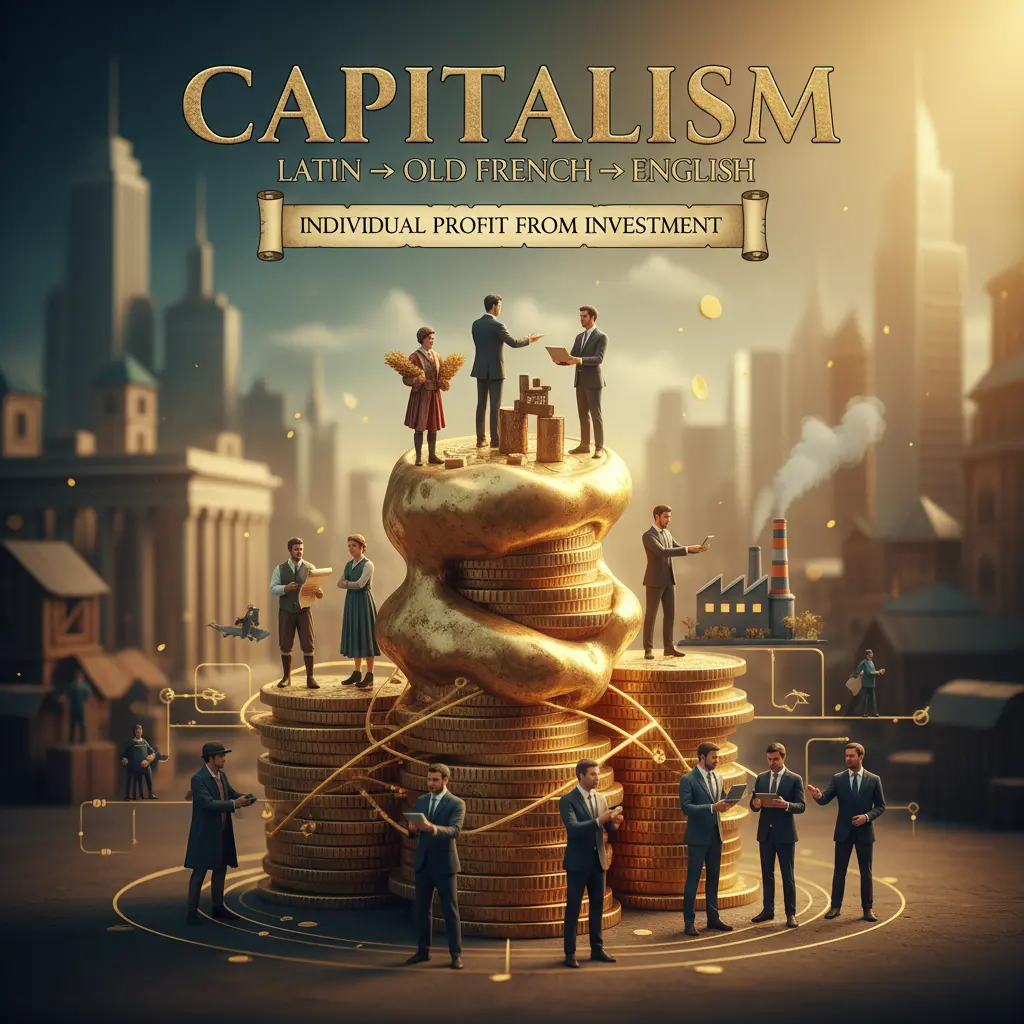
Root decomposition: capital (from Latin 'capitale') meaning 'money' + -ism (suffix indicating a system or practice). Historical origin: Latin → Old French → English. Memory image: Imagine a stack of coins representing wealth, with people engaging in trade to grow that wealth, symbolizing a system where individuals profit from their investments.
Note 1: These definitions and etymologies are not standard dictionary definitions, but extended explanations provided to help with memorization and understanding of the actual application of words. Through this background information, we strive to make words more vivid and easier to understand, and help you remember their meanings in real life.
Note 2: LexiTalk designs the learning flow around the linguistics principle of “Comprehensible Input.” When learners encounter material that is slightly above their level but still understandable from context, the brain naturally absorbs the language. That’s why we keep every word inside authentic contexts, using examples and associations to help you understand it and use it flexibly.
Read the FAQ explanation of Comprehensible InputI reach for a small box, place it on a table, and turn the handle. Coins clink as I push and pull the mechanism, watching numbers move. I adjust my grip, keep the pace steady, and feel the room shift with every decision. The scene hints at a larger pattern of trade and choice, where effort and risk shape what people can gain and lose.
Capitalism is an economic system in which private individuals and businesses own the means of production and operate for profit in a competitive market. It emphasizes private property, voluntary exchange, and consumer choice, with prices largely determined by supply and demand. Proponents argue that capitalism spurs innovation, efficiency, and wealth creation by rewarding risk and entrepreneurship. Critics point to inequalities, market failures, and cycles of boom and bust, arguing that profits can trump social welfare. The term has historical roots in the growth of market economies, shifting from mercantilism to industrial capitalism, and it appears in political debate whether to emphasize free markets, regulation, or social safety nets.
Explain to an English speaker (meta, keep short)
What is the meaning of the word 'capitalism'?
Which sentence uses 'capitalism' correctly?
What is a synonym for 'capitalism'?
What is an opposite (antonym) for 'capitalism'?
How does 'capitalism' apply in real-world situations?
Download LexiTalk app for personalized learning experience
Download AppCookies
We use cookies for essential site functions, analytics, and ads. You can accept, reject, or manage preferences. Privacy Policy