cash - Master This Word
Master this word with our 5-step learning method – Learn English in English
Train English Through Brain Routes, Not Translation.
This page helps you stop memorizing isolated translations and start understanding a word through its shared mental image, native-style thinking, and practical training steps.
Master this word with our 5-step learning method – Learn English in English
Example sentences are the start of understanding. Don't rush to memorize. First feel how the word works in a sentence.
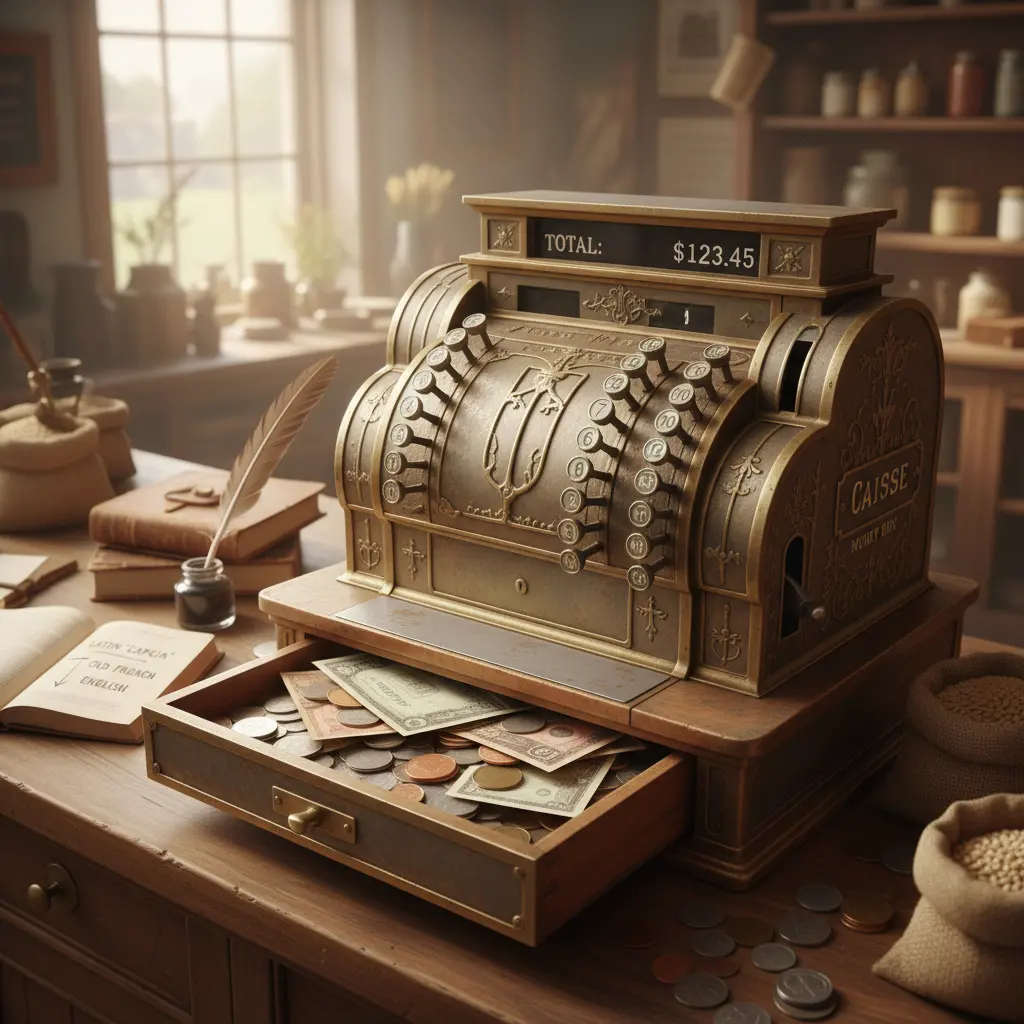
cash = cash (noun) from French 'caisse' (money box) → Latin 'capcia' (box) → Old French → English. Imagine a cash register, the box where money is kept.
Note 1: These definitions and etymologies are not standard dictionary definitions, but extended explanations provided to help with memorization and understanding of the actual application of words. Through this background information, we strive to make words more vivid and easier to understand, and help you remember their meanings in real life.
Note 2: LexiTalk designs the learning flow around the linguistics principle of “Comprehensible Input.” When learners encounter material that is slightly above their level but still understandable from context, the brain naturally absorbs the language. That’s why we keep every word inside authentic contexts, using examples and associations to help you understand it and use it flexibly.
Read the FAQ explanation of Comprehensible InputI grip the wallet, push the flap, and watch the cash spill into my palm. I move my fingers to count, shift bills one by one, and adjust the stack until it sits flat. A small decision tightens in my chest, I turn my attention toward the register or the door, keeping the total in sight. In that moment, the sight and weight of the bills let cash settle in as something I can hand over or keep.
Cash is the most immediate form of money, consisting of physical coins and banknotes rather than digital balances. In American English we say cash a check to convert it into money you can spend, and we often speak of paying with cash or keeping cash on hand. The word cash can also function as a verb, as in cash out or cash in, meaning to redeem or realize value. Learners often confuse cash with money or currency in general, or use cash when they mean a card payment. Note the distinction between cash (money in hand) and cash register or cash machine in specific contexts.
Cash is concrete money in hand; English often treats cash as both the object (cash) and the action (to cash a check). Learners from languages with fewer cash distinctions may overgeneralize 'cash' as a universal term for money or mix up with credit. Highlight phrasal verbs and collocations to separate payment methods from the money itself.
In which of the following scenarios would you most likely use cash?
Which word is similar to 'cash' in meaning?
What is the opposite of 'cash' in terms of payment method?
How often do you use cash in your daily life?
Download LexiTalk app for personalized learning experience
Download AppCookies
We use cookies for essential site functions, analytics, and ads. You can accept, reject, or manage preferences. Privacy Policy