
castles - Master This Word
Master this word with our 5-step learning method – Learn English in English
Train English Through Brain Routes, Not Translation.
This page helps you stop memorizing isolated translations and start understanding a word through its shared mental image, native-style thinking, and practical training steps.
Master this word with our 5-step learning method – Learn English in English
Example sentences are the start of understanding. Don't rush to memorize. First feel how the word works in a sentence.
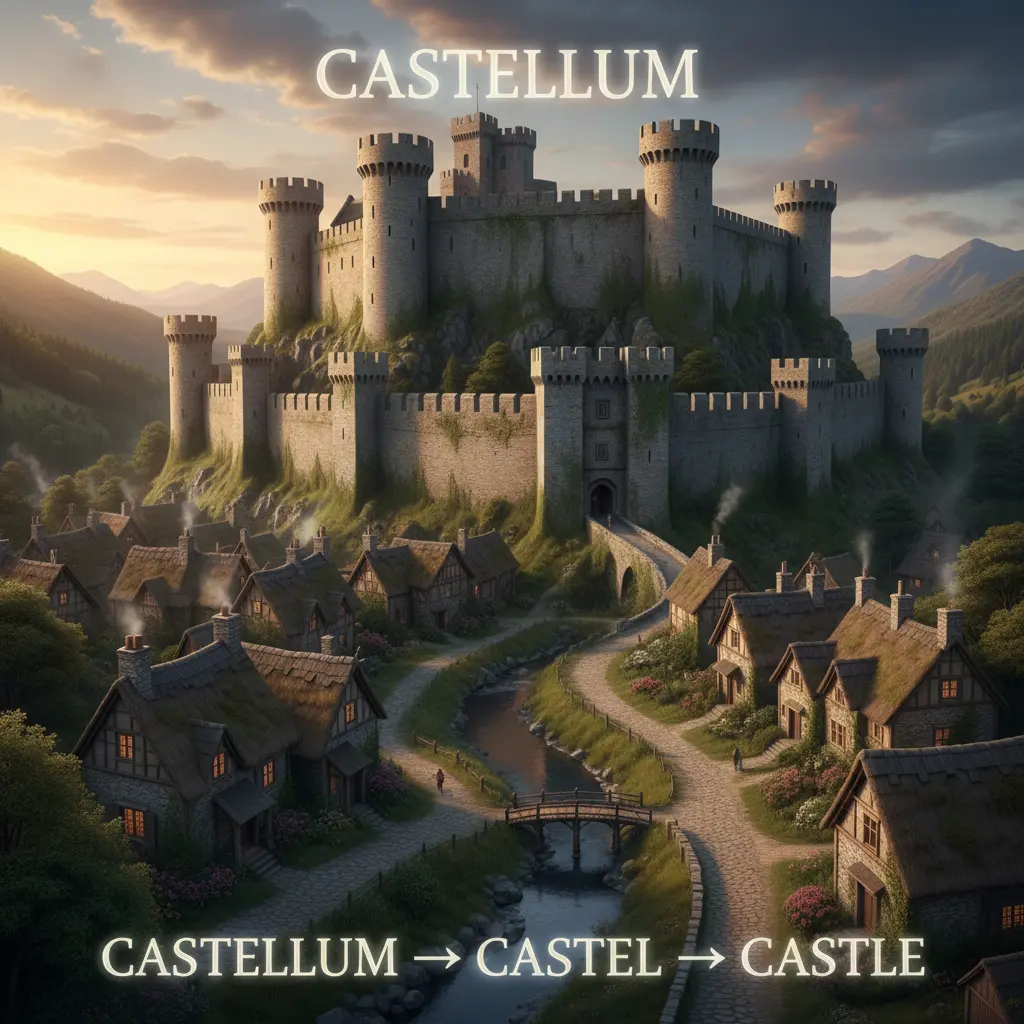
Root decomposition: caste + le (diminutive suffix, 'small place'). Historical origin: Latin 'castellum' → Old French 'castel' → English. Memory image: envision a grand fortress protecting a small village, illustrating both the physical strength of a castle and its diminutive, home-like aspect.
Note 1: These definitions and etymologies are not standard dictionary definitions, but extended explanations provided to help with memorization and understanding of the actual application of words. Through this background information, we strive to make words more vivid and easier to understand, and help you remember their meanings in real life.
Note 2: LexiTalk designs the learning flow around the linguistics principle of “Comprehensible Input.” When learners encounter material that is slightly above their level but still understandable from context, the brain naturally absorbs the language. That’s why we keep every word inside authentic contexts, using examples and associations to help you understand it and use it flexibly.
Read the FAQ explanation of Comprehensible InputFirst I push the heavy door and let it swing open, my hand steady on the old wood. I step inside, the cool air shifting around my ankles as I move forward. I lift my chin a little, adjust my stance to the tall ceiling and stone walls, and keep a careful pace. The space feels like a shelter and a stage, a place where power and home meet, and I sense why people would call it a castle.
Castle is a large fortified building, historically the residence and power base of nobles or royalty, designed to withstand attacks and control surrounding lands. It can be a military stronghold, a lord's manor, or a ceremonial seat, often perched on a hill or protected by walls, towers, and moats. The word traces back through Latin castellum to Old French castel and into English, carrying both the idea of strength and a home-like sense of enclosure. In everyday English you might speak of a medieval castle, a castle-like hotel, or a city castle that anchors a town's identity. The memory image helps: imagine a grand fortress guarding a small village, a formidable exterior with a cozy, inhabited interior.
Castle in English conveys fortress and residence together, but learners should note the distinction from palace (royal residence) and fortress (military stronghold). The metaphorical uses differ from languages that have separate words for different grand buildings. Be mindful of the chess verb 'to castle' and the idiom 'castles in the air' to avoid misinterpretation.
Download LexiTalk app for personalized learning experience
Download AppCookies
We use cookies for essential site functions, analytics, and ads. You can accept, reject, or manage preferences. Privacy Policy