
charades - Master This Word
Master this word with our 5-step learning method – Learn English in English
Train English Through Brain Routes, Not Translation.
This page helps you stop memorizing isolated translations and start understanding a word through its shared mental image, native-style thinking, and practical training steps.
Master this word with our 5-step learning method – Learn English in English
Example sentences are the start of understanding. Don't rush to memorize. First feel how the word works in a sentence.
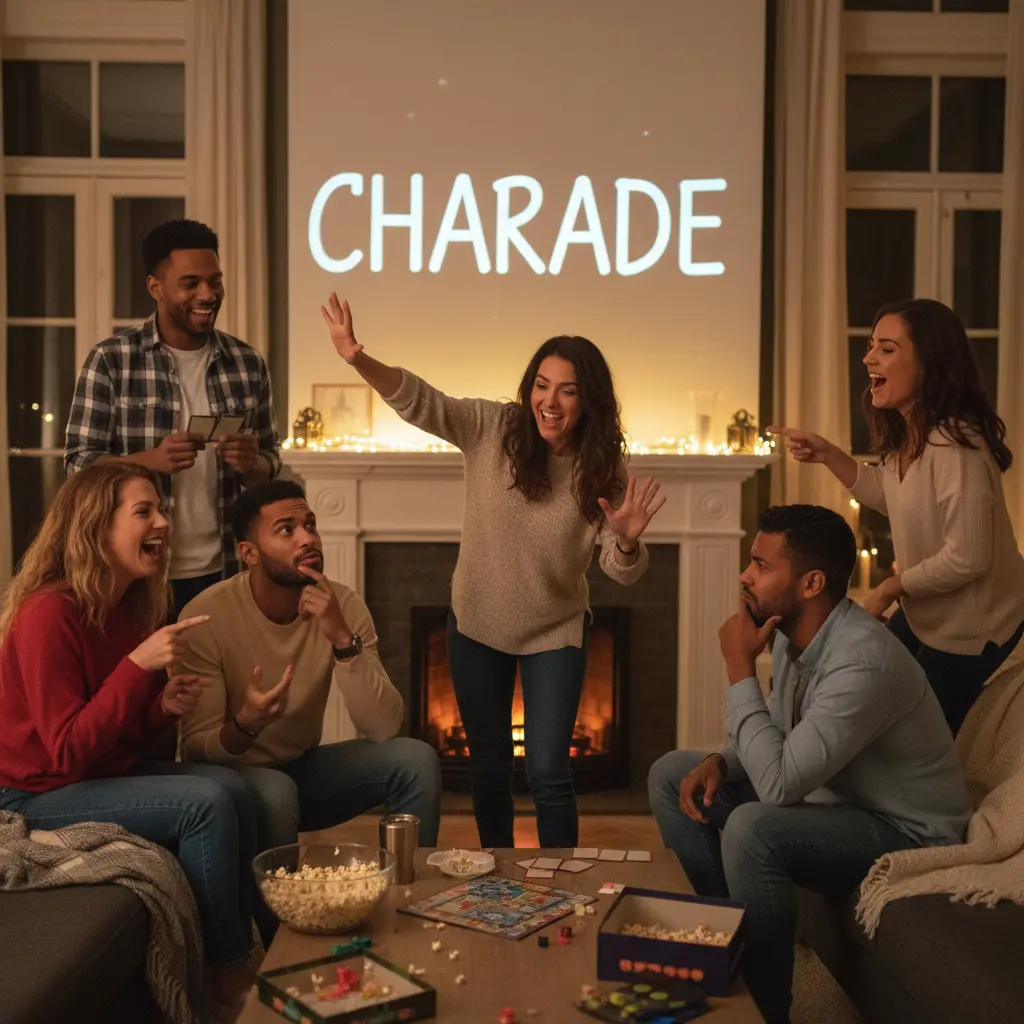
The word consists of 'char-' (from French 'charade'), which illustrates the idea of acting in a game, and the root 'ade' indicating a form or process. Its historical origin stems from Latin, evolving through Old French into modern English. Visualize a lively gathering where friends are acting out clues in a game, with laughter and puzzlement—this image embodies the essence of charade.
Note 1: These definitions and etymologies are not standard dictionary definitions, but extended explanations provided to help with memorization and understanding of the actual application of words. Through this background information, we strive to make words more vivid and easier to understand, and help you remember their meanings in real life.
Note 2: LexiTalk designs the learning flow around the linguistics principle of “Comprehensible Input.” When learners encounter material that is slightly above their level but still understandable from context, the brain naturally absorbs the language. That’s why we keep every word inside authentic contexts, using examples and associations to help you understand it and use it flexibly.
Read the FAQ explanation of Comprehensible InputCharade is a playful guessing game in which players act out clues without speaking, and teammates try to identify the word or phrase. The noun also carries two broader meanings: a deceptive or pretended situation, and an obvious pretense or show. In play, participants mime, gesture, and sometimes use props, creating laughter and misdirection as guesses are offered. The etymology links to French charade, conveying the sense of a form or process; learners often confuse it with near-synonyms like farce or sham. Picture a lively gathering where friends take turns presenting clues through movement, and everyone enjoys the puzzle and teamwork. The word captures both play and pretense in social settings.
In English, charade is commonly learned as a social game with playful deception; learners often think ‘pretense’ implies lies and may miss the cooperative, timing-driven nature of the activity.
What is the meaning of 'charades'?
Choose the correct usage of 'charades' in a sentence.
Which word is most similar to 'charades'?
What is the opposite of 'charades'?
Can you think of a real-life context where 'charades' might be played?
Download LexiTalk app for personalized learning experience
Download AppCookies
We use cookies for essential site functions, analytics, and ads. You can accept, reject, or manage preferences. Privacy Policy