chemicals - Master This Word
Master this word with our 5-step learning method – Learn English in English
Train English Through Brain Routes, Not Translation.
This page helps you stop memorizing isolated translations and start understanding a word through its shared mental image, native-style thinking, and practical training steps.
Master this word with our 5-step learning method – Learn English in English
Example sentences are the start of understanding. Don't rush to memorize. First feel how the word works in a sentence.
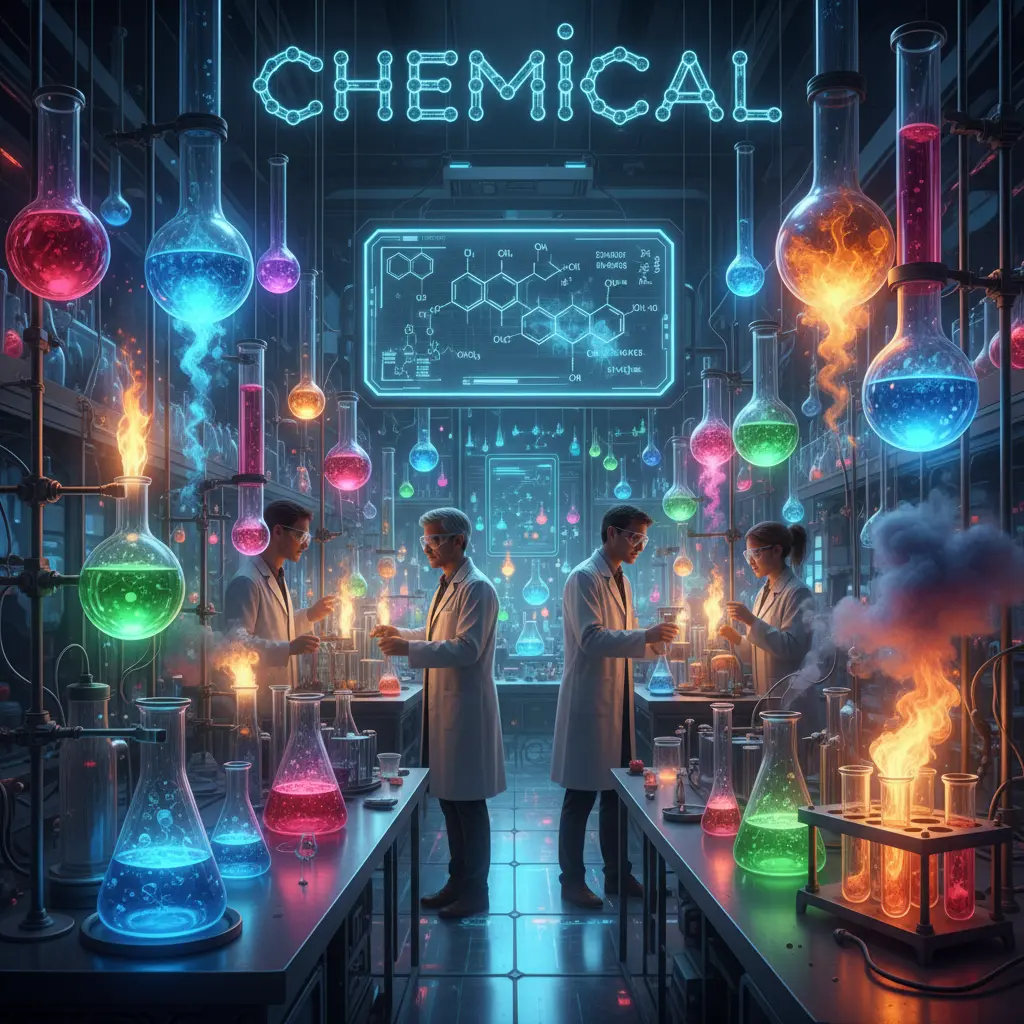
From 'chem' (related to chemistry) + '-ical' (pertaining to). Origin: Greek (khēmia) → Latin (chimica) → Old French → English. Visualize a laboratory filled with colorful chemicals reacting in test tubes.
Note 1: These definitions and etymologies are not standard dictionary definitions, but extended explanations provided to help with memorization and understanding of the actual application of words. Through this background information, we strive to make words more vivid and easier to understand, and help you remember their meanings in real life.
Note 2: LexiTalk designs the learning flow around the linguistics principle of “Comprehensible Input.” When learners encounter material that is slightly above their level but still understandable from context, the brain naturally absorbs the language. That’s why we keep every word inside authentic contexts, using examples and associations to help you understand it and use it flexibly.
Read the FAQ explanation of Comprehensible InputI press a bottle cap with my thumb, turn it, and set the bottle down in my palm. A drop slides out, moving across the rim and into a tiny cup. I adjust my grip, push a little more pressure, and watch the liquid change position and the color shift in the light. The word chemical starts to feel real not as a rule, but as something you touch, something you use when you place or mix something with care, keep track, and let the result tell you what it is.
Chemical is a versatile word in English that can function as both an adjective and a noun. As an adjective, it describes anything related to chemistry, substances involved in chemical processes, or the outcomes of such processes, like chemical reactions, chemical bonds, or chemical safety. As a noun, it refers to a substance used in or produced by a chemical reaction, such as a chemical compound or a formulated product. In everyday speech you’ll hear phrases like the chemical industry or chemical analysis. Learners should note that chemical often pairs with words like reaction, solution, product, or safety to create common terms.
Learners think of chemical as both a substance and a field; keep clear that adjectives describe traits and nouns name things. Many mistakes come from treating chemical as a fixed product name or confusing it with chemistry.
Environment & Pollution
Listen NowDownload LexiTalk app for personalized learning experience
Download AppCookies
We use cookies for essential site functions, analytics, and ads. You can accept, reject, or manage preferences. Privacy Policy