child - Master This Word
Master this word with our 5-step learning method – Learn English in English
Train English Through Brain Routes, Not Translation.
This page helps you stop memorizing isolated translations and start understanding a word through its shared mental image, native-style thinking, and practical training steps.
Master this word with our 5-step learning method – Learn English in English
Example sentences are the start of understanding. Don't rush to memorize. First feel how the word works in a sentence.
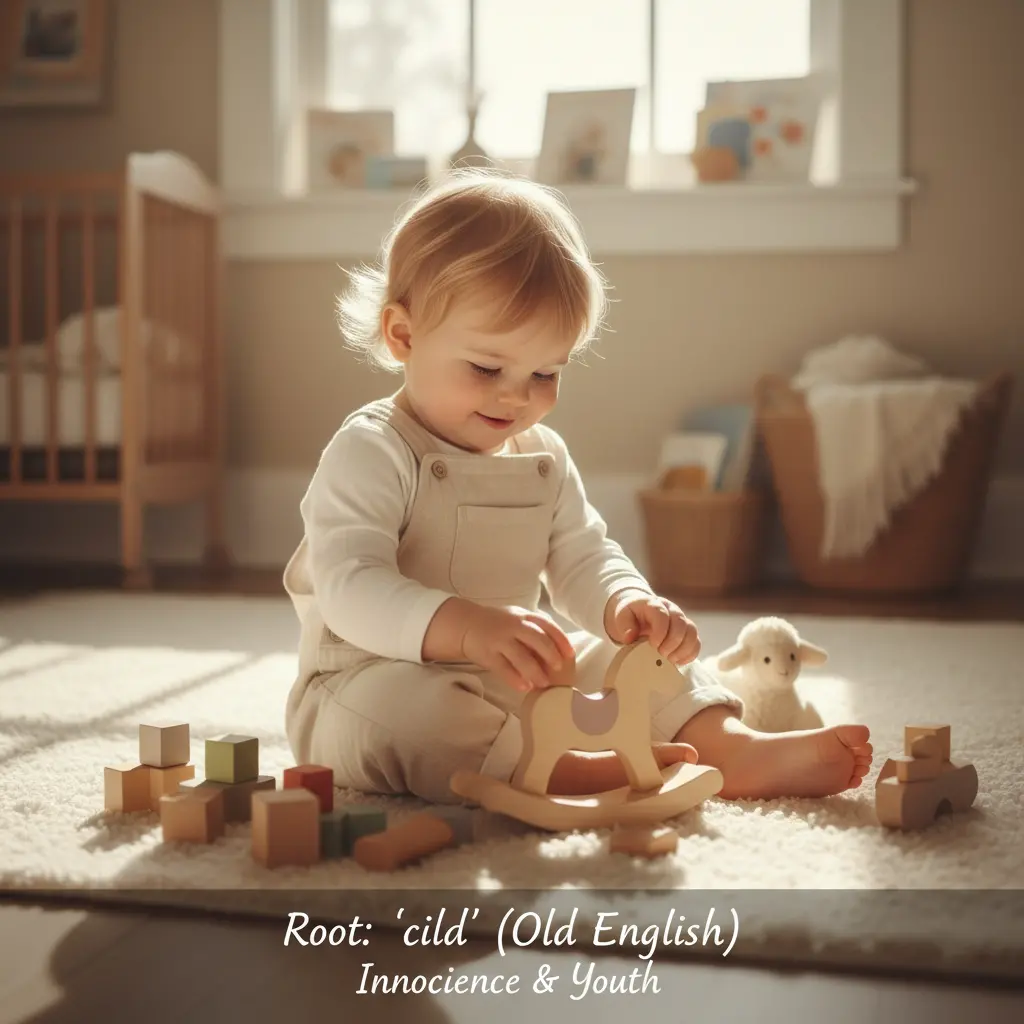
Root: 'cild' (Old English) - Historical Origin: Old English → Germanic → Proto-Indo-European - Memory Image: Imagine a small child playing with toys, showcasing innocence and youth.
Note 1: These definitions and etymologies are not standard dictionary definitions, but extended explanations provided to help with memorization and understanding of the actual application of words. Through this background information, we strive to make words more vivid and easier to understand, and help you remember their meanings in real life.
Note 2: LexiTalk designs the learning flow around the linguistics principle of “Comprehensible Input.” When learners encounter material that is slightly above their level but still understandable from context, the brain naturally absorbs the language. That’s why we keep every word inside authentic contexts, using examples and associations to help you understand it and use it flexibly.
Read the FAQ explanation of Comprehensible InputI lean down to tie a shoelace and my hands move toward the child. I lift my gaze as the child steps closer, and I adjust my grip to hold the small hand. This moment shifts from simple action to care, the warm trust growing between us. In real life I keep my pace steady, let small stumbles teach us, and move together toward the next step.
Child is a noun for a young human being who has not yet reached puberty. It also refers to your son or daughter, especially when describing family relationships, or to young people in formal or academic contexts. In everyday speech, people often say kid, but child sounds more neutral or polite. The irregular plural is children. The notion of child carries an idea of dependency and development, not gender. The etymology goes back to Old English cild, with cognates in other Germanic languages, and ultimately to Proto-Indo-European roots. Keep in mind that most languages mark age differently, so translations may require explicit age ranges or family terms.
English tends to separate formal, neutral, and informal uses of child. Learners often mix neutral 'child' with casual 'kid' or try to use 'children' for a single person. English also marks age implicitly; learners may need explicit age ranges in translations.
In which sentence is the word 'child' used correctly?
Which word is similar to 'child'?
What is the opposite of 'child'?
In what real-life context would you find a 'child'?
Download LexiTalk app for personalized learning experience
Download AppCookies
We use cookies for essential site functions, analytics, and ads. You can accept, reject, or manage preferences. Privacy Policy