
chivalry - Master This Word
Master this word with our 5-step learning method – Learn English in English
Train English Through Brain Routes, Not Translation.
This page helps you stop memorizing isolated translations and start understanding a word through its shared mental image, native-style thinking, and practical training steps.
Master this word with our 5-step learning method – Learn English in English
Example sentences are the start of understanding. Don't rush to memorize. First feel how the word works in a sentence.
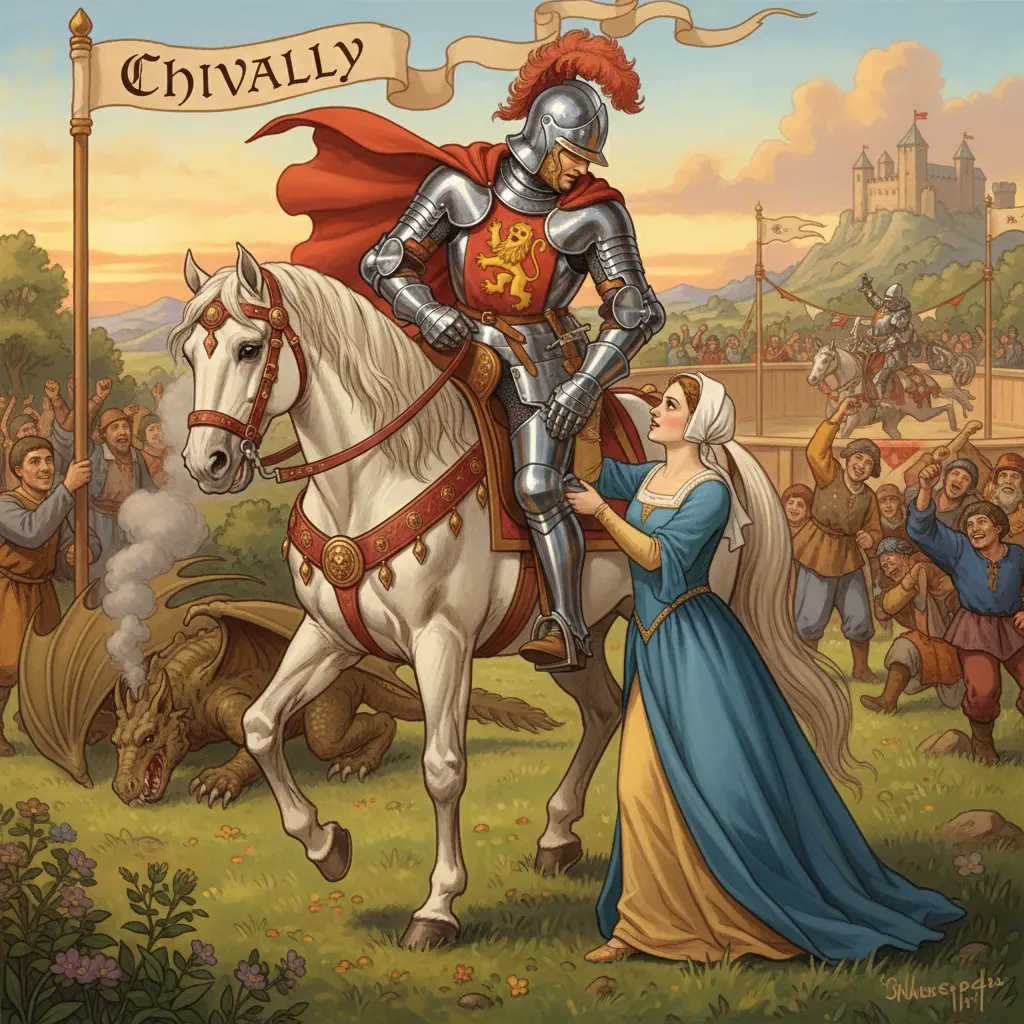
Root Decomposition: 'chival' (from 'cavalier') + 'ry' (suffix indicating a condition). Historical Origin: Latin 'cabalarius' → Old French 'chevalier' → English 'chivalry'. Memory Image: Picture a knight in shining armor, riding a noble steed, performing valiant deeds and treating ladies with utmost respect, embodying the virtues of chivalry.
Note 1: These definitions and etymologies are not standard dictionary definitions, but extended explanations provided to help with memorization and understanding of the actual application of words. Through this background information, we strive to make words more vivid and easier to understand, and help you remember their meanings in real life.
Note 2: LexiTalk designs the learning flow around the linguistics principle of “Comprehensible Input.” When learners encounter material that is slightly above their level but still understandable from context, the brain naturally absorbs the language. That’s why we keep every word inside authentic contexts, using examples and associations to help you understand it and use it flexibly.
Read the FAQ explanation of Comprehensible InputChivalry originally described the medieval knightly code, combining martial valor with moral, religious, and social duties. It encompassed courage in battle, loyalty to lords, and protection of the weak, yet it also prescribed courteous, generous, and respectful behavior toward women and guests. Over time, the word broadened beyond warfare to describe considerate conduct, refined manners, and principled behavior in everyday life. In modern English, chivalry is often invoked to praise generous acts of courtesy rather than to justify any violence. When learners encounter the term, they should distinguish historical chivalry from contemporary politeness, and remember that respectful behavior is valued across cultures, even without knighthood.
Chivalry blends historical code with modern politeness; learners often assume it means only romance or male entitlement. Emphasize its historical context and its ethical aims, and show how it differs from general manners today.
What is the definition of chivalry?
Choose the sentence that correctly uses the word chivalry.
Which word is most similar to chivalry?
What is the opposite of chivalry?
Can you think of a scenario where a person might demonstrate chivalry?
Download LexiTalk app for personalized learning experience
Download AppCookies
We use cookies for essential site functions, analytics, and ads. You can accept, reject, or manage preferences. Privacy Policy