clash - Master This Word
Master this word with our 5-step learning method – Learn English in English
Train English Through Brain Routes, Not Translation.
This page helps you stop memorizing isolated translations and start understanding a word through its shared mental image, native-style thinking, and practical training steps.
Master this word with our 5-step learning method – Learn English in English
Example sentences are the start of understanding. Don't rush to memorize. First feel how the word works in a sentence.
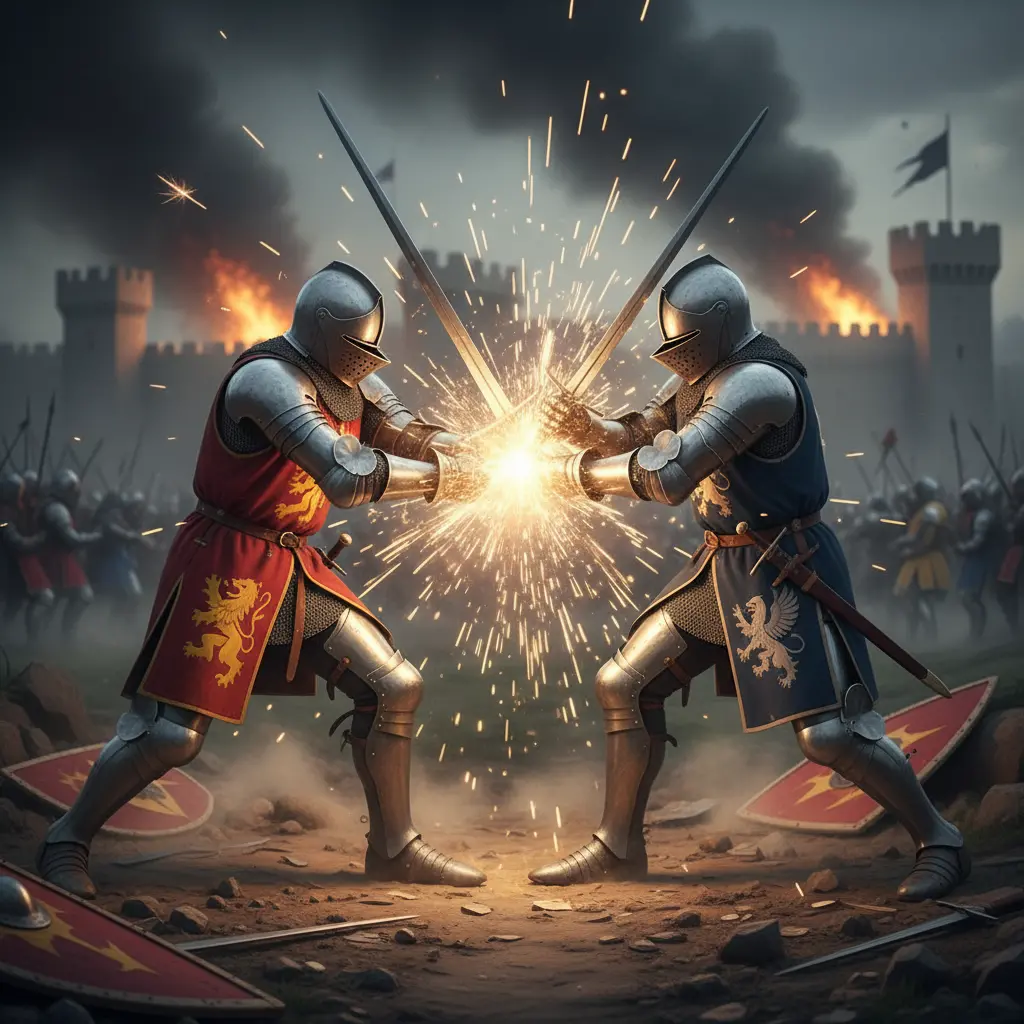
clash = cl- (to strike) + ash (derived from a root meaning 'to break'); Originated from Late Middle English, likely from Old French 'clachier'. Picture two knights striking their swords together, creating a loud clash of metal.
Note 1: These definitions and etymologies are not standard dictionary definitions, but extended explanations provided to help with memorization and understanding of the actual application of words. Through this background information, we strive to make words more vivid and easier to understand, and help you remember their meanings in real life.
Note 2: LexiTalk designs the learning flow around the linguistics principle of “Comprehensible Input.” When learners encounter material that is slightly above their level but still understandable from context, the brain naturally absorbs the language. That’s why we keep every word inside authentic contexts, using examples and associations to help you understand it and use it flexibly.
Read the FAQ explanation of Comprehensible InputI grip two practice sticks and move them toward each other, watching my wrists settle into rhythm. When they meet, a clear clash rings out and I feel a quick surge of effort. I adjust my grip, push a little more on one stick, then pull back to keep them from spinning apart. The moment of contact teaches me that a clash isn't just a noise; it's the edge where things bump, change, and push each other into new directions.
Clash covers three related ideas. As a verb, to clash means to collide with force, often producing a loud metal sound when surfaces meet. As a noun, a clash can be a physical collision or a conflict, argument, or disagreement between people or groups. It can also describe colors, outfits, or styles that clash, meaning they look visually incompatible. The image of two knights striking swords together is a classic illustration of a literal clash, while headlines about political clashes capture a non-physical sense. In everyday speech you may say plans clash with commitments, or sound effects clash in a soundtrack. The word carries emphasis on impact and opposition.
To an English speaker, clash often emphasizes action, impact, and opposition in a vivid, concrete way; learners might lean on the noun sense too strongly or overextend it to every disagreement. Keep in mind collocations and the more idiomatic phrases like clash with, clash over, or a clash of opinions.
What does the word 'clash' mean?
In which sentence is 'clash' used correctly?
Which word is a synonym of 'clash'?
What is the opposite of 'clash'?
In what real-life situation might you experience a 'clash'?
Download LexiTalk app for personalized learning experience
Download AppCookies
We use cookies for essential site functions, analytics, and ads. You can accept, reject, or manage preferences. Privacy Policy