clogged - Master This Word
Master this word with our 5-step learning method – Learn English in English
Train English Through Brain Routes, Not Translation.
This page helps you stop memorizing isolated translations and start understanding a word through its shared mental image, native-style thinking, and practical training steps.
Master this word with our 5-step learning method – Learn English in English
Example sentences are the start of understanding. Don't rush to memorize. First feel how the word works in a sentence.
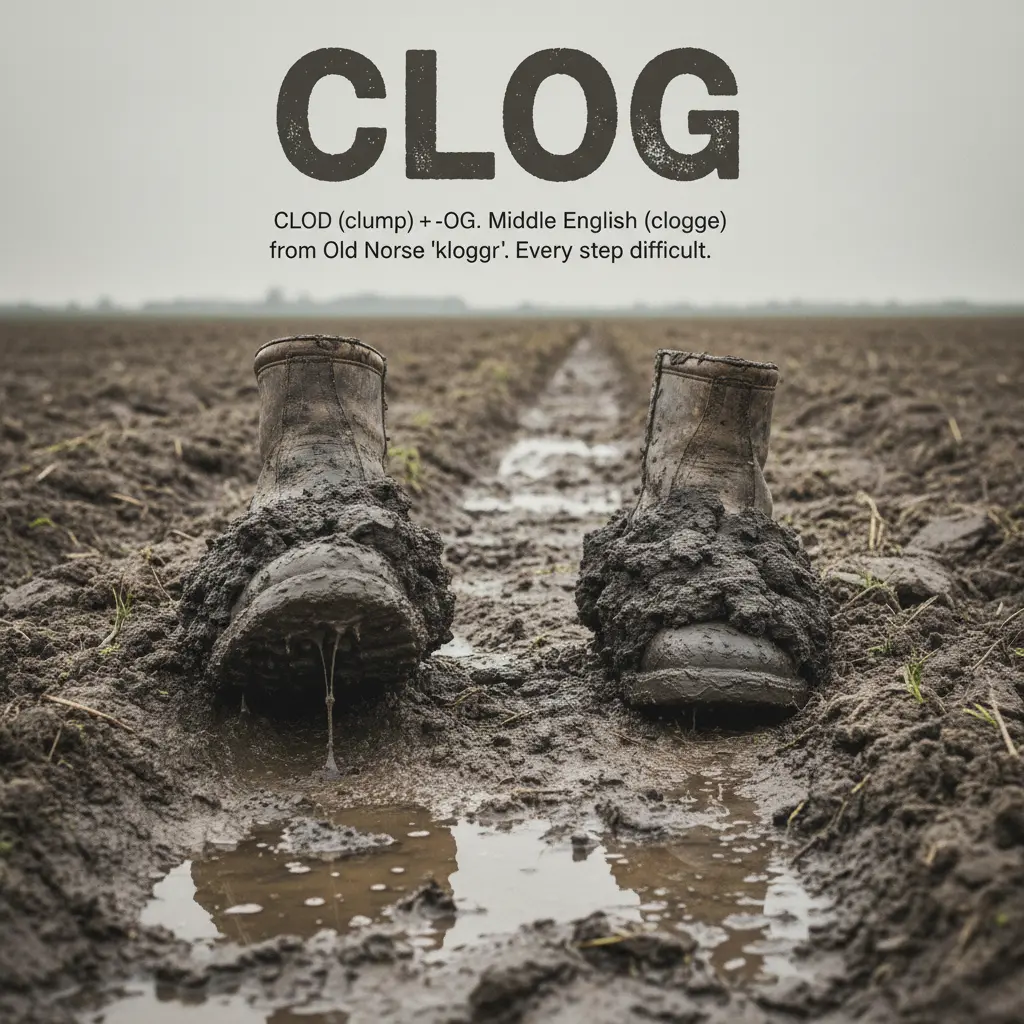
clog = clod (clump) + suffix -og. Historical origin: Middle English (clogge) from Old Norse 'kloggr'. Memory image: Imagine trying to walk through a muddy field, where the heavy clogs of mud attach to your shoes, making every step difficult. This is the essence of clogging.
Note 1: These definitions and etymologies are not standard dictionary definitions, but extended explanations provided to help with memorization and understanding of the actual application of words. Through this background information, we strive to make words more vivid and easier to understand, and help you remember their meanings in real life.
Note 2: LexiTalk designs the learning flow around the linguistics principle of “Comprehensible Input.” When learners encounter material that is slightly above their level but still understandable from context, the brain naturally absorbs the language. That’s why we keep every word inside authentic contexts, using examples and associations to help you understand it and use it flexibly.
Read the FAQ explanation of Comprehensible InputClog has two broad uses in everyday English. As a verb, it means to block an opening or a flow, for example a pipe can clog with grease, or traffic can clog a street, bringing movement to a halt. It can also describe the state of becoming blocked by solid matter, such as a drain that is clogged with hair and soap. As a noun, a clog is a type of shoe with a thick wooden sole, often associated with workwear. The etymology links clog to clod (a lump) plus the suffix -og, with Old Norse kloggr as its ancestor. A memory image: walking through mud while heavy wooden clogs cling to your feet, making each step deliberate.
Learners often default to using clog only for shoes; English encodes both a verb of blocking and a noun for a wooden shoe, requiring attention to context and collocations.
Download LexiTalk app for personalized learning experience
Download AppCookies
We use cookies for essential site functions, analytics, and ads. You can accept, reject, or manage preferences. Privacy Policy