
colonial - Master This Word
Master this word with our 5-step learning method – Learn English in English
Train English Through Brain Routes, Not Translation.
This page helps you stop memorizing isolated translations and start understanding a word through its shared mental image, native-style thinking, and practical training steps.
Master this word with our 5-step learning method – Learn English in English
Example sentences are the start of understanding. Don't rush to memorize. First feel how the word works in a sentence.
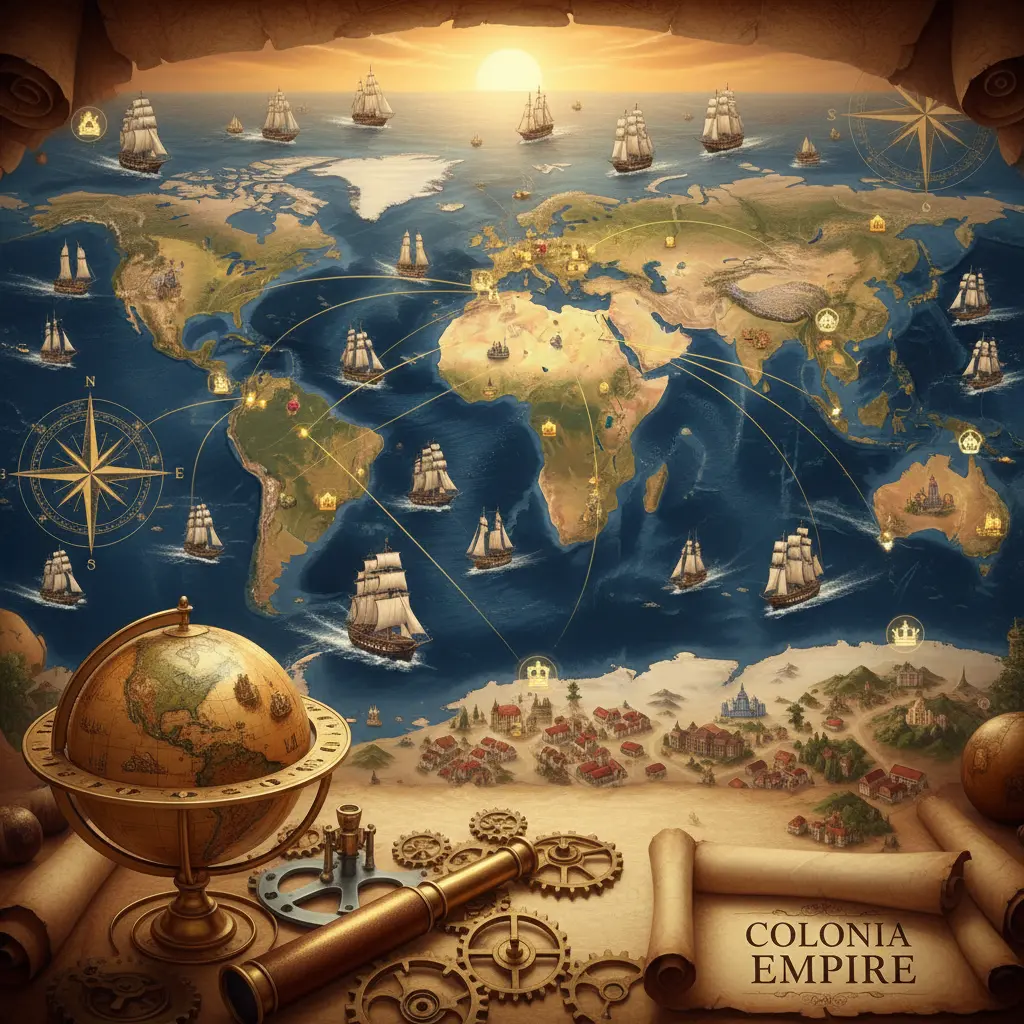
Colonial = colon(y) + -ial. Origin: Latin 'colonia' → Old French 'colonial' → English. Imagine a vast colonial empire where people sail across oceans to establish colonies, symbolizing expansion and power.
Note 1: These definitions and etymologies are not standard dictionary definitions, but extended explanations provided to help with memorization and understanding of the actual application of words. Through this background information, we strive to make words more vivid and easier to understand, and help you remember their meanings in real life.
Note 2: LexiTalk designs the learning flow around the linguistics principle of “Comprehensible Input.” When learners encounter material that is slightly above their level but still understandable from context, the brain naturally absorbs the language. That’s why we keep every word inside authentic contexts, using examples and associations to help you understand it and use it flexibly.
Read the FAQ explanation of Comprehensible InputI push the door and step onto a quiet street, tracing a line of colonial houses with my fingers brushing the painted wood. I move closer, adjust my stance, and tilt my head to notice the arches and lattice that repeat along the blocks. The word settles in my mouth as I read the scene, not by rule but by feel, as if the place is teaching me how to speak it. I keep walking, letting the texture of the street guide how I will use the word in future sentences.
Colonial describes anything related to a colony, or to the period of colonial rule, and it can also describe art, architecture, or institutions that originated in, or were heavily influenced by, a colonial power. It is used for historical contexts (the colonial era, colonial administrators) and for cultural items that carry that period style. The term often implies power, expansion, and cross-cultural encounters, but it can also describe modern places or designs that retain colonial-era features. Do not confuse with colonialism (the policy) or with colony (a settlement). When used for architecture, colonial usually points to a historical aesthetic rather than present governance. In everyday speech, 'colonial' is most common in historical or descriptive contexts rather than current politics.
Native English speakers typically link colonial with historical periods, borders, and architectural styles, so learners should avoid forcing it onto current politics. Learners often confuse colonial with colonialism or colonize; keep the distinction clear.
What is the meaning of the word 'colonial'?
In which of the following sentences is 'colonial' used correctly?
Which word is similar to 'colonial'?
What is the opposite of 'colonial'?
In what real-life context would you encounter the term 'colonial'?
Download LexiTalk app for personalized learning experience
Download AppCookies
We use cookies for essential site functions, analytics, and ads. You can accept, reject, or manage preferences. Privacy Policy