
comics - Master This Word
Master this word with our 5-step learning method – Learn English in English
Train English Through Brain Routes, Not Translation.
This page helps you stop memorizing isolated translations and start understanding a word through its shared mental image, native-style thinking, and practical training steps.
Master this word with our 5-step learning method – Learn English in English
Example sentences are the start of understanding. Don't rush to memorize. First feel how the word works in a sentence.
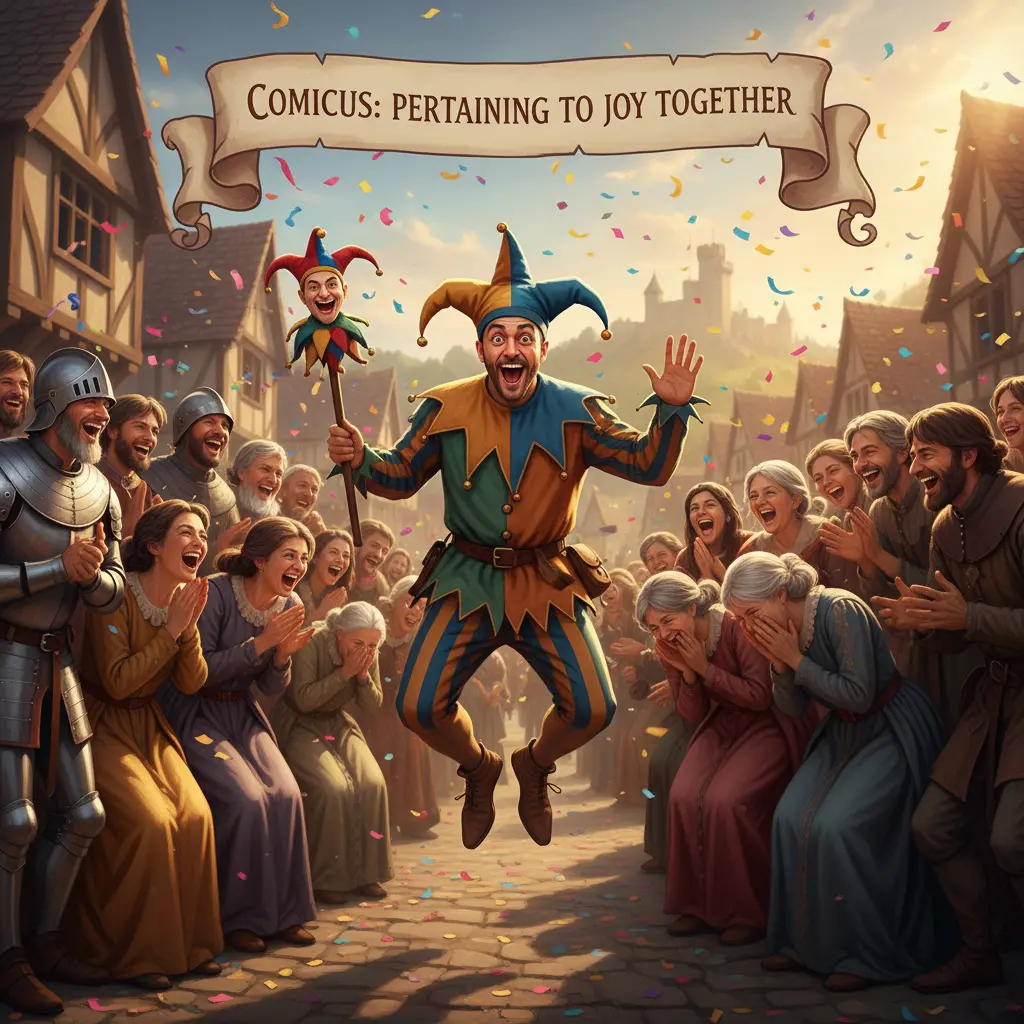
comic (com- = together, -ic = pertaining to) → Latin comicus → Old French comique → English. Imagine a jester making everyone laugh together, highlighting the joy of humor.
Note 1: These definitions and etymologies are not standard dictionary definitions, but extended explanations provided to help with memorization and understanding of the actual application of words. Through this background information, we strive to make words more vivid and easier to understand, and help you remember their meanings in real life.
Note 2: LexiTalk designs the learning flow around the linguistics principle of “Comprehensible Input.” When learners encounter material that is slightly above their level but still understandable from context, the brain naturally absorbs the language. That’s why we keep every word inside authentic contexts, using examples and associations to help you understand it and use it flexibly.
Read the FAQ explanation of Comprehensible InputI lean in, move the page, and the light catches a line that makes me smile. I pull the corner of the frame and adjust my seat as the joke lands in the pause between panels. The characters push through their silliness, change pace, and I feel the room warm with laughter. The word starts to feel like a living moment you keep, a timing you practice and carry with you.
Comic can be an adjective meaning funny or related to comedy, often signaling light, playful humor rather than serious drama. It is also a noun for a periodical featuring comic strips, typically appealing to readers with visual humor and sequential art. A person skilled in comedy of course is called a comic, though more common in modern English is comedian for the performer. The term carries a slightly old-fashioned or literary feel when referring to magazines, while describing a character’s demeanor as comic emphasizes the outward, observable humor. Note that comic and comedy differ from 'humorous' or 'funny' in nuance and collocations like comic relief or comic timing.
English tends to use comic across several parts of speech and collocates with terms like relief, timing, and book; learners often confuse its senses or default to funny whenever they hear humor.
Download LexiTalk app for personalized learning experience
Download AppCookies
We use cookies for essential site functions, analytics, and ads. You can accept, reject, or manage preferences. Privacy Policy