commerce - Master This Word
Master this word with our 5-step learning method – Learn English in English
Train English Through Brain Routes, Not Translation.
This page helps you stop memorizing isolated translations and start understanding a word through its shared mental image, native-style thinking, and practical training steps.
Master this word with our 5-step learning method – Learn English in English
Example sentences are the start of understanding. Don't rush to memorize. First feel how the word works in a sentence.
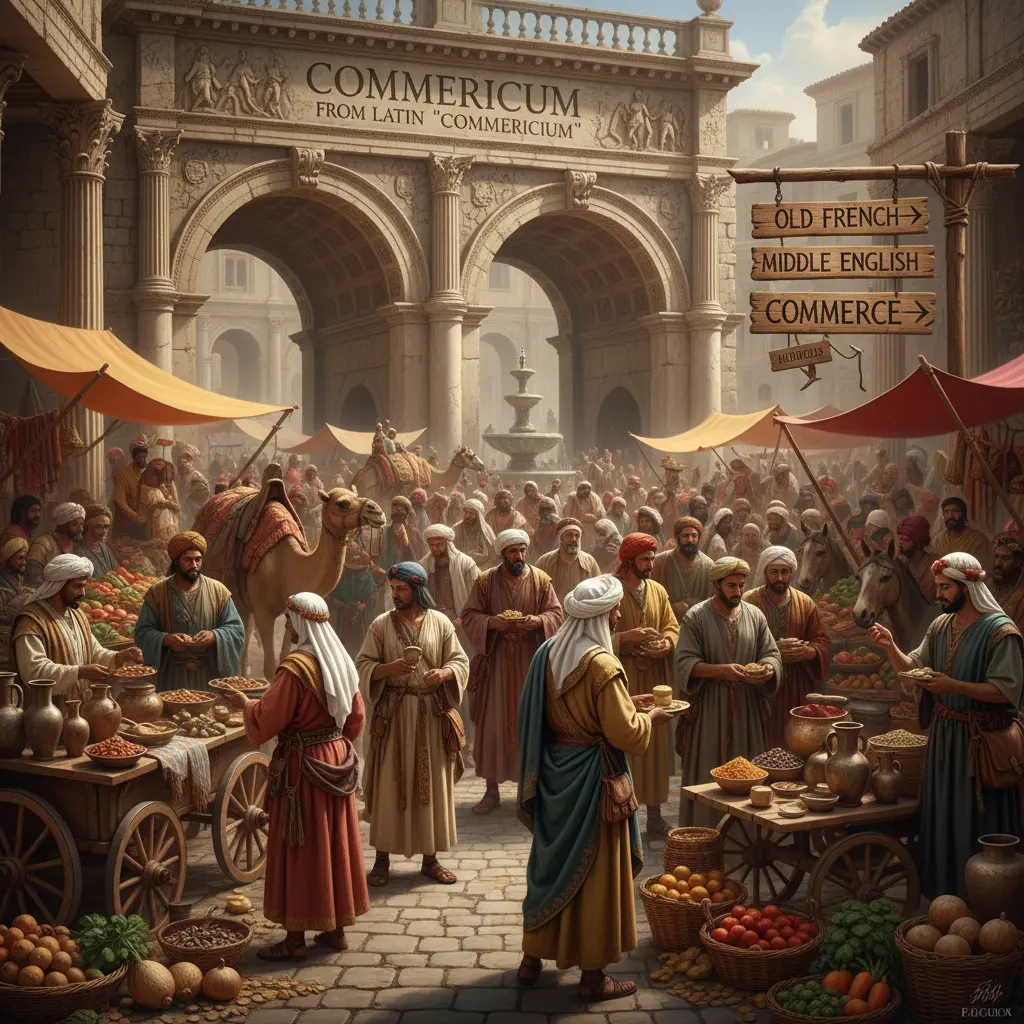
com- = together + merce = trade. Originated from Latin 'commercium' → Old French → Middle English. Imagine a bustling marketplace where merchants from all over gather to trade goods, symbolizing the essence of commerce.
Note 1: These definitions and etymologies are not standard dictionary definitions, but extended explanations provided to help with memorization and understanding of the actual application of words. Through this background information, we strive to make words more vivid and easier to understand, and help you remember their meanings in real life.
Note 2: LexiTalk designs the learning flow around the linguistics principle of “Comprehensible Input.” When learners encounter material that is slightly above their level but still understandable from context, the brain naturally absorbs the language. That’s why we keep every word inside authentic contexts, using examples and associations to help you understand it and use it flexibly.
Read the FAQ explanation of Comprehensible InputI push open the stall, a whisk of metal and air, and lean into the day. I place a stack of apples, adjust the price tag, and watch coins click as people choose. The whole scene keeps moving, a constant shift of hands, chats, and receipts. By evening I feel this whole rhythm—commerce—keeping the market moving, and I keep tending it.
Commerce refers to the activity of buying and selling goods and services, especially on a large scale or across borders. It covers everything from markets and storefronts to digital platforms, supply chains, and international trade agreements. In everyday English you might say a store sells goods, but in policy or business writing you speak of commerce and the economy. The word emphasizes the system and institutions that enable trade, such as currencies, contracts, tariffs, and transport. Commerce can be used as a collective noun or in phrases like "global commerce" or "e-commerce." Its etymology traces back to Latin commercium, through Old French and Middle English, capturing the idea of bringing together buyers and sellers.
Explain to an English speaker (meta, keep short)
What is the meaning of 'commerce'?
Which sentence uses 'commerce' correctly?
Choose the synonym for 'commerce'.
Choose the antonym for 'commerce'.
In what real-life context is 'commerce' commonly used?
Download LexiTalk app for personalized learning experience
Download AppCookies
We use cookies for essential site functions, analytics, and ads. You can accept, reject, or manage preferences. Privacy Policy